
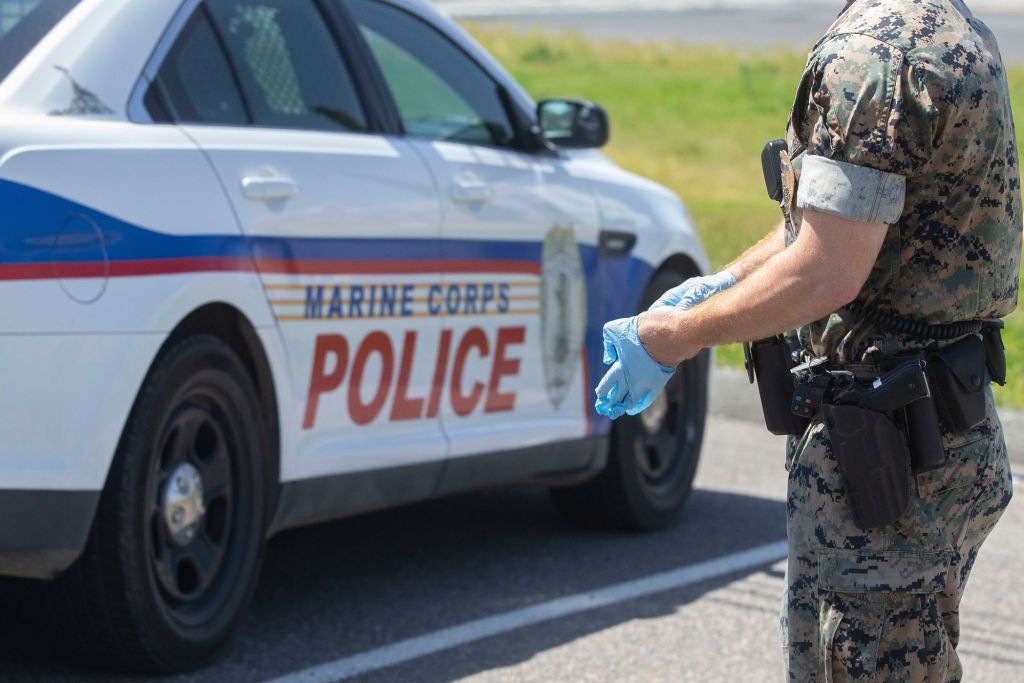
I unintentionally entered Camp Pendleton this week through one of its public access sites, which put me in an unexpected situation. I had accidentally driven onto federal property, which was a genuine mistake that was immediately noticed by the military police at Camp Pendleton.
After that, I had a courteous and professional conversation with the MPs who pulled me over at the entrance checkpoint. They checked my identification, interrogated me about why I was there, and made sure I wasn’t a security risk. They gave me a warning and sent me back to the main road after concluding that my presence was unintentional and not dangerous.
The U.S. Immigration and Customs Enforcement (ICE) agency was noticeably absent from this interaction. I was not surprised by this fact given that immigration enforcement and law enforcement frequently converge in unexpected ways in the current environment. And the fact that the military police were entirely concerned with security and safety—not immigration status—gave me a sense of comfort.
Every U.S. military facility, including Camp Pendleton, has its own distinct jurisdiction. It is a community that welcomes thousands of service members, their families, and civilian workers, as well as a sovereign military area. The military police’s decision not to include ICE during regular vehicle stops or searches is not only legally correct but also necessary for preserving trust and operational efficiency inside the base.

The lack of immigration enforcement in routine policing creates a culture of security and cooperation for people who reside or work on base, such as civilian contractors, international military liaisons, or foreign nationals serving under special visas. It makes certain that individuals are not deterred by the threat of deportation from seeking necessary services or reporting crimes.
My brief but ultimately uneventful experience serves to emphasize a more fundamental point: military facilities must continue to prioritize their primary purpose of protecting the country. The law enforcement in that area should be carried out with professionalism, clarity, and a thorough awareness of the unique characteristics of military communities.
For a long time, the Department of Defense has maintained that military facilities are not the place for local law enforcement activities that have nothing to do with base security. Whether by duty, invitation, or, like in my case, by mistake, this policy safeguards the integrity of the military objective as well as the rights and dignity of all persons who enter the base.
The Camp Pendleton Military Police should be praised for their professional and cautious response to the situation. Their behavior demonstrates a dedication to the values of fairness, discretion, and respect that characterize our military, as well as to security.
Mistakes occur, but an institution’s actual character is revealed by how it responds. In this instance, Camp Pendleton successfully completed the test.
Discover more from The OC Reporter
Subscribe to get the latest posts sent to your email.
 The OC Reporter