EDITORIAL: WHEN ACCOUNTABILITY IS POLITICAL, JUSTICE REMAINS OUT OF REACH

Santa Ana Police Assault

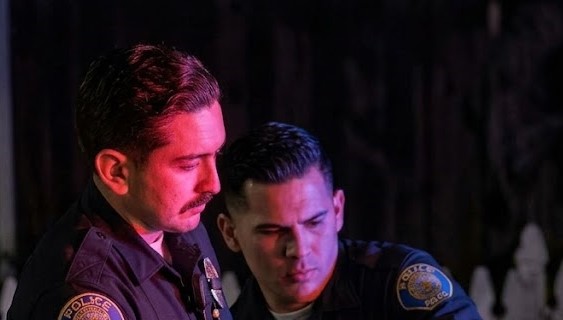
The video captured on a Santa Ana sidewalk on the night of October 1 was not a standard arrest; to anyone watching the viral footage, it looked less like police work and more like a street fight.

The footage—recorded by the sister of 28-year-old Florentino Junior Lopez—shows officers calling Lopez out from his front yard, citing his probation status. Moments later, following a brief verbal exchange, an officer forcibly throws Lopez to the pavement before initiating a barrage of punches and knee strikes, joined quickly by his partner. As backup arrived, officers took steps to obstruct bystanders from filming rather than de-escalating the scene, a clear violation of California’s Right to Observe and Record Act (SB 95).

For long-time residents, the scene carries echoes of the 1991 Rodney King beating—a reminder of what happens when police authority devolves into brute force.

What followed at City Hall was equally telling. Within just five days, Mayor Valerie Amezcua, Police Chief Robert Rodriguez, and City Councilmembers Phil Becerra and David Penaloza addressed the incident, calling for reviews and independent oversight.

While a swift response is necessary, the timing cannot be ignored. With municipal elections just weeks away and key council seats on the ballot, this sudden urgency feels less like systemic reform and more like damage control. For years, Santa Ana’s political leadership has operated under the heavy backing of the Santa Ana Police Officers Association (SAPOA). When public outrage threatens electoral success, rhetoric changes overnight—but real accountability requires more than press releases issued during an election cycle.

The issues facing Santa Ana extend beyond a single arrest. As regional federal law enforcement and ICE operations expand across Orange County, residents are left wondering where local leadership stands on protecting community members. True public safety requires leaders who uphold constitutional standards, enforce department policy, and stand up for residents’ rights every day—not just when an election is around the corner.

Santa Ana voters must ask themselves a critical question before filling out their ballots: Are city leaders protecting the community, or are they protecting the status quo until the polls close?

CBS LA: Video shows Santa Ana police officers beating a man during arrest

This local news report covers the viral video of the October 1 arrest, detailing the community reaction and the Santa Ana Police Department’s internal investigation.
EDITORIAL: CUANDO LA RENDICIÓN DE CUENTAS ES POLÍTICA, LA JUSTICIA PERMANECE FUERA DE ALCANCE

Santa Ana PD Assaulted a Man

El video grabado en una acera de Santa Ana la noche del 1 de octubre no fue un arresto rutinario; para cualquiera que haya visto las imágenes virales, se parecía menos a un trabajo policial y más a una pelea callejera.

Las imágenes—grabadas por la hermana de Florentino Junior López, de 28 años—muestran a los oficiales llamando a López desde su jardín delantero, citando su condición de libertad condicional. Momentos después, tras un breve intercambio verbal, un oficial arroja por la fuerza a López contra el pavimento antes de iniciar una ráfaga de puñetazos y rodillazos, a los que rápidamente se suma su compañero. A medida que llegaba el apoyo, los oficiales tomaron medidas para obstruir que los transeúntes filmaran en lugar de desescalar la escena, una clara violación de la Ley del Derecho a Observar y Grabar de California (SB 95).

Para los residentes de muchos años, la escena trae recuerdos de la golpiza a Rodney King en 1991: un recordatorio de lo que sucede cuando la autoridad policial degenera en fuerza bruta.

Lo que siguió en el Ayuntamiento fue igualmente revelador. En tan solo cinco días, la alcaldesa Valerie Amezcua, el jefe de policía Robert Rodríguez y los concejales Phil Becerra y David Penaloza abordaron el incidente, pidiendo revisiones y supervisión independiente.

Si bien es necesaria una respuesta rápida, no se puede ignorar el momento en que ocurre. A solo unas semanas de las elecciones municipales y con escaños clave del concejo en la papeleta, esta repentina urgencia se siente menos como una reforma sistémica y más como un control de daños. Durante años, el liderazgo político de Santa Ana ha operado bajo el fuerte respaldo de la Asociación de Oficiales de Policía de Santa Ana (SAPOA, por sus siglas en inglés). Cuando la indignación pública amenaza el éxito electoral, la retórica cambia de la noche a la mañana; pero una verdadera rendición de cuentas requiere algo más que comunicados de prensa emitidos durante un ciclo electoral.

Los problemas que enfrenta Santa Ana van más allá de un solo arresto. A medida que las operaciones regionales de las fuerzas del orden federales y del ICE se expanden por el condado de Orange, los residentes se preguntan dónde se posiciona el liderazgo local con respecto a la protección de los miembros de la comunidad. La verdadera seguridad pública requiere líderes que defiendan los estándares constitucionales, hagan cumplir la política del departamento y defiendan los derechos de los residentes todos los días, no solo cuando las elecciones están a la vuelta de la esquina.

Los votantes de Santa Ana deben hacerse una pregunta crítica antes de llenar sus papeletas: ¿Están los líderes de la ciudad protegiendo a la comunidad, o están protegiendo el statu quo hasta que cierren las urnas?

CBS LA: Video muestra a oficiales de policía de Santa Ana golpeando a un hombre durante un arresto

Este informe de noticias locales cubre el video viral del arresto del 1 de octubre, detallando la reacción de la comunidad y la investigación interna del Departamento de Policía de Santa Ana.

Editorial: Un llamado a la desescalada: Repensando la respuesta letal ante las crisis

Un llamado a la desescalada: Repensando la respuesta letal ante las crisis

La trágica muerte de un joven de 15 años a manos del Departamento de Policía de Santa Ana este pasado domingo, 14 de junio de 2026, sirve como un recordatorio desgarrador de las consecuencias letales que pueden surgir cuando las fuerzas del orden se encuentran con una persona en medio de una crisis conductual o de salud mental. Los oficiales fueron llamados a un complejo de apartamentos en la cuadra 3400 de Main Street por un disturbio familiar, donde se encontraron con el adolescente, quien supuestamente estaba bajo los efectos de sustancias y armado con un cuchillo. Aunque la situación involucró un reporte de agresión —donde el adolescente presuntamente apuñaló a un hombre de 53 años—, el resultado, un menor muerto en la escena, exige un reexamen serio de las tácticas del departamento.

El fracaso de la rigidez táctica

Cuando la policía responde a llamadas que involucran a personas que luchan contra problemas de salud mental o crisis inducidas por sustancias, el objetivo debe ser la preservación de la vida mediante la aplicación calculada de tiempo, distancia y desescalada. En cambio, el encuentro resultó en un tiroteo fatal, lo que plantea preocupaciones críticas sobre el enfoque del departamento:

  • Aunque los oficiales supuestamente dieron varias órdenes para que el adolescente soltara el arma, la transición a la fuerza letal sugiere un fracaso en la utilización de alternativas menos letales —como municiones de impacto o herramientas de restricción— que podrían haber neutralizado la amenaza sin terminar con una vida.
  • En escenarios donde un adolescente se muestra visiblemente errático o sufre un episodio de salud mental, la presencia de un arma debería activar una respuesta especializada centrada en la contención y la negociación en lugar de una confrontación táctica estándar.
  • El departamento debe explicar por qué se consideró que la fuerza letal era la única opción viable contra un menor, especialmente cuando la capacitación estándar en desescalada enfatiza agotar todos los demás medios antes de recurrir al uso de un arma de servicio.

El costo humano y la negligencia sistémica

Más allá de los fallos tácticos, existe un problema más profundo: la forma en que nuestros sistemas tratan a quienes están pasando por una crisis. Un adolescente en crisis es una persona que ha perdido el rumbo, no un combatiente que debe ser eliminado. Cuando enviamos oficiales armados a manejar lo que es fundamentalmente una emergencia médica o psicológica, estamos preparando el terreno para el desastre. El “deber de actuar” nunca debe reemplazar al “deber de proteger”, especialmente cuando la vida en juego es la de un niño. Debemos preguntarnos: ¿cuándo decidimos que la conveniencia de una resolución rápida y letal vale más que el potencial de salvar y rehabilitar una vida joven?

Una demanda de rendición de cuentas y reforma

La investigación en curso por parte de la Unidad de Homicidios del Departamento de Policía de Santa Ana, Asuntos Internos y la Oficina del Fiscal de Distrito del Condado de Orange es un paso procesal necesario, pero no sustituye al cambio sistémico. La comunidad merece:

  • Una divulgación completa de los detalles del incidente y una auditoría interna rigurosa sobre el cumplimiento de los oficiales con las políticas de uso de la fuerza.
  • Un cambio en la política que exija la presencia de, o la consulta con, profesionales capacitados en crisis de salud mental para todos los disturbios domésticos que involuven signos de inestabilidad conductual.
  • Una revisión de la política departamental que establezca un estándar significativamente más alto para el uso de fuerza letal cuando el sujeto es un menor, priorizando la contención a largo plazo sobre la resolución inmediata y fatal.

Llamado a la acción comunitaria

El tiempo de la observación silenciosa ha pasado. Instamos a todos los residentes preocupados a asistir a la próxima reunión del Concejo Municipal de Santa Ana. Debemos exigir que el concejo incluya este incidente en la agenda para una audiencia pública de emergencia. Es imperativo que hagamos responsables a nuestros funcionarios electos y al liderazgo policial expresando nuestra demanda de una reforma política inmediata. Preséntense, alcen la voz y asegúrense de que las voces de la comunidad sean escuchadas hasta que se implementen cambios concretos para evitar que tal tragedia vuelva a ocurrir.

La pérdida de un joven de 15 años es una tragedia profunda que debería obligar al Departamento de Policía de Santa Ana a confrontar su propia cultura táctica. Debemos avanzar hacia un modelo de seguridad pública donde una llamada de crisis resulte en una intervención que salve vidas en lugar de una sentencia de muerte.

Editorial: A Call for De-escalation: Rethinking the Fatal Response to Crisis

A Call for De-escalation: Rethinking the Fatal Response to Crisis

The tragic death of a 15-year-old at the hands of the Santa Ana Police Department this past Sunday, June 14, 2026, serves as a harrowing reminder of the lethal consequences that can arise when law enforcement encounters an individual in the midst of a behavioral or mental health crisis. Officers were called to an apartment complex in the 3400 block of Main Street regarding a family disturbance, where they encountered the teenager who was reportedly under the influence and armed with a knife. While the situation involved a reported assault—where the teen allegedly stabbed a 53-year-old man—the outcome, a child dead at the scene, demands a serious re-examination of departmental tactics.

The Failure of Tactical Rigidity

When police respond to calls involving individuals struggling with mental health or substance-induced crises, the goal must be the preservation of life through the calculated application of time, distance, and de-escalation. Instead, the encounter resulted in a fatal shooting, raising critical concerns about the department’s approach:

  • Although officers reportedly gave several commands for the teen to drop the weapon, the transition to lethal force suggests a failure to utilize less-lethal alternatives—such as beanbag rounds or other restraint tools—that could have neutralized the threat without ending a life.
  • In scenarios where an adolescent is visibly erratic or suffering from a mental health episode, the presence of a weapon should trigger a specialized response focused on containment and negotiation rather than a standard tactical confrontation.
  • The department must account for why lethal force was deemed the only viable option against a minor, particularly when standard de-escalation training emphasizes exhausting all other means before resorting to the use of a service weapon.

The Human Cost and Systematic Neglect

Beyond the tactical failures lies a deeper issue: the way our systems treat those in the throes of a breakdown. A teenager in a state of crisis is a person who has lost their way, not a combatant to be eliminated. When we send armed officers to handle what is fundamentally a medical or psychological emergency, we are setting the stage for disaster. The “duty to act” must never supersede the “duty to protect,” especially when the life at stake is that of a child. We have to ask ourselves: when did we decide that the convenience of a swift, lethal resolution is worth more than the potential for a young life to be saved and rehabilitated?

A Demand for Accountability and Reform

The ongoing investigation by the Santa Ana Police Department’s Homicide Unit, Internal Affairs, and the Orange County District Attorney’s Office is a necessary procedural step, but it is not a substitute for systemic change. The community deserves:

  • A full disclosure of the incident details and a rigorous internal audit of the officers’ adherence to use-of-force policies.
  • A shift in policy that mandates the presence of, or consultation with, trained mental health crisis professionals for all domestic disturbances involving signs of behavioral instability.
  • A revision to departmental policy that sets a significantly higher bar for the use of deadly force when the subject is a minor, prioritizing long-term containment over immediate, fatal resolution.

Community Call to Action

The time for silent observation has passed. We urge all concerned residents to attend the upcoming Santa Ana City Council meeting. We must demand that the council place this incident on the agenda for an emergency public hearing. It is imperative that we hold our elected officials and police leadership accountable by voicing our demand for immediate policy reform. Show up, speak out, and ensure that the voices of the community are heard until concrete changes are implemented to prevent such a tragedy from ever happening again.

The loss of a 15-year-old is a profound tragedy that should force the Santa Ana Police Department to confront its own tactical culture. We must move toward a model of public safety where a crisis call results in life-saving intervention rather than a death sentence.

Editorial: The Architecture of Ignorance, Why Orange County’s Law Enforcement Officers Must Be Held to the Standard of the Law

The relationship between a citizen and the state is a fragile contract based on a single, unyielding condition: the law applies equally to everyone.

When an individual breaks a law, the state demands absolute accountability; the excuse of “I didn’t know” is dismissed outright by courts under the oldest legal doctrine in the book—ignorantia juris non excusat (ignorance of the law excuses no one). Yet, a quiet crisis of legitimacy unfolds across Orange County when that exact standard is flipped. We are increasingly witnessing a system where the very officials paid to enforce the rules—from sworn police officers to municipal code enforcement agents—operate with a stunning lack of precision regarding the laws they are tasked to uphold.

To watch a field officer fabricate a charge, guess at a statute, or hand out an arbitrary citation with the casual justification of “let the District Attorney or the traffic court sort it out” is to watch a system slide from law enforcement into state-sanctioned overreach.

It is a betrayal of public trust that forces a vital question: If the citizen must know the law to survive, how can we tolerate an enforcement apparatus that operates in the dark?

The Illusion of Authority

The title “Law Enforcement Officer” carries immense weight. In the eyes of the public, that badge signifies an expert in the rules of the game. But the institutional reality is far different.

Under current legal precedents, courts have carved out dangerous protections for official ignorance. Landmark rulings, like the Supreme Court’s decision in Heien v. North Carolina, explicitly state that an officer’s “objectively reasonable” mistake of law can still justify an arrest or a stop. In short, the judiciary has legalized a double standard: citizens are expected to have perfect legal knowledge, while enforcement officers are granted a margin of error for their ignorance.

This structural loophole creates a culture of administrative laziness. When a city or county treats enforcement as a volume game—focusing on the number of citations written, vehicles impounded, or arrests made—the nuance of the law is the first thing discarded. Field enforcement becomes mechanical, driven by a desire to control space rather than protect constitutional rights.

When Ignorance Crosses Into Perjury

There is a distinct legal boundary where genuine ignorance ends and criminal misconduct begins. When a local official utilizes their state-granted authority to intentionally twist a statute, misrepresent a fact on a police report, or invent a violation out of thin air, they are no longer making a mistake. They are operating under color of law to deprive an individual of their civil liberties.

A signed police report or an issued citation is not a casual piece of paper; it is an official declaration made under penalty of perjury. Passing the buck to the District Attorney’s office to act as a legal filter does not absolve the officer of the initial unlawful seizure.

  • The Standard of Accountability
    • Citizen: Must have perfect knowledge of the law. No excuses allowed.
    • Enforcement: Allowed “reasonable mistakes” of law, creating a structural double standard.

When local governments allow their agents to use the justice system as a trial-and-error experiment on the lives of everyday citizens, they expose themselves to deep systemic rot—and massive civil liability under federal civil rights laws.

Becoming the Mirror: The Citizen’s Mandate

If the institutions of Orange County—from city councils to county supervisors—refuse to mandate rigorous, continuous legal education for their enforcement personnel, then the burden of accountability inevitably shifts to the community.

We cannot afford to be passive consumers of authority. Forcing a government to respect its own boundaries requires a relentless, calculated response from the governed:

  • Objective Documentation: The camera has become the ultimate equalizer in modern civil rights. Openly and legally recording interactions with municipal officials strips away the institutional bias that historically protected official falsehoods.
  • Radical Transparency: Utilizing the California Public Records Act to drag internal training manuals, policy directives, and misconduct records into the sunlight prevents cities from hiding predatory or unconstitutional enforcement patterns.
  • Institutional Friction: Presenting documented evidence of overreach directly to local oversight boards, city council chambers, and independent journalist platforms turns isolated grievances into unavoidable public record.

The badge does not grant an official the right to write their own laws on the fly. Government power is a leased asset, strictly bounded by the text of the law and the consent of the people. When those who hold the handcuffs refuse to learn the rules, it is the fundamental duty of the public to act as a mirror—reflecting their overreach back onto them until compliance with the law is the only option left.