EDITORIAL: WHEN ACCOUNTABILITY IS POLITICAL, JUSTICE REMAINS OUT OF REACH

Santa Ana Police Assault

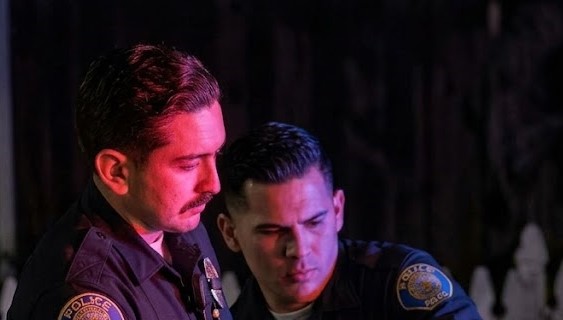
The video captured on a Santa Ana sidewalk on the night of October 1 was not a standard arrest; to anyone watching the viral footage, it looked less like police work and more like a street fight.

The footage—recorded by the sister of 28-year-old Florentino Junior Lopez—shows officers calling Lopez out from his front yard, citing his probation status. Moments later, following a brief verbal exchange, an officer forcibly throws Lopez to the pavement before initiating a barrage of punches and knee strikes, joined quickly by his partner. As backup arrived, officers took steps to obstruct bystanders from filming rather than de-escalating the scene, a clear violation of California’s Right to Observe and Record Act (SB 95).

For long-time residents, the scene carries echoes of the 1991 Rodney King beating—a reminder of what happens when police authority devolves into brute force.

What followed at City Hall was equally telling. Within just five days, Mayor Valerie Amezcua, Police Chief Robert Rodriguez, and City Councilmembers Phil Becerra and David Penaloza addressed the incident, calling for reviews and independent oversight.

While a swift response is necessary, the timing cannot be ignored. With municipal elections just weeks away and key council seats on the ballot, this sudden urgency feels less like systemic reform and more like damage control. For years, Santa Ana’s political leadership has operated under the heavy backing of the Santa Ana Police Officers Association (SAPOA). When public outrage threatens electoral success, rhetoric changes overnight—but real accountability requires more than press releases issued during an election cycle.

The issues facing Santa Ana extend beyond a single arrest. As regional federal law enforcement and ICE operations expand across Orange County, residents are left wondering where local leadership stands on protecting community members. True public safety requires leaders who uphold constitutional standards, enforce department policy, and stand up for residents’ rights every day—not just when an election is around the corner.

Santa Ana voters must ask themselves a critical question before filling out their ballots: Are city leaders protecting the community, or are they protecting the status quo until the polls close?

CBS LA: Video shows Santa Ana police officers beating a man during arrest

This local news report covers the viral video of the October 1 arrest, detailing the community reaction and the Santa Ana Police Department’s internal investigation.
BÀI XÃ LUẬN: Khi Trách Nhiệm Áp Dụng Mang Tính Chính Trị, Công Lý Sẽ Bị Tầm Với

Santa Ana Police Assault

Đoạn video ghi lại trên một vỉa hè ở Santa Ana vào tối ngày 1 tháng 10 không phải là một vụ bắt giữ thông thường; đối với bất kỳ ai xem đoạn phim lan truyền này, nó giống một cuộc ẩu đả trên đường phố hơn là công việc của cảnh sát.

Đoạn phim—do chị gái của Florentino Junior Lopez, 28 tuổi, ghi lại—cho thấy các sĩ quan gọi Lopez ra khỏi sân trước nhà ông, đưa ra lý do về tình trạng quản chế của ông. Ít phút sau, sau một cuộc trao đổi ngắn bằng lời nói, một sĩ quan đã vật mạnh Lopez xuống mặt đường trước khi tung ra hàng loạt cú đấm và cú lên gối, và đồng nghiệp của ông ta cũng nhanh chóng tham gia. Khi lực lượng viện trợ đến, các sĩ quan đã có hành động cản trở người dân xung quanh quay phim thay vì hạ nhiệt tình hình, vi phạm rõ ràng Đạo luật Quyền Báo cáo và Ghi hình của California (SB 95).

Đối với những cư dân lâu năm, cảnh tượng này gợi nhớ đến vụ đánh đập Rodney King năm 1991—một lời nhắc nhở về những gì xảy ra khi quyền lực cảnh sát biến thành bạo lực thô bạo.

Những gì diễn ra tiếp theo tại Tòa thị chính cũng đáng suy ngẫm không kém. Chỉ trong vòng năm ngày, Thị trưởng Valerie Amezcua, Cảnh sát trưởng Robert Rodriguez, cùng các Ủy viên Hội đồng Thành phố Phil Becerra và David Penaloza đã lên tiếng về vụ việc, kêu gọi xem xét lại và giám sát độc lập.

Mặc dù phản ứng nhanh chóng là cần thiết, nhưng thời điểm diễn ra điều này không thể bị ngó lơ. Khi các cuộc bầu cử cấp thành phố chỉ còn vài tuần nữa và các ghế hội đồng quan trọng đang nằm trên lá phiếu, sự cấp bách đột ngột này giống như một biện pháp kiểm soát thiệt hại hơn là một cuộc cải cách mang tính hệ thống. Trong nhiều năm, bộ máy lãnh đạo chính trị của Santa Ana đã hoạt động dưới sự hỗ trợ mạnh mẽ của Hiệp hội Sĩ quan Cảnh sát Santa Ana (SAPOA). Khi làn sóng phẫn nộ của công chúng đe dọa đến kết quả bầu cử, tuyên bố có thể thay đổi chỉ sau một đêm—nhưng trách nhiệm giải trình thực sự đòi hỏi nhiều hơn là các thông cáo báo chí được phát đi trong một kỳ bầu cử.

Các vấn đề mà Santa Ana đang đối mặt không chỉ dừng lại ở một vụ bắt giữ đơn lẻ. Khi các hoạt động của lực lượng hành pháp liên bang và Cơ quan Thực thi Di trú và Hải quan (ICE) mở rộng khắp Quận Cam, người dân phải đặt câu hỏi về lập trường của lãnh đạo địa phương trong việc bảo vệ các thành viên cộng đồng. An toàn công cộng thực sự đòi hỏi những nhà lãnh đạo luôn tôn trọng các tiêu chuẩn hiến pháp, thực thi chính sách của cơ quan và bảo vệ quyền lợi của người dân mỗi ngày—chứ không chỉ khi cuộc bầu cử đang đến gần.

Cử tri Santa Ana phải tự hỏi một câu hỏi quan trọng trước khi điền vào lá phiếu của mình: Các nhà lãnh đạo thành phố đang bảo vệ cộng đồng, hay họ đang bảo vệ trạng thái nguyên trạng cho đến khi các phòng phiếu đóng cửa?

CBS LA: Video cho thấy các sĩ quan cảnh sát Santa Ana đánh đập một người đàn ông trong lúc bắt giữ

Bản tin thời sự địa phương này đưa tin về đoạn video lan truyền về vụ bắt giữ ngày 1 tháng 10, chi tiết về phản ứng của cộng đồng và cuộc điều tra nội bộ của Sở Cảnh sát Santa Ana.

EDITORIAL: CUANDO LA RENDICIÓN DE CUENTAS ES POLÍTICA, LA JUSTICIA PERMANECE FUERA DE ALCANCE

Santa Ana PD Assaulted a Man

El video grabado en una acera de Santa Ana la noche del 1 de octubre no fue un arresto rutinario; para cualquiera que haya visto las imágenes virales, se parecía menos a un trabajo policial y más a una pelea callejera.

Las imágenes—grabadas por la hermana de Florentino Junior López, de 28 años—muestran a los oficiales llamando a López desde su jardín delantero, citando su condición de libertad condicional. Momentos después, tras un breve intercambio verbal, un oficial arroja por la fuerza a López contra el pavimento antes de iniciar una ráfaga de puñetazos y rodillazos, a los que rápidamente se suma su compañero. A medida que llegaba el apoyo, los oficiales tomaron medidas para obstruir que los transeúntes filmaran en lugar de desescalar la escena, una clara violación de la Ley del Derecho a Observar y Grabar de California (SB 95).

Para los residentes de muchos años, la escena trae recuerdos de la golpiza a Rodney King en 1991: un recordatorio de lo que sucede cuando la autoridad policial degenera en fuerza bruta.

Lo que siguió en el Ayuntamiento fue igualmente revelador. En tan solo cinco días, la alcaldesa Valerie Amezcua, el jefe de policía Robert Rodríguez y los concejales Phil Becerra y David Penaloza abordaron el incidente, pidiendo revisiones y supervisión independiente.

Si bien es necesaria una respuesta rápida, no se puede ignorar el momento en que ocurre. A solo unas semanas de las elecciones municipales y con escaños clave del concejo en la papeleta, esta repentina urgencia se siente menos como una reforma sistémica y más como un control de daños. Durante años, el liderazgo político de Santa Ana ha operado bajo el fuerte respaldo de la Asociación de Oficiales de Policía de Santa Ana (SAPOA, por sus siglas en inglés). Cuando la indignación pública amenaza el éxito electoral, la retórica cambia de la noche a la mañana; pero una verdadera rendición de cuentas requiere algo más que comunicados de prensa emitidos durante un ciclo electoral.

Los problemas que enfrenta Santa Ana van más allá de un solo arresto. A medida que las operaciones regionales de las fuerzas del orden federales y del ICE se expanden por el condado de Orange, los residentes se preguntan dónde se posiciona el liderazgo local con respecto a la protección de los miembros de la comunidad. La verdadera seguridad pública requiere líderes que defiendan los estándares constitucionales, hagan cumplir la política del departamento y defiendan los derechos de los residentes todos los días, no solo cuando las elecciones están a la vuelta de la esquina.

Los votantes de Santa Ana deben hacerse una pregunta crítica antes de llenar sus papeletas: ¿Están los líderes de la ciudad protegiendo a la comunidad, o están protegiendo el statu quo hasta que cierren las urnas?

CBS LA: Video muestra a oficiales de policía de Santa Ana golpeando a un hombre durante un arresto

Este informe de noticias locales cubre el video viral del arresto del 1 de octubre, detallando la reacción de la comunidad y la investigación interna del Departamento de Policía de Santa Ana.

Editorial: Systemic Gatekeeping and the Political Mechanics of Homelessness in Santa Ana

Homelessness In Santa Ana

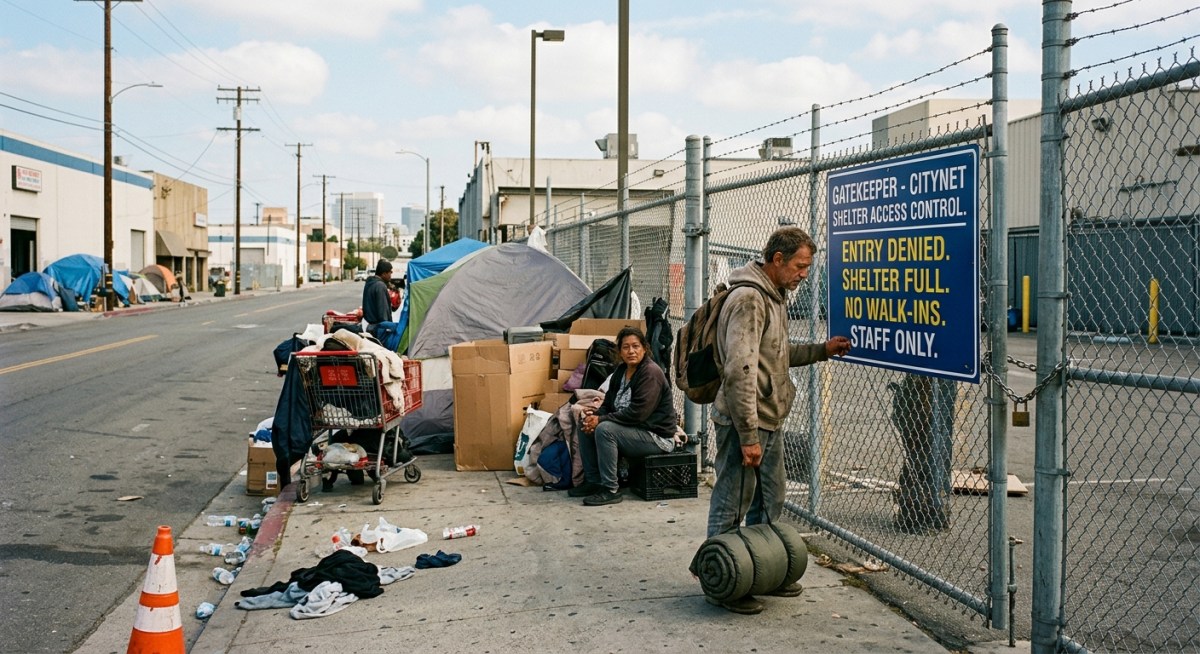
Santa Ana’s approach to unhoused management has undergone a structural transformation over the past decade. The shift from open-access intake managed by community-based non-profits to a centralized dispatch model governed by City Net has fundamentally altered how services are accessed on the ground. Where organizations like Mercy House or Illumination Foundation once handled walk-in intake directly, shelter placement now flows exclusively through a closed referral loop managed by contract outreach teams.

This referral-only framework restricts direct walk-in placement at municipal and regional facilities, requiring a formal assessment from City Net or law enforcement.

The Referral Bottleneck and Institutional Gatekeeping

The centralization of intake under City Net established a strict operational filter for shelter entry:

  • Field Constraints for Law Enforcement: Non-emergency calls and field contacts handled by police officers are funneled into City Net‘s dispatch system. Officers cannot directly place individuals into shelter beds without navigating this centralized pipeline.
  • Elimination of Walk-In Access: Unhoused residents attempting to seek shelter independently are turned away at facility gates. Entry depends entirely on field identification and documentation by contract outreach workers.
  • Controlled Capacity Metrics: By routing all intake through a single entity, municipal leadership retains control over capacity data, prioritizing individuals with verified local ties while limiting visible gathering around service hubs.

Political Rhetoric vs. Operational Realities

As municipal leaders frame homelessness around public safety and street clearance metrics, the operational mechanics of the current intake system highlight a friction between political narrative and service delivery.

Public emphasis on clearing public spaces relies on an infrastructure designed to tightly regulate entry points. When municipal policy pairs strict enforcement of anti-camping and public-space ordinances with a closed referral network, the result is a system that manages visibility rather than expanding immediate access.

Evaluating the structural dynamics of Santa Ana’s intake framework—specifically the transition from open-access non-profit care to centralized contract gatekeeping—provides an objective window into how municipal policy shapes the reality on the streets.

Editorial: The Paradox of Progress: Why Downtown Santa Ana Needs Proactive Leadership

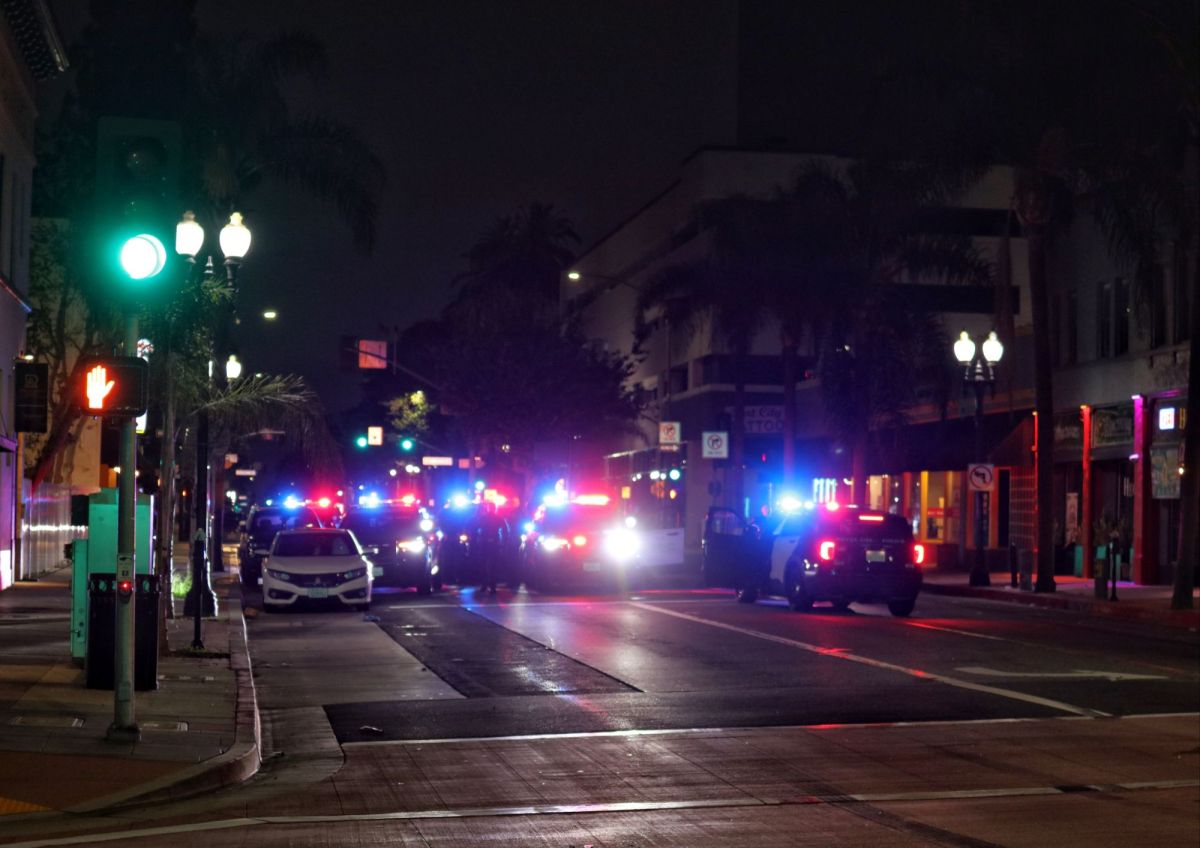
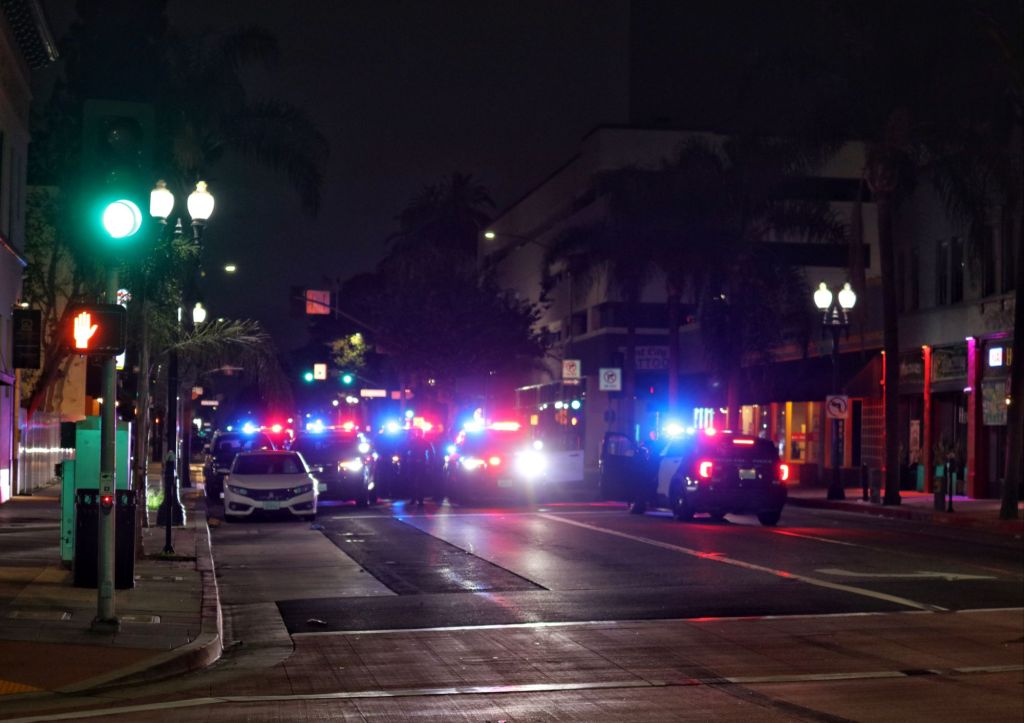
Santa Ana Police Department arrived to disperse the public.

Last night, the streets of Downtown Santa Ana were electrified by a singular, unifying force: a momentous soccer victory for Mexico. The atmosphere was unmistakable—a vibrant display of collective pride that transformed the urban landscape into a stage for celebration. From the resonance of live music to the fireworks illuminating the night sky, the energy was infectious. Neighbors emerged from their homes and local establishments, creating a scene of camaraderie that felt, for several hours, like a genuine community event.

However, as a documentarian and a long-time observer of this city, I find that such moments of euphoria often expose a troubling structural void. While the community’s spirit was high, the absence of logistical coordination and foresight from city officials was equally palpable. The night served as a stark case study in the risks of a “hands-off” approach to public gatherings.

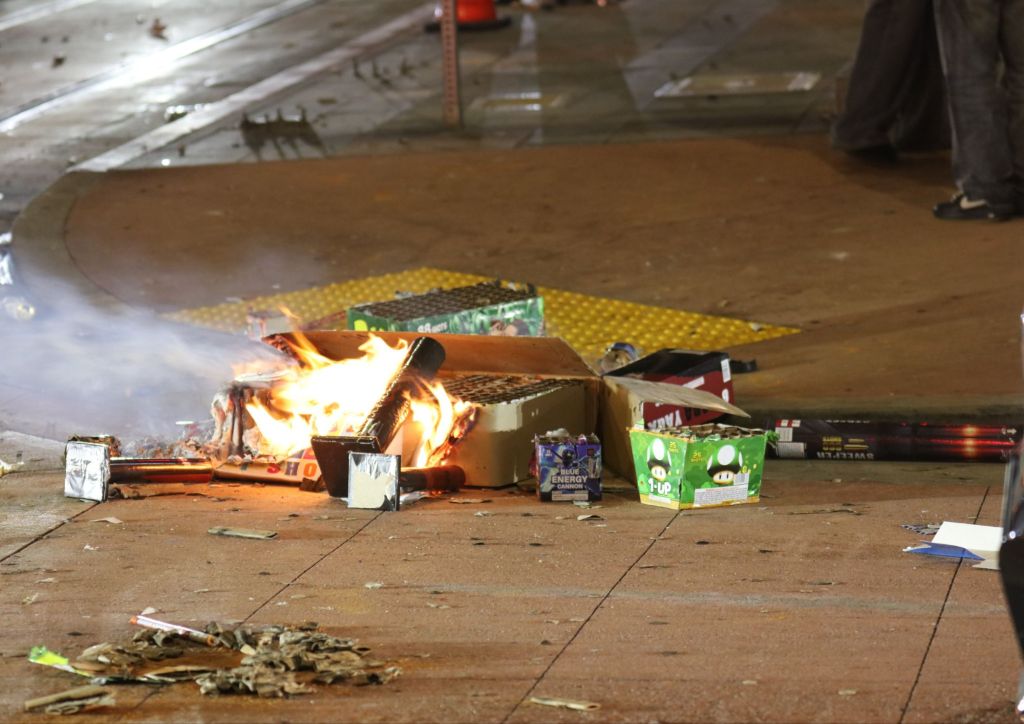
Fire on the corner of 4th/Bush

For the vast majority of the evening, the streets were left to manage themselves. In the absence of any visible official oversight, the atmosphere carried a volatile undercurrent. I personally had to intervene to de-escalate a physical altercation as tensions began to rise, and I observed a small fire burning on a street corner—minor incidents that were ultimately contained by the grace of the attendees themselves, but which underscore the instability of an unmanaged environment.

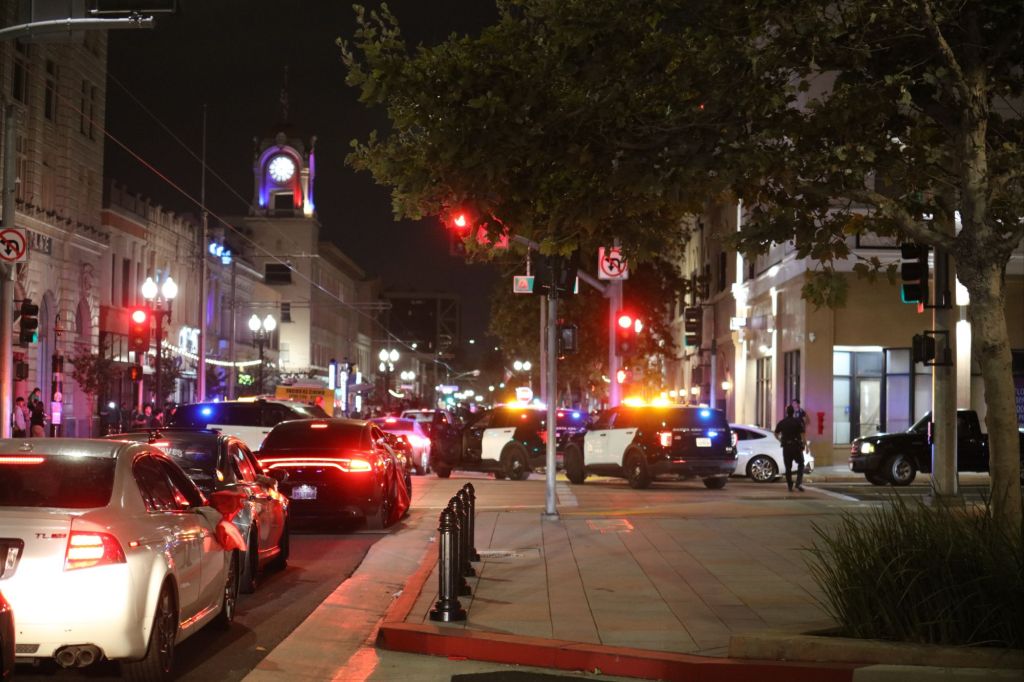
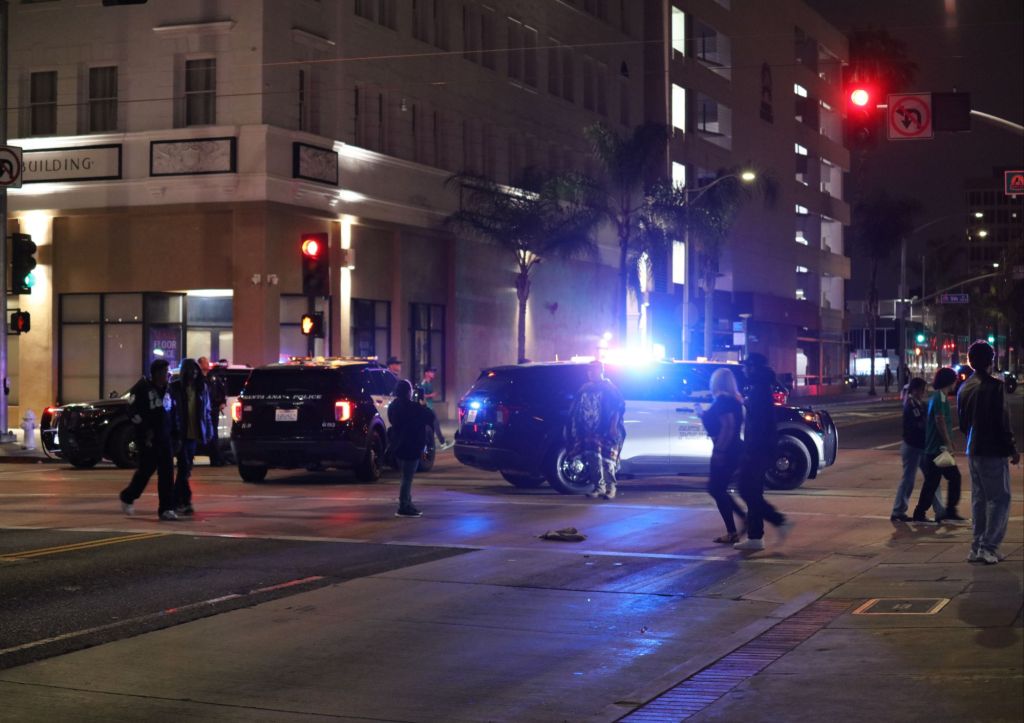
The transition from this “laissez-faire” state to enforced order was as jarring as it was predictable. Around 2:00 a.m., when the Santa Ana Police Department finally arrived to disperse the crowds, the atmosphere shifted instantly from festivity to tactical enforcement.

SAPD starting to disperse the public.

The shift revealed the fragility of the situation. While trying to clear the area, I found myself in the middle of a high-intensity police operation. Approximately six police units had a vehicle trained at gunpoint. As I prepared to exit the immediate vicinity, I encountered the same scene again; the officers were still there, weapons drawn, maintaining a perimeter around the vehicle. Moments later, on an adjacent block, the scene evolved further. I observed those same officers on foot, moving methodically and scanning the ground. One officer explained that they had given chase to suspects who had discarded an item while fleeing, and the officers were now scouring the area to recover it.

SAPD holding vehicle at gunpoint

This juxtaposition—a celebratory, unmanaged street scene colliding with high-stakes police operations—is a recipe for chaos. A policy that relies on total silence from city leadership until the early morning hours is not a safety strategy; it is a lack of one.

We cannot expect to cultivate a vibrant, event-driven downtown culture while maintaining a philosophy of reactive, rather than proactive, planning. If we want our streets to be safe for those who live and work here, city officials must pivot from silence to strategy. This requires a dedicated framework for public gatherings that balances the spontaneity of community celebration with the necessity of maintaining order. It is entirely possible to foster a festive environment while having a real plan in place, but that requires leadership, not just observation. We love the energy of our city, but we deserve the stability that comes with sound governance.