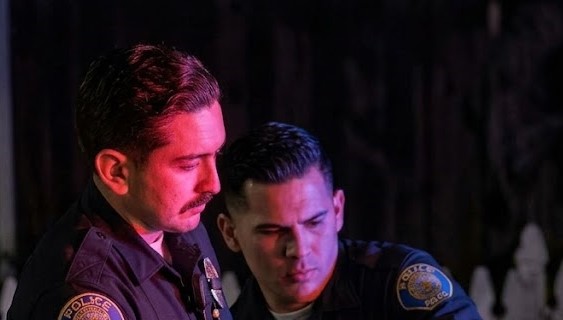
The video captured on a Santa Ana sidewalk on the night of October 1 was not a standard arrest; to anyone watching the viral footage, it looked less like police work and more like a street fight.
The footage—recorded by the sister of 28-year-old Florentino Junior Lopez—shows officers calling Lopez out from his front yard, citing his probation status. Moments later, following a brief verbal exchange, an officer forcibly throws Lopez to the pavement before initiating a barrage of punches and knee strikes, joined quickly by his partner. As backup arrived, officers took steps to obstruct bystanders from filming rather than de-escalating the scene, a clear violation of California’s Right to Observe and Record Act (SB 95).
For long-time residents, the scene carries echoes of the 1991 Rodney King beating—a reminder of what happens when police authority devolves into brute force.
What followed at City Hall was equally telling. Within just five days, Mayor Valerie Amezcua, Police Chief Robert Rodriguez, and City Councilmembers Phil Becerra and David Penaloza addressed the incident, calling for reviews and independent oversight.
While a swift response is necessary, the timing cannot be ignored. With municipal elections just weeks away and key council seats on the ballot, this sudden urgency feels less like systemic reform and more like damage control. For years, Santa Ana’s political leadership has operated under the heavy backing of the Santa Ana Police Officers Association (SAPOA). When public outrage threatens electoral success, rhetoric changes overnight—but real accountability requires more than press releases issued during an election cycle.
The issues facing Santa Ana extend beyond a single arrest. As regional federal law enforcement and ICE operations expand across Orange County, residents are left wondering where local leadership stands on protecting community members. True public safety requires leaders who uphold constitutional standards, enforce department policy, and stand up for residents’ rights every day—not just when an election is around the corner.
Santa Ana voters must ask themselves a critical question before filling out their ballots: Are city leaders protecting the community, or are they protecting the status quo until the polls close?
This local news report covers the viral video of the October 1 arrest, detailing the community reaction and the Santa Ana Police Department’s internal investigation.
The relationship between a citizen and the state is a fragile contract based on a single, unyielding condition: the law applies equally to everyone.
When an individual breaks a law, the state demands absolute accountability; the excuse of “I didn’t know” is dismissed outright by courts under the oldest legal doctrine in the book—ignorantia juris non excusat (ignorance of the law excuses no one). Yet, a quiet crisis of legitimacy unfolds across Orange County when that exact standard is flipped. We are increasingly witnessing a system where the very officials paid to enforce the rules—from sworn police officers to municipal code enforcement agents—operate with a stunning lack of precision regarding the laws they are tasked to uphold.
To watch a field officer fabricate a charge, guess at a statute, or hand out an arbitrary citation with the casual justification of “let the District Attorney or the traffic court sort it out” is to watch a system slide from law enforcement into state-sanctioned overreach.
It is a betrayal of public trust that forces a vital question: If the citizen must know the law to survive, how can we tolerate an enforcement apparatus that operates in the dark?
The Illusion of Authority
The title “Law Enforcement Officer” carries immense weight. In the eyes of the public, that badge signifies an expert in the rules of the game. But the institutional reality is far different.
Under current legal precedents, courts have carved out dangerous protections for official ignorance. Landmark rulings, like the Supreme Court’s decision in Heien v. North Carolina, explicitly state that an officer’s “objectively reasonable” mistake of law can still justify an arrest or a stop. In short, the judiciary has legalized a double standard: citizens are expected to have perfect legal knowledge, while enforcement officers are granted a margin of error for their ignorance.
This structural loophole creates a culture of administrative laziness. When a city or county treats enforcement as a volume game—focusing on the number of citations written, vehicles impounded, or arrests made—the nuance of the law is the first thing discarded. Field enforcement becomes mechanical, driven by a desire to control space rather than protect constitutional rights.
When Ignorance Crosses Into Perjury
There is a distinct legal boundary where genuine ignorance ends and criminal misconduct begins. When a local official utilizes their state-granted authority to intentionally twist a statute, misrepresent a fact on a police report, or invent a violation out of thin air, they are no longer making a mistake. They are operating under color of law to deprive an individual of their civil liberties.
A signed police report or an issued citation is not a casual piece of paper; it is an official declaration made under penalty of perjury. Passing the buck to the District Attorney’s office to act as a legal filter does not absolve the officer of the initial unlawful seizure.
The Standard of Accountability
Citizen: Must have perfect knowledge of the law. No excuses allowed.
Enforcement: Allowed “reasonable mistakes” of law, creating a structural double standard.
When local governments allow their agents to use the justice system as a trial-and-error experiment on the lives of everyday citizens, they expose themselves to deep systemic rot—and massive civil liability under federal civil rights laws.
Becoming the Mirror: The Citizen’s Mandate
If the institutions of Orange County—from city councils to county supervisors—refuse to mandate rigorous, continuous legal education for their enforcement personnel, then the burden of accountability inevitably shifts to the community.
We cannot afford to be passive consumers of authority. Forcing a government to respect its own boundaries requires a relentless, calculated response from the governed:
Objective Documentation: The camera has become the ultimate equalizer in modern civil rights. Openly and legally recording interactions with municipal officials strips away the institutional bias that historically protected official falsehoods.
Radical Transparency: Utilizing the California Public Records Act to drag internal training manuals, policy directives, and misconduct records into the sunlight prevents cities from hiding predatory or unconstitutional enforcement patterns.
Institutional Friction: Presenting documented evidence of overreach directly to local oversight boards, city council chambers, and independent journalist platforms turns isolated grievances into unavoidable public record.
The badge does not grant an official the right to write their own laws on the fly. Government power is a leased asset, strictly bounded by the text of the law and the consent of the people. When those who hold the handcuffs refuse to learn the rules, it is the fundamental duty of the public to act as a mirror—reflecting their overreach back onto them until compliance with the law is the only option left.
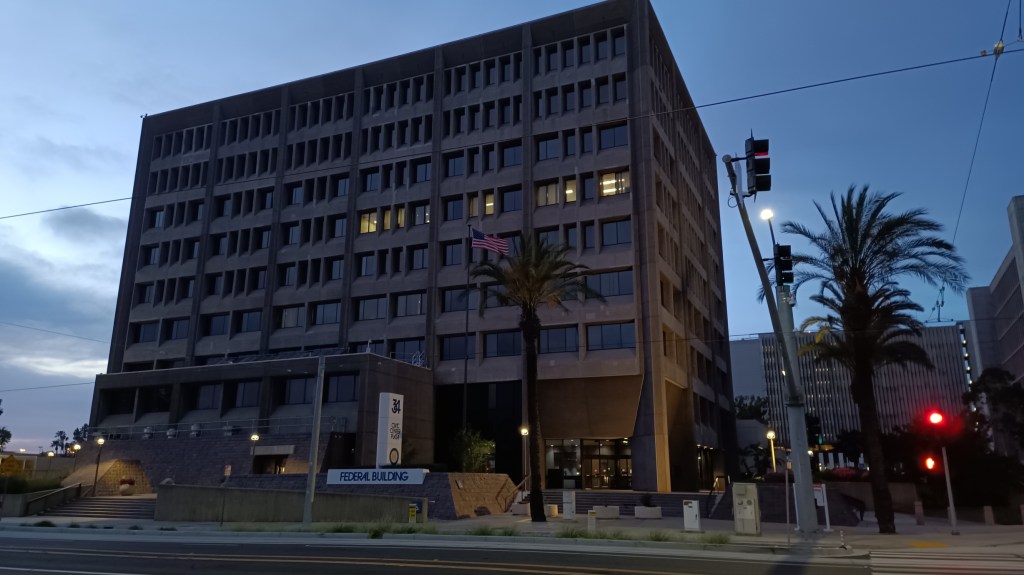
Vans used by DHS/ICE parked at the Federal Parking across from Federal Building (DHS) 34 Civic Center Plaza in Santa Ana
The quiet of a Tuesday morning on E 6th St, near N Parkcenter Dr was shattered at 7:45 a.m. by a scene that has become a recurring nightmare for the residents of Santa Ana. A 21-year-old woman, simply walking to work, found herself fighting to avoid being pulled into a dark blue van by two men. She escaped, but the trauma remains—as do the haunting questions about who was behind the wheel.
While the Santa Ana Police Department has correctly classified this as an attempted abduction, we cannot ignore the geographical and tactical context of our city. This incident occurred mere blocks from the federal hub at 34 Civic Center Plaza. In a city that has fought long and hard to establish transparency and “Sanctuary City” protections, the line between a criminal kidnapping and an uncoordinated federal “pickup” has become dangerously thin.
The “Rogue” Variable
The proximity to the federal building raises a legitimate concern: were these DHS/ICE Federal Rogue Agents? In the current climate of mass deportation sweeps and aggressive federal posturing, we are seeing a breakdown in “deconfliction”—the process by which federal agencies notify local police of their operations.
When agents operate without the knowledge or consent of local authorities, failing to identify themselves or follow municipal safety protocols, they are, by definition, operating rogue. To a civilian on the street, there is no functional difference between a predatory criminal and an unidentified federal agent ignoring due process. Both represent a terrifying breach of the public trust.
Federal Building (DHS) 34 Civic Center Plaza in Santa Ana just block away from the attempted kidnapping.
A Pattern of Shadow Operations
We have already seen the tension boiling over at the Civic Center this year. From the City lowering flags to half-staff in January to honor victims of federal enforcement, to SAPD command staff reportedly refusing calls for assistance from DHS during local protests, the rift is widening.
If DHS or ICE personnel are now utilizing unmarked blue vans to snatch residents off the pavement without local notification, they are not just “enforcing the law”—they are endangering the public and bypassing the very Transparency and Outreach Policy that Santa Ana residents rely on for protection.
Demand for Accountability
The Santa Ana City Council and the SAPD must now put our local policies to the test. We have the technology—Automated License Plate Readers (ALPRs) and an extensive network of city-owned cameras—to track that dark blue van.
If the van is traced back to a federal agency, the city must demand to know:
Why were these agents operating without notifying local dispatch?
Were these agents acting under official orders, or was this a “wildcat” operation by rogue elements?
If this was a case of “mistaken identity,” why has there been no public accountability?
Until these questions are answered, the “Architecture of Silence” in our city only grows taller. We cannot allow Santa Ana to become a hunting ground where “official” federal business is indistinguishable from a kidnapping. Our residents deserve to walk to work without wondering if the next unmarked van holds a criminal or a rogue agent operating in the shadows.
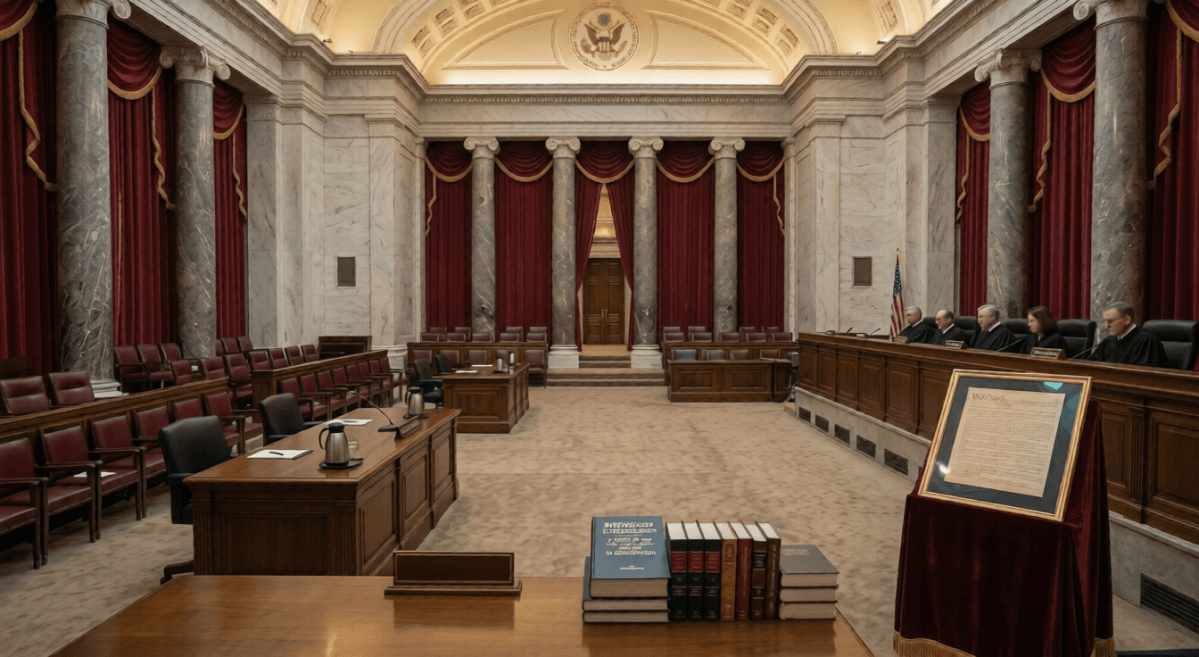
While the justices in Washington D.C. weigh the technicalities of the 14th Amendment, the view from the streets of Santa Ana, Anaheim, and Westminster is far more personal. In Orange County, citizenship isn’t just a legal status; it is the silent engine of our economy and the glue of our neighborhoods. If the Supreme Court moves to dismantle birthright citizenship, they aren’t just changing a rule—they are pulling the plug on the civic life of our county.
The Nightmare of Retroactive Doubt
The most terrifying aspect of this debate isn’t about who arrives tomorrow; it’s about who has been here for decades. Orange County is home to families three and four generations deep. These are people who have never held a foreign passport, who pay into our tax system, and who have built their lives on the bedrock of a U.S. birth certificate.
If that birthright is revoked or “re-verified” based on the status of one’s parents, we are inviting a bureaucratic catastrophe. Imagine a 45-year-old nurse in Irvine or a grandfather in Fullerton suddenly being told their citizenship is “provisional” until they can produce their deceased parents’ residency papers from 1980. Records vanish, businesses close, and the basic trust that allows a community to function disappears.
An Institutional Heart Attack
The ripple effect would paralyze our local government. Our public institutions are staffed by the very people this ruling would target.
Law Enforcement: In the OC Sheriff’s Department and our local police forces, hundreds of officers are the American-born children of immigrants. To question their status is to decimate our front-line public safety. Does a veteran sergeant lose his badge because of his parents’ paperwork?
The Bench and the Bar: Our legal system relies on finality. If a judge’s or prosecutor’s citizenship is called into question, every conviction they secured and every ruling they signed becomes a target for litigation. We would see the wheels of justice in Santa Ana grind to a permanent, expensive halt.
The Classroom: Our schools would lose teachers and administrators who have spent their lives pouring into the next generation, only to be sidelined by an administrative identity crisis.
The High Cost of Exclusion
Beyond the logistics, there is the human toll. We are talking about turning our neighbors into “stateless” people—men and women who belong nowhere else but here. When you tell a significant portion of your population that their roots are no longer valid, you don’t get a more “secure” county; you get a fractured one. You get a community where people are afraid to report crimes, afraid to start businesses, and afraid to participate in the civic life that makes Orange County a leader in California.
Orange County has always been a place where people come to build something permanent. Whether they arrived four generations ago or were born at OC Global Medical Center last year, their contribution is what keeps us moving forward.
The Supreme Court is currently holding the “delete” key over the lives of thousands of our residents. For the sake of our economy, our safety, and our shared humanity, we must hope they understand that you cannot strengthen a nation by tearing out its heart.
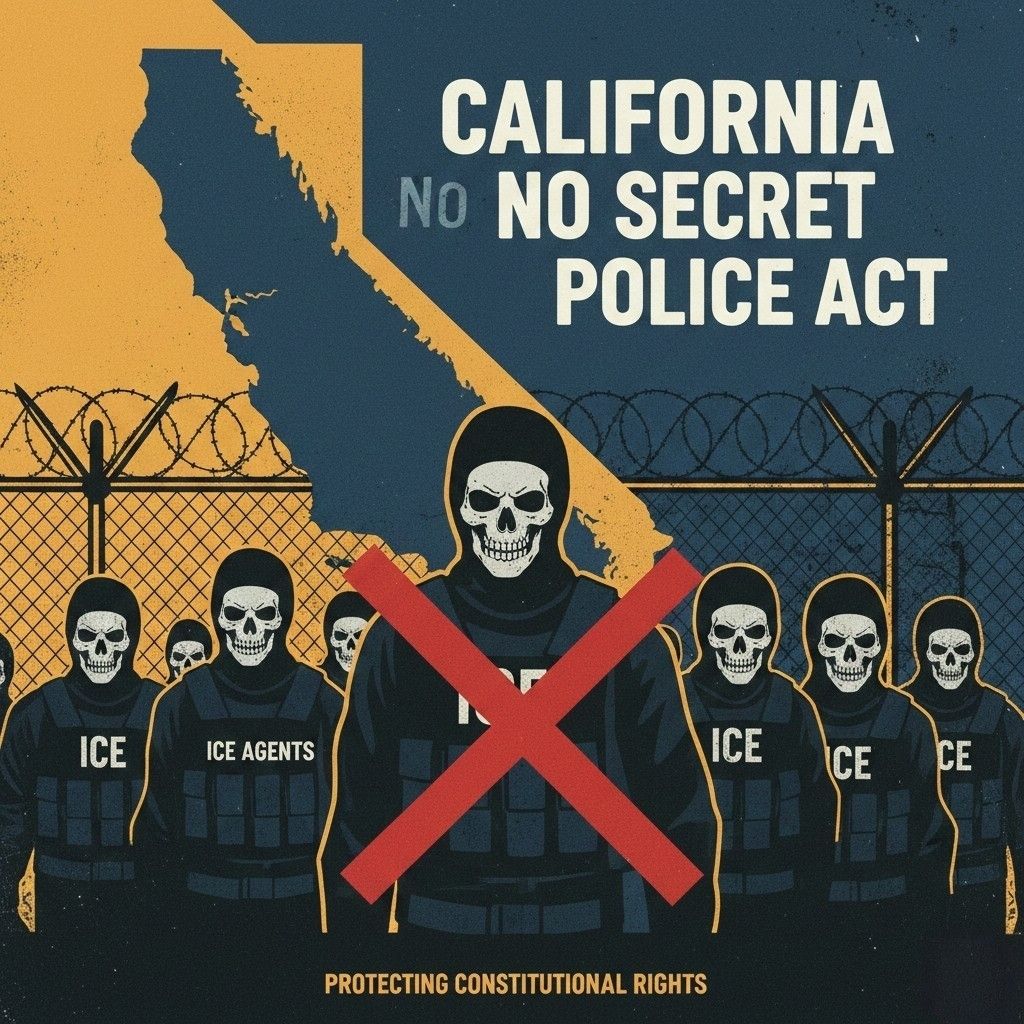
La “Ley de No Policía Secreta” – SB 627 entra en vigor a partir del 1 de enero de 2026.
La “Ley de No a la Policía Secreta”, una legislación revolucionaria que prohíbe a todos los agentes del orden público que trabajan en el estado, incluidos los agentes federales (como los de ICE o CBP) y el personal de otros estados, usar mascarillas que oculten su identidad mientras están de servicio, se implementó en California a partir del 1 de enero de 2026, de acuerdo con el Proyecto de Ley Senatorial 627. La prohibición se dirige particularmente a las mascarillas “extremas”, como pasamontañas o pasamontañas, que ocultan los rasgos faciales hasta el punto de que un agente no puede ser fácilmente reconocido por su nombre o número de placa.
La creciente preocupación pública por la posibilidad de que funcionarios federales no identificados llevaran a cabo operativos, en particular de control migratorio, en grandes ciudades de California, completamente enmascarados y sin ningún medio de identificación, condujo a la legislación. Los críticos compararon estos métodos con los utilizados en regímenes autoritarios, alegando que erosionaban la confianza de la comunidad y fomentaban el miedo en lugar de la seguridad. Al exigir que todas las personas que ejercen la autoridad policial en el estado sean claramente identificables, la SB 627 busca restablecer la rendición de cuentas.
Para el 1 de julio de 2026, todas las fuerzas del orden, incluyendo las locales, estatales, federales e incluso los grupos de trabajo visitantes de otros estados, deberán implementar y publicar políticas escritas que rijan el uso de mascarillas faciales de acuerdo con la nueva legislación. Como reflejo del serio propósito de la legislatura, las infracciones pueden dar lugar tanto a litigios civiles como a sanciones penales. No obstante, esta estrategia de cumplimiento ha suscitado preocupación: sobre todo en casos de alta visibilidad o sensibilidad política, los críticos advierten que la identificación de los agentes podría exponerlos al acoso en internet, la difusión de información personal o represalias.
La transparencia es esencial en una democracia, según sus defensores. Durante el debate del proyecto de ley, un asistente legislativo declaró: «Si el público no sabe quién lo vigila, no puede haber una policía responsable». La legislación también aborda una amenaza real: la posibilidad de que delincuentes se hagan pasar por agentes del orden. El proyecto de ley SB 627 busca eliminar la ambigüedad que podría facilitar el fraude o la violencia al aumentar la cantidad de videos virales que muestran a personas enmascaradas ejerciendo su autoridad.
Sin embargo, existe una oposición inmediata y firme a la legislación. En entornos donde los agentes federales se enfrentan a amenazas de cárteles, traficantes de personas o extremistas nacionales, el Departamento de Seguridad Nacional de EE. UU. (DHS) ha declarado inconstitucional la SB 627, alegando que les impide desempeñar sus responsabilidades de forma segura. El DHS ha indicado que planea impugnar la legislación en los tribunales bajo el concepto de primacía federal y sostiene que el estado no tiene jurisdicción sobre las acciones de las fuerzas del orden federales.
Este conflicto legal sienta las bases para una posible batalla constitucional en la Corte Suprema de Estados Unidos sobre el conflicto entre los derechos estatales y la autoridad federal. Mientras tanto, el audaz experimento de California sirve como un caso de prueba nacional: ¿Tiene un estado la autoridad para exigir transparencia a todos los que portan una placa en su territorio, independientemente de su jurisdicción?
Al redefinir los límites éticos y visuales de la policía contemporánea, la SB 627 tiene el potencial de servir de modelo para leyes similares en todo el país si recibe apoyo. En una época donde las fronteras entre la autoridad estatal y federal son cada vez más difusas, podría fortalecer los límites del poder estatal si se rechaza. En cualquier caso, California ha reabierto un debate crucial sobre quién vigila a los vigilantes y si se les debería permitir usar mascarilla.
Aunque este estatuto está formalmente en vigor a partir de enero de 2026, el Estado de California y el gobierno federal ahora están envueltos en una importante disputa legal al respecto.
Disposiciones principales de la Ley de No a la Policía Secreta (SB 627)
Prohibición de mascarillas: Prohíbe a los agentes del orden público locales y federales utilizar pasamontañas, máscaras de esquí o polainas para el cuello que cubran sus rostros mientras están de servicio.
Requisitos de identificación: Los uniformes, nombres o números de placa deben facilitar la identificación de los agentes del orden. La Ley de No Vigilantes (SB 805), que aborda en particular las tácticas de “policía secreta” empleadas en recientes redadas de inmigración, suele ir acompañada de esto.
Resultados de las infracciones:
Responsabilidad civil: Los oficiales que usan máscaras cuando cometen agravios (como arrestos falsos o asaltos) pierden algunas de sus protecciones legales (inmunidad calificada) y pueden estar sujetos a una multa civil mínima de $10,000.
Cargos criminales: El incumplimiento de la prohibición de usar mascarillas puede ser procesado como un delito menor.
Situación jurídica vigente (enero de 2026)
Debe tener en cuenta los siguientes cambios, aunque la legislación entró en vigor el 1 de enero de 2026:
Demanda federal: El Departamento de Justicia de los Estados Unidos (DOJ) presentó una demanda contra California, alegando que el estado no puede regular las acciones de los agentes federales (ICE, Patrulla Fronteriza). Afirman que esto contraviene la “Cláusula de Supremacía” de la Constitución.
Orden judicial temporal: A fines de diciembre de 2025, un tribunal federal (la jueza Christina A. Snyder) emitió una orden judicial temporal sobre la aplicación de ciertas disposiciones de la ley contra funcionarios federales mientras el caso está pendiente de sentencia.
Conflicto sobre el terreno: Algunos fiscales de distrito de California, como los de San Francisco, han dicho que planean aplicar la ley agresivamente e incluso han insinuado que la policía local podría arrestar a los agentes federales que violen estas leyes estatales.
Las excepciones de la ley
Aunque la ley tiene algunas restricciones sobre el uso de mascarillas, hay situaciones particulares en las que está permitido:
Operaciones Encubiertas: Con el fin de garantizar la seguridad de los agentes en posiciones encubiertas.
Equipo médico/táctico: Cascos tácticos estándar o máscaras de grado médico, como las N95, que se usan por razones de salud.
Incendio/Situaciones peligrosas: Máscaras que brindan protección física contra peligros ambientales.