Editorial: Starve the Machine: Why Communities Must Cut Off ICE’s Lifelines

Hands Up – Don’t Shoot!

Immigration and Customs Enforcement (ICE) continues to function in cities and towns throughout the United States with blatant contempt for constitutional principles, civil rights, and human dignity. The raids take place during the early hours of the morning. Parents disappear from school drop-offs. Workers are abducted from their workplaces—all without warrants, frequently without justification, and always with the unsettling effectiveness of an organization that believes it is accountable to no one.

However, the reality is that ICE operates on more than just power. It uses gas. Regarding coffee from the corner deli. The serene complicity of local business, parking places, and Wi-Fi are all available at rest stops. That is exactly where communities have the power and obligation to retaliate.
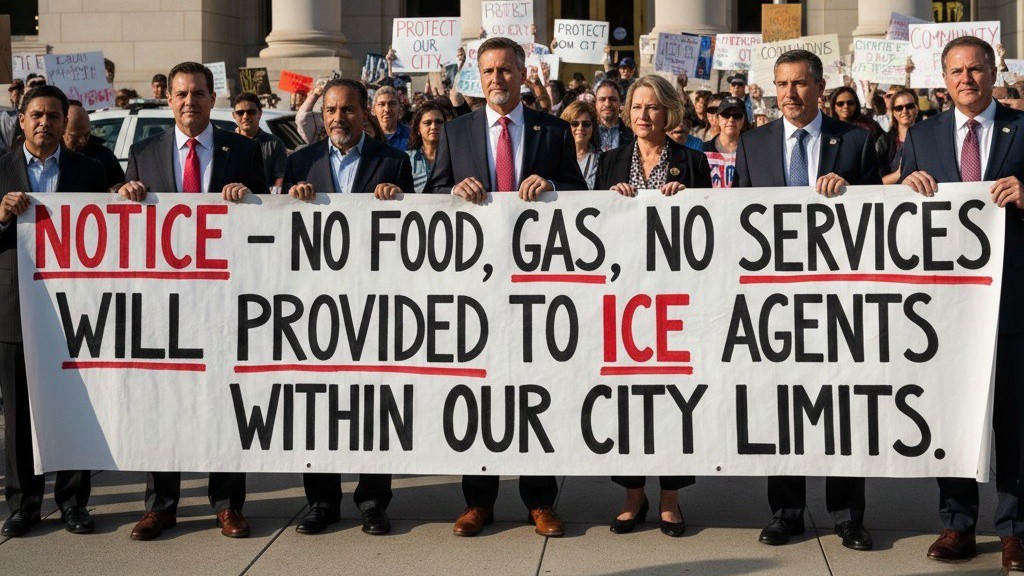
City Officials should be doing this as a Sanctuary City.

The concept is straightforward but has far-reaching consequences:  “If you don’t want ICE in your community, stop supporting it.”

Don’t sell gasoline to ICE vehicles that are marked or unlabeled. bar representatives for restaurants and restrooms. Tell local businesses: no contracts, no services, no silent support for a system that splits families apart and makes due process optional.

This isn’t vigilantism. It’s community self-defense.
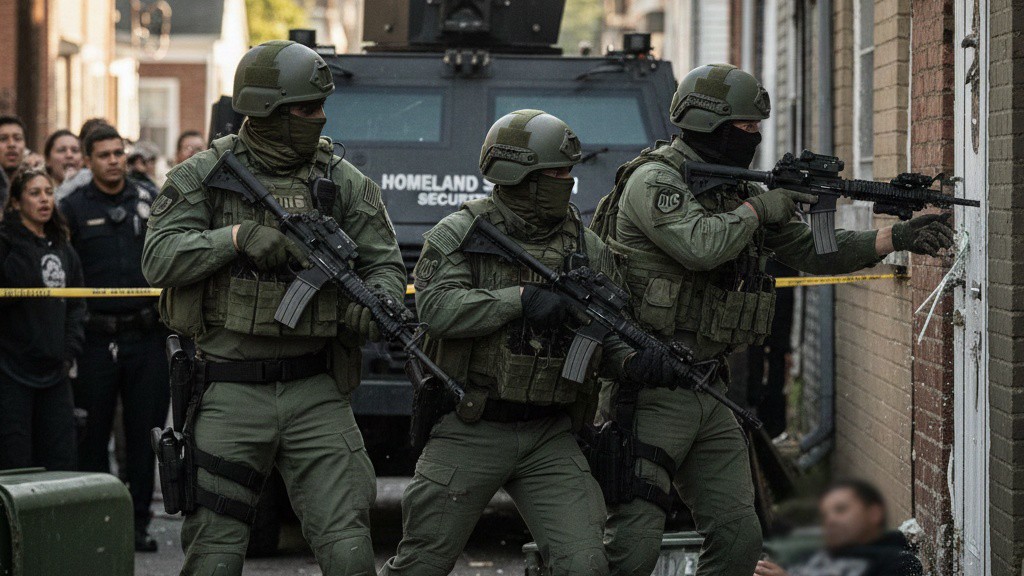
Unlawful Actions by DHS and ICE!

Such conduct, according to critics, “impedes federal law enforcement.” However, an agency loses the presumption of legitimacy when it regularly disregards the Fourth Amendment by entering houses without a warrant and the Fifth Amendment by arresting individuals without charges or access to a lawyer. ICE functions in a gray area made possible by indifference rather than legislation. Local companies become accessories to constitutional breaches every time a gas station fills an ICE van with gasoline or a restaurant provides breakfast to officers on their way to a raid, albeit unknowingly.

Although they are a beginning, sanctuary city statements are frequently symbolic. A genuine sanctuary is about the business owner who says, “Not on my property,” not about municipal hall resolutions. It’s about the community that collectively draws a line, saying, “You may have a badge, but you don’t have our consent.”

ICE has become the Enemy of The State as they are Attacking US Senators!

Others will contend that refusing service is un-American. However, it is undeniably un-American to permit a federal agency to arm local infrastructure against vulnerable neighbors while simultaneously asserting impunity. The Constitution does not cease to exist when someone’s immigration status changes, and it most certainly does not cease to exist when someone wears a DHS patch.

Moral resistance has always relied on disrupting the machinery of injustice—**not just condemning it, but starving it**—through the thousands of daily acts of ordinary people withdrawing their cooperation. History shows that oppressive regimes fall as a result of this withdrawal of cooperation, not just through courts or Congress. This withdrawal of cooperation has taken many forms, including divestment campaigns against apartheid and boycotts during the Civil Rights Movement.
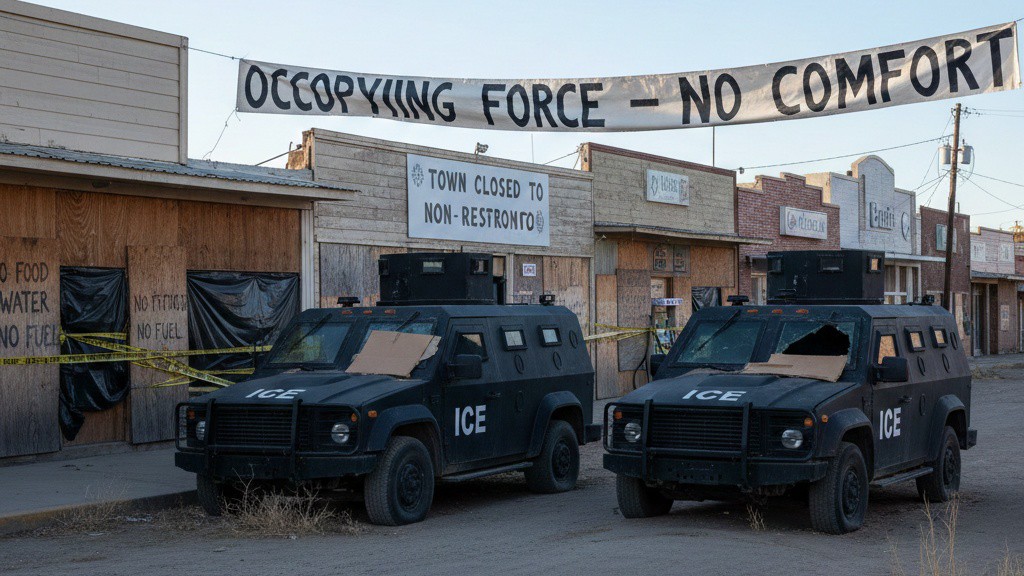
ICE is an Occupying Force to Oppress The People.

Therefore, to be clear, if ICE believes that it is above the Constitution, then communities are entitled to treat it as an occupying force, using complete non-cooperation rather than violence. No sustenance. No fuel. There are no restrooms. Not at all cozy. There isn’t a cover.

Make it logistically impossible for ICE to function in your city.

Sanctuary Cities, It’s time to start defending your residents,
YOUR COMMUNITY .

Make your city a genuine haven rather than just a “sanctuary” in name.

Because justice cannot be proclaimed. We are the ones who enforce it.

Editorial: ¿Las rotondas de Santa Ana hacen las calles más seguras o más peligrosas?

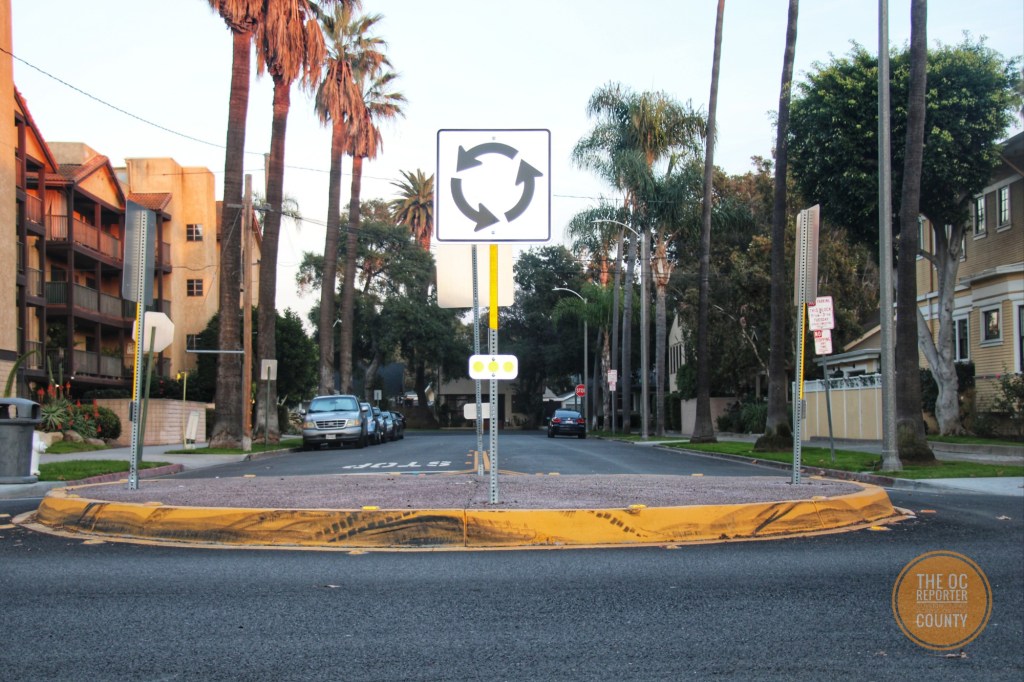
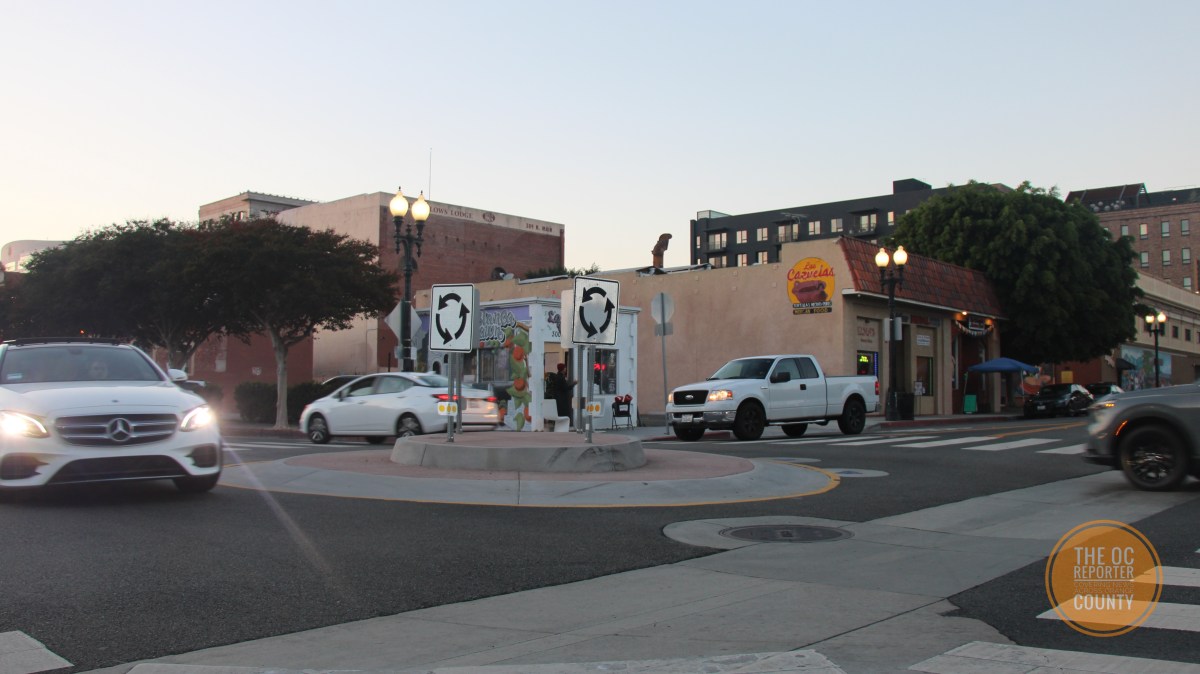
Foto de The OC Reporter/ ¿Seguridad o peligro en Santa Ana?

Las rotondas suelen considerarse una solución moderna a los problemas del tráfico urbano: reducen la velocidad de los vehículos, eliminan las colisiones transversales a alta velocidad y, en teoría, crean calles más tranquilas y seguras. Por eso, Santa Ana, al igual que muchas ciudades del país, las ha ido instalando poco a poco, desde corredores céntricos hasta tranquilas manzanas residenciales, como parte de una iniciativa más amplia de pacificación del tráfico.

Pero cuando una rotonda se encuentra cerca de un cruce peatonal donde un querido miembro de la comunidad es atropellado y muere, como le ocurrió a María Rubalcava de Ruesga, de 69 años, en las calles Bishop y Shelton en noviembre de 2025, no basta con citar las estadísticas nacionales. Los residentes se plantean preguntas urgentes y locales: ¿Funciona este diseño aquí? ¿Para quién? ¿Y a qué precio?

El accidente fatal, seguido pocos días después por una colisión de varios vehículos cerca de otra rotonda del centro, en las calles Bush y 8, ha intensificado las preocupaciones que venían latentes. Los vecinos reportan confusión, comportamiento errático al volante e incluso un aumento en la velocidad al circular por patrones circulares desconocidos. Una rotonda, que antes era una simple señal de alto de cuatro vías, se ha convertido en un lugar frecuente de cuasi accidentes, según informes locales.

Esto no significa que las rotondas sean intrínsecamente defectuosas. Datos de la Administración Federal de Carreteras e ingenieros de transporte muestran sistemáticamente que reducen los accidentes graves hasta en un 80 % en comparación con las intersecciones señalizadas. Pero el éxito depende de algo más que solo asfalto y pintura. Se basa en una señalización clara, una iluminación adecuada, cruces peatonales adecuados, educación vial y, fundamentalmente, la participación de la comunidad antes de que comience la construcción.

El compromiso de Santa Ana con Visión Cero —eliminar las muertes por accidentes de tránsito— es encomiable. Sin embargo, la infraestructura que prioriza el flujo vehicular sobre la claridad peatonal puede ser contraproducente, especialmente en vecindarios con personas mayores, niños y mucho tráfico peatonal.  Si los residentes se sienten menos seguros, es una señal que vale la pena tomar en cuenta.

Instamos a la Ciudad de Santa Ana a detenerse, escuchar y evaluar. Publicar datos de accidentes antes y después. Realizar una auditoría de seguridad de las rotondas recientemente instaladas. Organizar foros vecinales, no solo para dar explicaciones, sino también para el codiseño. La seguridad no se trata solo de métricas de ingeniería; se trata de si las personas se sienten seguras al caminar a la parada de autobús o cruzar la calle para visitar a un vecino.

Las rotondas pueden ser parte de un futuro más seguro, pero solo si se diseñan pensando en las personas, no solo en el tráfico.

— Consejo Editorial de The OC Reporter

Editorial: Are Santa Ana’s Roundabouts Making Streets Safer—or More Dangerous?

Photo by The OC Repoorter/ Safety or Hazard in Santa Ana?

Roundabouts are often hailed as a modern solution to urban traffic woes: they reduce vehicle speeds, eliminate high-speed T-bone collisions, and, in theory, create calmer, safer streets. That’s why Santa Ana, like many cities across the country, has been steadily installing them—from downtown corridors to quiet residential blocks—as part of a broader traffic-calming initiative.

But when a roundabout sits near a crosswalk where a beloved community member is struck and killed, as happened to 69-year-old Maria Rubalcava de Ruesga on Bishop and Shelton Streets in November 2025, it’s not enough to point to national statistics. Residents are asking urgent, localized questions: Is this design working here? For whom? And at what cost?

The fatal crash—followed just days later by a multi-vehicle collision near another downtown roundabout at Bush and 8th Streets—has amplified long-simmering concerns. Neighbors report confusion, erratic driver behavior, and even increased speeding as motorists navigate unfamiliar circular patterns. One roundabout, converted from a straightforward four-way stop, has become a frequent site of near-misses, according to local accounts.

This isn’t to say roundabouts are inherently flawed. Data from the Federal Highway Administration and transportation engineers consistently show they reduce severe crashes by up to 80% compared to signalized intersections. But success depends on more than just asphalt and paint. It hinges on clear signage, proper lighting, adequate pedestrian crossings, driver education—and, crucially, community input before construction begins.

Santa Ana’s commitment to Vision Zero—eliminating traffic deaths—is commendable. Yet infrastructure that prioritizes vehicle flow over pedestrian clarity can backfire, especially in neighborhoods with seniors, children, and high foot traffic. If residents feel less safe, that’s a signal worth heeding.

We urge the City of Santa Ana to pause, listen, and evaluate. Release before-and-after crash data. Conduct a safety audit of recently installed roundabouts. Host neighborhood forums—not just for explanation, but for co-design. Safety isn’t just about engineering metrics; it’s about whether people feel secure walking to the bus stop or crossing the street to visit a neighbor.

Roundabouts can be part of a safer future—but only if they’re designed with people, not just traffic, in mind.

— The OC Reporter Editorial Board

Residentes preocupados afirman que las nuevas rotondas representan riesgos para la seguridad en Santa Ana

Fotografía de The OC Reporter/ 3rd y Bush St – 1st Roundabout que Santa Ana instaló hace unos años y muchos accidentes casi fatales

Las rotondas han estado apareciendo en Santa Ana durante varios años, primero como instalaciones temporales, luego como elementos permanentes. El centro de la ciudad vio su primera rotonda en las calles Tercera y Bush, y en los últimos años, se han expandido a barrios residenciales como parte de la estrategia más amplia de la ciudad para moderar el tráfico.

Las autoridades municipales promocionan las rotondas como una medida de seguridad comprobada, citando estudios que demuestran que reducen la probabilidad de accidentes mortales y con lesiones graves en comparación con las intersecciones convencionales. Por su diseño, las rotondas reducen la velocidad de los vehículos y eliminan puntos de conflicto de alto riesgo, como giros a la izquierda y colisiones frontales, comunes en intersecciones con semáforos o con control de parada. Se espera que los conductores cedan el paso al tráfico circulante, reduzcan la velocidad al acercarse y señalicen antes de salir.

Foto de The OC Reporter/ El 19 de noviembre de 2025, María Rubalcava de Ruesga, de 69 años, fue atropellada y asesinada por un camión de basura mientras cruzaba donde está instalada una rotonda.

Pero algunos residentes ahora argumentan que estas mismas características están creando nuevos peligros.  El 19 de noviembre de 2025, María Rubalcava de Ruesga, de 69 años, fue atropellada y falleció por un camión de basura mientras cruzaba un cruce peatonal cerca de la intersección de las calles Bishop y Shelton, donde se instaló una rotonda hace aproximadamente un año. El Departamento de Policía de Santa Ana está investigando el accidente, y los vecinos han expresado su preocupación de que la disposición de la rotonda pueda estar contribuyendo a condiciones peligrosas tanto para peatones como para conductores.

Menos de dos semanas después, otro accidente grave ocurrió en las cercanías. Según un registro de despacho de la OCFA del 28 de noviembre de 2025, a las 23:56, varios vehículos colisionaron en la intersección de las calles North Bush y East 8th, el mismo corredor que la rotonda del centro. Unidades de la División 6, incluyendo el Batallón 9, la Unidad de Motor 75 y el Camión 75, acudieron al lugar. 

Foto de The OC Reporter/varios vehículos chocaron en la intersección de North Bush Street y East 8th Street

Los residentes de la zona reportan un aumento en el exceso de velocidad y confusión sobre las normas de derecho de paso, particularmente en una rotonda que reemplazó una antigua intersección de cuatro vías. Algunos afirman que el cambio ha vuelto la intersección más caótica, no más segura, aunque la ciudad no ha publicado datos oficiales de accidentes que comparen las condiciones antes y después de la instalación.

Fotografía de The OC Reporter/ Señales de conductores corriendo hacia la rotonda en 9th y Spurgeon.

Mientras Santa Ana continúa modernizando las intersecciones con rotondas para mejorar la seguridad del vecindario, los miembros de la comunidad solicitan una revisión más exhaustiva de su diseño, ubicación e impacto, especialmente en zonas con alta actividad peatonal.

Concerned Residents Say New Roundabouts Pose Safety Risks in Santa Ana

Photo by The OC Repoorter/ 3rd and Bush St – 1st Roundabout that Santa Ana installed a few years ago and many near misses of accidents

Roundabouts have been appearing across Santa Ana for several years—first as temporary installations, then as permanent fixtures. The downtown area saw its first roundabout at Third and Bush Streets, and in recent years, they’ve expanded into residential neighborhoods as part of the city’s broader traffic-calming strategy.

City officials tout roundabouts as a proven safety measure, citing studies showing they reduce the likelihood of fatal and serious injury crashes compared to conventional intersections. By design, roundabouts slow vehicle speeds and eliminate high-risk conflict points—like left-turn and head-on collisions—common at signalized or stop-controlled intersections. Drivers are expected to yield to circulating traffic, reduce speed on approach, and signal before exiting.

Photo by The OC Repoorter/ On November 19, 2025, 69-year-old Maria Rubalcava de Ruesga was struck and killed by a trash truck while crossing where a roundabout is installed.

But some residents now argue that these very features are creating new dangers.  

On November 19, 2025, 69-year-old Maria Rubalcava de Ruesga was struck and killed by a trash truck while crossing at a crosswalk near the intersection of Bishop and Shelton Streets—a location where a roundabout was installed about a year ago. The Santa Ana Police Department is investigating the crash, and neighbors have voiced concerns that the roundabout’s layout may be contributing to hazardous conditions for pedestrians and drivers alike.

Less than two weeks later, another serious crash occurred nearby. According to an OCFA dispatch log from November 28, 2025, at 11:56 p.m., multiple vehicles collided at the intersection of North Bush Street and East 8th Street—the same corridor as the downtown roundabout. Units from Division 6, including Battalion 9, Engine 75, and Truck 75, responded to the scene.

Photo by The OC Repoorter/ multiple vehicles collided at the intersection of North Bush Street and East 8th Street

Residents in the area report increased speeding and confusion around right-of-way rules, particularly at a roundabout that replaced a former four-way stop. Some say the change has made the intersection more chaotic, not safer—though the city has not released official crash data comparing conditions before and after installation.

Photo by The OC Repoorter/ Signs of drivers running into the roundabout on 9th and Spurgeon.

As Santa Ana continues to retrofit intersections with roundabouts in an effort to improve neighborhood safety, community members are calling for a closer review of their design, placement, and impact—especially in areas with high pedestrian activity.