Editorial: The Fractures Behind the Glass

Old Clock Tower at 4th and Sycamore

The clock at 4th and Sycamore stands as a silent sentinel over downtown Santa Ana, its hands frozen in a permanent state of arrested development. Most residents pass it without a second glance, but a closer look—the kind of look afforded only by those willing to document the uncomfortable—reveals deep, radiating cracks in its frosted glass. These are not just signs of age; they are a metaphor for a municipal structure that is crumbling while those at the top look the other way.

Nowhere are these fractures more evident than in the administration of Mayor Valeria Amezcua.

A Failure of Leadership

For a city as vibrant and complex as Santa Ana, leadership requires more than just holding a gavel; it requires the courage to address the structural decay within City Hall. Yet, under Mayor Amezcua’s tenure, the “cracks” have only deepened. The administration has become increasingly defined by its alignment with the Santa Ana Police Officers Association (SAPOA), creating a feedback loop that prioritizes special interests over the needs of the everyday people who walk these streets.

The Institutional Chain

The decay follows a clear path from the street level to the highest office:

  • The SAPOA Influence: The political weight of the police union continues to exert an outsized influence on city policy, often at the expense of genuine police accountability.
  • The Police Department: Structural issues within the department remain unaddressed, shielded by a lack of transparent oversight from the council.
  • The Council and Mayor: At the top of this chain sits a Mayor and a City Council that seem content to let the mechanism of government remain broken, provided the facade remains intact.

Documenting the Truth

Just as a photographer captures the “Architecture of Silence”—the metaphysical and structural transitions that others ignore—we must capture the reality of our local government. The cracks in the clock at 4th and Sycamore are bothersome because they represent a choice: the choice to ignore history and allow the foundation of our city to erode.

Mayor Amezcua has failed to be the leader who picks up the tools to fix these breaks. Instead, she presides over a system where transparency is sacrificed for political convenience. As independent oversight and public records requests continue to peel back the layers of municipal citation procedures and data privacy issues, the public is starting to see what has been hidden in plain sight.

It is time to stop walking past the decay. If the government refuses to fix the cracks, it falls upon the people to document them until they can no longer be ignored.

Editorial: The 1972 Collision

The narrative of the 2014 Civic Center bicycle case is no longer just a local story of one man versus a ticket; it has become a case study in how grassroots pressure can predict—and eventually force—statewide reform.

When I took my seat in Department C46 of the Central Justice Center in July 2014, I wasn’t just defending a $400 citation. I was exposing a structural flaw in Orange County’s “bottom-up” policing. Here is an editorial perspective on that journey from the Civic Center to the State Capitol.

By Igmar Rodas – Editor in Chief at The OC Reporter

Circa 2014 – Bicycle used to make the Bicycle Registration City Ordinance from 1972, Obsolete in July 2014.

The Ghost in the Machine

For forty-two years, a ghost lived in the Santa Ana municipal code. Enacted in 1972, the mandatory bicycle registration ordinance was a “silent” law. It wasn’t designed for safety or theft prevention—it was designed as a tool for contact. It sat in the books, largely unknown to the 330,000 residents of the city, until it was needed to justify a stop in the Civic Center.

In 2014, that ghost met a man born the same year the law was written.

The Set-Up and the “Scapegoat”

The battle wasn’t an accident; it was an extraction. After months of documenting the harassment of the homeless and poor—who were often cited for the “crime” of riding an unlicensed bike—the lines were drawn. When I told the officers I was going to buy a bike and dared them to cite me, I was forcing the system to reveal its hand.

When the citation finally came, the irony of the “Architecture of Silence” was on full display. In court, Officer S. Lopez was the one left to defend the indefensible. By turning that bicycle upside down without consent, the department didn’t just find a missing sticker; they found a Fourth Amendment violation. Judge James Crandall’s ruling was the first crack in a wall that had stood for decades.

From Santa Ana to the State Capitol

At the time, our victory felt local. We forced the Santa Ana City Council to admit the law was “idiotic” and repeal it within weeks. But look at where we are now.

In 2022, the State of California finally caught up to what we proved in a Santa Ana courtroom eight years earlier. Assembly Bill 1909 (The Bicycle Omnibus Bill) finally prohibited any city in the state from requiring bicycle registration. The state legislature eventually realized what we already knew: these laws were rarely about bikes and almost always about the “selective harassment” of people law enforcement deemed “undesirable.”

The Long Game of the “Watcher”

To the younger activists today who want rapid results: remember the 1972 ordinance. It took 42 years to build that wall, 8 years for the state to follow our lead, and one man on a bicycle to prove it was hollow.

When we say “start from the bottom,” this is what we mean. You don’t always need to change the Mayor to change the city. Sometimes, you just need to flip the bike over and show the world that the foundation is made of sand.

Key Comparisons: Then vs. Now

EraThe 1972 Ordinance (2014)The AB 1909 Reality (2026)
StatusMandatory & PunitiveStrictly Prohibited
EnforcementUsed for “selective stops”Local licensing bans are statewide
Legal StandingUnlawful Search (Judge Crandall)Protected State Right
The “Bottom”Officers used it as a “hook”One less tool for profiling

“Once the bottom is out, the rest will crumble under its own weight.”

This editorial isn’t just about a bicycle; it’s about the fact that if you hold the mirror up long enough, eventually the state has no choice but to look.

The Van on 6th Street: Rogue Tactics in the Shadow of the Civic Center

Vans used by DHS/ICE parked at the Federal Parking across from Federal Building (DHS) 34 Civic Center Plaza in Santa Ana

The quiet of a Tuesday morning on E 6th St, near N Parkcenter Dr was shattered at 7:45 a.m. by a scene that has become a recurring nightmare for the residents of Santa Ana. A 21-year-old woman, simply walking to work, found herself fighting to avoid being pulled into a dark blue van by two men. She escaped, but the trauma remains—as do the haunting questions about who was behind the wheel.

While the Santa Ana Police Department has correctly classified this as an attempted abduction, we cannot ignore the geographical and tactical context of our city. This incident occurred mere blocks from the federal hub at 34 Civic Center Plaza. In a city that has fought long and hard to establish transparency and “Sanctuary City” protections, the line between a criminal kidnapping and an uncoordinated federal “pickup” has become dangerously thin.

The “Rogue” Variable

The proximity to the federal building raises a legitimate concern: were these DHS/ICE Federal Rogue Agents? In the current climate of mass deportation sweeps and aggressive federal posturing, we are seeing a breakdown in “deconfliction”—the process by which federal agencies notify local police of their operations.

When agents operate without the knowledge or consent of local authorities, failing to identify themselves or follow municipal safety protocols, they are, by definition, operating rogue. To a civilian on the street, there is no functional difference between a predatory criminal and an unidentified federal agent ignoring due process. Both represent a terrifying breach of the public trust.

Federal Building (DHS) 34 Civic Center Plaza in Santa Ana just block away from the attempted kidnapping.

A Pattern of Shadow Operations

We have already seen the tension boiling over at the Civic Center this year. From the City lowering flags to half-staff in January to honor victims of federal enforcement, to SAPD command staff reportedly refusing calls for assistance from DHS during local protests, the rift is widening.

If DHS or ICE personnel are now utilizing unmarked blue vans to snatch residents off the pavement without local notification, they are not just “enforcing the law”—they are endangering the public and bypassing the very Transparency and Outreach Policy that Santa Ana residents rely on for protection.

Demand for Accountability

The Santa Ana City Council and the SAPD must now put our local policies to the test. We have the technology—Automated License Plate Readers (ALPRs) and an extensive network of city-owned cameras—to track that dark blue van.

If the van is traced back to a federal agency, the city must demand to know:

  • Why were these agents operating without notifying local dispatch?
  • Were these agents acting under official orders, or was this a “wildcat” operation by rogue elements?
  • If this was a case of “mistaken identity,” why has there been no public accountability?

Until these questions are answered, the “Architecture of Silence” in our city only grows taller. We cannot allow Santa Ana to become a hunting ground where “official” federal business is indistinguishable from a kidnapping. Our residents deserve to walk to work without wondering if the next unmarked van holds a criminal or a rogue agent operating in the shadows.

The Fracture of the Golden Empire: Orange County’s Day of Reckoning

Orange County, California

The “Architecture of Silence” that has long defined the corridors of power in Orange County is finally groaning under the weight of its own secrets. For decades, the “Orange Curtain” served as a pristine barrier, hiding the machinations of an elite class behind the sun-drenched imagery of coastal wealth and suburban stability. But as the 8:00 PM deadline passes and the global “blame game” intensifies between the likes of JD Vance and Todd Blanche, that curtain isn’t just fluttering—it’s being torn down.

The “MAGA-nificent” Betrayal

In Huntington Beach, the self-proclaimed “MAGA-nificent Seven” city council has built a political fortress on the promise of local control and resistance to a “globalist elite.” For the thousands of residents who donned the hats and attended the rallies, the movement was a crusade for the forgotten patriot.

However, the exposure of a deeper, entrenched secret society influence within the administration’s inner circle creates a seismic identity crisis. If the leaders championed as the vanguard of the people are revealed to be operatives of the very elite they claimed to despise, the reaction will not be quiet. We are witnessing a historic split: a segment of the faithful will retreat into the comfort of denial, but another, more volatile faction will realize the “leader” is the true enemy. When the patriot feels deceived, the backlash isn’t just political—it is militant.

Santa Ana: The Counter-Weight

While the coastal enclaves grapple with betrayal, the streets of Santa Ana are vibrating with a different frequency. Documenting the “No Kings” movement reveals a community that has long suspected the game was rigged. As Huntington Beach leaned into the administration’s apocalyptic rhetoric, Santa Ana became the hub for anti-authoritarian action.

The exposure of this clandestine influence validates the “No Kings” narrative, transforming local protests into a spiritual and existential fight for the soul of the county. With the current two-week ceasefire acting as a thin veil for federal chaos, Santa Ana and Anaheim are poised for the largest mobilizations in history. If the technological infrastructure begins to fail—hitting the tech hubs of Irvine and Costa Mesa first—the communication blackout will only serve to fuel the fire of a resistance that no longer recognizes any king, secret or otherwise.

The Collapse of Silence

Orange County is a sanctuary of “old money” and defense contractors who have thrived in the status quo. But the “Neighborhood Watch” has taken a dark turn. As federal officials scramble to protect themselves, local power players in Newport Beach and Irvine are beginning to “unload” their connections.

The era of the “Accessory” is ending. Just as high-ranking figures disappear from the public eye to protect the paper trail, expect a sudden wave of local resignations and unexplained “vacations.” The records of who was influenced and who was compromised are leaking through the cracks of a failing system. The fortress of old money is being breached, and no corporate suit or political slogan is thick enough to hide the truth anymore.

A Microcosm of the End

Orange County is no longer a suburban monolith; it is a microcosm of a global struggle. From the ultra-wealthy enclaves to the vibrant immigrant heart of Santa Ana, the lines are drawn. The distraction of the next fourteen days is the last gasp of an old guard trying to maintain a semblance of order.

As the secret influences are stripped away, the “Orange Curtain” will not be repaired. We are entering an era where the masks are gone, the bluffs have been called, and the local architecture of power is facing a total, unyielding reboot. The truth has arrived in the land of sunshine, and it is casting very long shadows.

The Fault Lines of Belonging: Why the Citizenship Debate Could Fracture Orange County

While the justices in Washington D.C. weigh the technicalities of the 14th Amendment, the view from the streets of Santa Ana, Anaheim, and Westminster is far more personal. In Orange County, citizenship isn’t just a legal status; it is the silent engine of our economy and the glue of our neighborhoods. If the Supreme Court moves to dismantle birthright citizenship, they aren’t just changing a rule—they are pulling the plug on the civic life of our county.

The Nightmare of Retroactive Doubt

The most terrifying aspect of this debate isn’t about who arrives tomorrow; it’s about who has been here for decades. Orange County is home to families three and four generations deep. These are people who have never held a foreign passport, who pay into our tax system, and who have built their lives on the bedrock of a U.S. birth certificate.

If that birthright is revoked or “re-verified” based on the status of one’s parents, we are inviting a bureaucratic catastrophe. Imagine a 45-year-old nurse in Irvine or a grandfather in Fullerton suddenly being told their citizenship is “provisional” until they can produce their deceased parents’ residency papers from 1980. Records vanish, businesses close, and the basic trust that allows a community to function disappears.

An Institutional Heart Attack

The ripple effect would paralyze our local government. Our public institutions are staffed by the very people this ruling would target.

  • Law Enforcement: In the OC Sheriff’s Department and our local police forces, hundreds of officers are the American-born children of immigrants. To question their status is to decimate our front-line public safety. Does a veteran sergeant lose his badge because of his parents’ paperwork?
  • The Bench and the Bar: Our legal system relies on finality. If a judge’s or prosecutor’s citizenship is called into question, every conviction they secured and every ruling they signed becomes a target for litigation. We would see the wheels of justice in Santa Ana grind to a permanent, expensive halt.
  • The Classroom: Our schools would lose teachers and administrators who have spent their lives pouring into the next generation, only to be sidelined by an administrative identity crisis.

The High Cost of Exclusion

Beyond the logistics, there is the human toll. We are talking about turning our neighbors into “stateless” people—men and women who belong nowhere else but here. When you tell a significant portion of your population that their roots are no longer valid, you don’t get a more “secure” county; you get a fractured one. You get a community where people are afraid to report crimes, afraid to start businesses, and afraid to participate in the civic life that makes Orange County a leader in California.

Orange County has always been a place where people come to build something permanent. Whether they arrived four generations ago or were born at OC Global Medical Center last year, their contribution is what keeps us moving forward.

The Supreme Court is currently holding the “delete” key over the lives of thousands of our residents. For the sake of our economy, our safety, and our shared humanity, we must hope they understand that you cannot strengthen a nation by tearing out its heart.

Editorial: The Hollow Map: The Reason the Orange County Streets Were Empty of “No Kings” Demonstrations

A Peaceful Demonstrator at the No Kings Day Rally – Santa Ana/Costa Mesa

The digital maps for “No Kings Day” portrayed Orange County as a tinderbox of activism on March 28, 2026. Hundreds of pins were dropped from La Habra to San Clemente, signaling a countywide wave of unified demonstrations. However, the reality was quite different from the internet buzz for those who really spent the day walking the streets of OC.

Only eleven individuals were present in the historic Orange Plaza, which is often the site of neighborhood protests. Although there were 300 decent crossings in Santa Ana at the intersection of Bristol and MacArthur, the silence everywhere else was deafening. The “No Kings” campaign failed in Orange County, but not only there; Between its digital aspirations and its physical implementation, it experienced a structural breakdown.

The Failure of the “Micro-Rally”

The event planners chose a “decentralized” approach, fostering local, community-level gatherings. Even though this seems amazing on a website, it is a logistical nightmare to gain momentum. The movement successfully made itself invisible by dispersing a small number of activists throughout 30 separate street corners.

You are a statistical outlier when you have a dozen people at a significant intersection in a county of three million. The “peanut butter approach” distributed resources so widely that the visual effect was diminished.

Micro Rally at The City of Orange Plaza about 11 People Rallied.

The Anaheim Siphon

Additionally, the county’s tranquility can be attributed to the “Flagship” impact. La Palma Park in Anaheim absorbed the majority of the local organizational drive. Thousands of people are said to have congregated there to hear speakers like Ada Briceño, but at the expense of the rest of the county.

The organizers inadvertently implied that the morning “neighborhood rallies” were just optional placeholders by focusing the day on a single late-afternoon event. The average bystander in Orange or Tustin wouldn’t notice the movement since everyone had already begun their journey to Anaheim.

The Reality on the Streets versus Online RSVPs

We are experiencing a period of “Click-tivism,” in which a thousand “Likes” on a Mobilize event page seldom equate to a thousand people in the streets. Many of the “silent” locations that the public saw on March 28th were probably “user-submitted” sites or automatically created incidents that didn’t have a dedicated local captain.

These micro-protests vanished before they could even start because there was no one on the ground to manage the logistics of water, signage, and morale. A map pin represents data, not a community. Data points don’t have indications, as we observed this Saturday.

Santa Ana/ Costa Mesa Rally about 300 people attended

The OC Activism Lesson

“No Kings Day” in Orange County failed to achieve its aim of presenting a united, ubiquitous front. In the majority of our local communities, the movement prioritized accessibility over density and ultimately achieved neither.

The lesson for prospective organizers is straightforward: Without significant, hyper-local infrastructure, a “neighborhood corner” approach would not be effective in Orange County because it is too big and relies too heavily on automobiles. No matter how loudly the internet claims to be, the streets of OC will remain silent unless activists exchange their online pins for real, on-the-ground coordination.

Editorial: Starve the Machine: Why Communities Must Cut Off ICE’s Lifelines

Hands Up – Don’t Shoot!

Immigration and Customs Enforcement (ICE) continues to function in cities and towns throughout the United States with blatant contempt for constitutional principles, civil rights, and human dignity. The raids take place during the early hours of the morning. Parents disappear from school drop-offs. Workers are abducted from their workplaces—all without warrants, frequently without justification, and always with the unsettling effectiveness of an organization that believes it is accountable to no one.

However, the reality is that ICE operates on more than just power. It uses gas. Regarding coffee from the corner deli. The serene complicity of local business, parking places, and Wi-Fi are all available at rest stops. That is exactly where communities have the power and obligation to retaliate.

City Officials should be doing this as a Sanctuary City.

The concept is straightforward but has far-reaching consequences:  “If you don’t want ICE in your community, stop supporting it.”

Don’t sell gasoline to ICE vehicles that are marked or unlabeled. bar representatives for restaurants and restrooms. Tell local businesses: no contracts, no services, no silent support for a system that splits families apart and makes due process optional.

This isn’t vigilantism. It’s community self-defense.

Unlawful Actions by DHS and ICE!

Such conduct, according to critics, “impedes federal law enforcement.” However, an agency loses the presumption of legitimacy when it regularly disregards the Fourth Amendment by entering houses without a warrant and the Fifth Amendment by arresting individuals without charges or access to a lawyer. ICE functions in a gray area made possible by indifference rather than legislation. Local companies become accessories to constitutional breaches every time a gas station fills an ICE van with gasoline or a restaurant provides breakfast to officers on their way to a raid, albeit unknowingly.

Although they are a beginning, sanctuary city statements are frequently symbolic. A genuine sanctuary is about the business owner who says, “Not on my property,” not about municipal hall resolutions. It’s about the community that collectively draws a line, saying, “You may have a badge, but you don’t have our consent.”

ICE has become the Enemy of The State as they are Attacking US Senators!

Others will contend that refusing service is un-American. However, it is undeniably un-American to permit a federal agency to arm local infrastructure against vulnerable neighbors while simultaneously asserting impunity. The Constitution does not cease to exist when someone’s immigration status changes, and it most certainly does not cease to exist when someone wears a DHS patch.

Moral resistance has always relied on disrupting the machinery of injustice—**not just condemning it, but starving it**—through the thousands of daily acts of ordinary people withdrawing their cooperation. History shows that oppressive regimes fall as a result of this withdrawal of cooperation, not just through courts or Congress. This withdrawal of cooperation has taken many forms, including divestment campaigns against apartheid and boycotts during the Civil Rights Movement.

ICE is an Occupying Force to Oppress The People.

Therefore, to be clear, if ICE believes that it is above the Constitution, then communities are entitled to treat it as an occupying force, using complete non-cooperation rather than violence. No sustenance. No fuel. There are no restrooms. Not at all cozy. There isn’t a cover.

Make it logistically impossible for ICE to function in your city.

Sanctuary Cities, It’s time to start defending your residents,
YOUR COMMUNITY .

Make your city a genuine haven rather than just a “sanctuary” in name.

Because justice cannot be proclaimed. We are the ones who enforce it.

Editorial: Are Santa Ana’s Roundabouts Making Streets Safer—or More Dangerous?

Photo by The OC Repoorter/ Safety or Hazard in Santa Ana?

Roundabouts are often hailed as a modern solution to urban traffic woes: they reduce vehicle speeds, eliminate high-speed T-bone collisions, and, in theory, create calmer, safer streets. That’s why Santa Ana, like many cities across the country, has been steadily installing them—from downtown corridors to quiet residential blocks—as part of a broader traffic-calming initiative.

But when a roundabout sits near a crosswalk where a beloved community member is struck and killed, as happened to 69-year-old Maria Rubalcava de Ruesga on Bishop and Shelton Streets in November 2025, it’s not enough to point to national statistics. Residents are asking urgent, localized questions: Is this design working here? For whom? And at what cost?

The fatal crash—followed just days later by a multi-vehicle collision near another downtown roundabout at Bush and 8th Streets—has amplified long-simmering concerns. Neighbors report confusion, erratic driver behavior, and even increased speeding as motorists navigate unfamiliar circular patterns. One roundabout, converted from a straightforward four-way stop, has become a frequent site of near-misses, according to local accounts.

This isn’t to say roundabouts are inherently flawed. Data from the Federal Highway Administration and transportation engineers consistently show they reduce severe crashes by up to 80% compared to signalized intersections. But success depends on more than just asphalt and paint. It hinges on clear signage, proper lighting, adequate pedestrian crossings, driver education—and, crucially, community input before construction begins.

Santa Ana’s commitment to Vision Zero—eliminating traffic deaths—is commendable. Yet infrastructure that prioritizes vehicle flow over pedestrian clarity can backfire, especially in neighborhoods with seniors, children, and high foot traffic. If residents feel less safe, that’s a signal worth heeding.

We urge the City of Santa Ana to pause, listen, and evaluate. Release before-and-after crash data. Conduct a safety audit of recently installed roundabouts. Host neighborhood forums—not just for explanation, but for co-design. Safety isn’t just about engineering metrics; it’s about whether people feel secure walking to the bus stop or crossing the street to visit a neighbor.

Roundabouts can be part of a safer future—but only if they’re designed with people, not just traffic, in mind.

— The OC Reporter Editorial Board

Concerned Residents Say New Roundabouts Pose Safety Risks in Santa Ana

Photo by The OC Repoorter/ 3rd and Bush St – 1st Roundabout that Santa Ana installed a few years ago and many near misses of accidents

Roundabouts have been appearing across Santa Ana for several years—first as temporary installations, then as permanent fixtures. The downtown area saw its first roundabout at Third and Bush Streets, and in recent years, they’ve expanded into residential neighborhoods as part of the city’s broader traffic-calming strategy.

City officials tout roundabouts as a proven safety measure, citing studies showing they reduce the likelihood of fatal and serious injury crashes compared to conventional intersections. By design, roundabouts slow vehicle speeds and eliminate high-risk conflict points—like left-turn and head-on collisions—common at signalized or stop-controlled intersections. Drivers are expected to yield to circulating traffic, reduce speed on approach, and signal before exiting.

Photo by The OC Repoorter/ On November 19, 2025, 69-year-old Maria Rubalcava de Ruesga was struck and killed by a trash truck while crossing where a roundabout is installed.

But some residents now argue that these very features are creating new dangers.  

On November 19, 2025, 69-year-old Maria Rubalcava de Ruesga was struck and killed by a trash truck while crossing at a crosswalk near the intersection of Bishop and Shelton Streets—a location where a roundabout was installed about a year ago. The Santa Ana Police Department is investigating the crash, and neighbors have voiced concerns that the roundabout’s layout may be contributing to hazardous conditions for pedestrians and drivers alike.

Less than two weeks later, another serious crash occurred nearby. According to an OCFA dispatch log from November 28, 2025, at 11:56 p.m., multiple vehicles collided at the intersection of North Bush Street and East 8th Street—the same corridor as the downtown roundabout. Units from Division 6, including Battalion 9, Engine 75, and Truck 75, responded to the scene.

Photo by The OC Repoorter/ multiple vehicles collided at the intersection of North Bush Street and East 8th Street

Residents in the area report increased speeding and confusion around right-of-way rules, particularly at a roundabout that replaced a former four-way stop. Some say the change has made the intersection more chaotic, not safer—though the city has not released official crash data comparing conditions before and after installation.

Photo by The OC Repoorter/ Signs of drivers running into the roundabout on 9th and Spurgeon.

As Santa Ana continues to retrofit intersections with roundabouts in an effort to improve neighborhood safety, community members are calling for a closer review of their design, placement, and impact—especially in areas with high pedestrian activity.

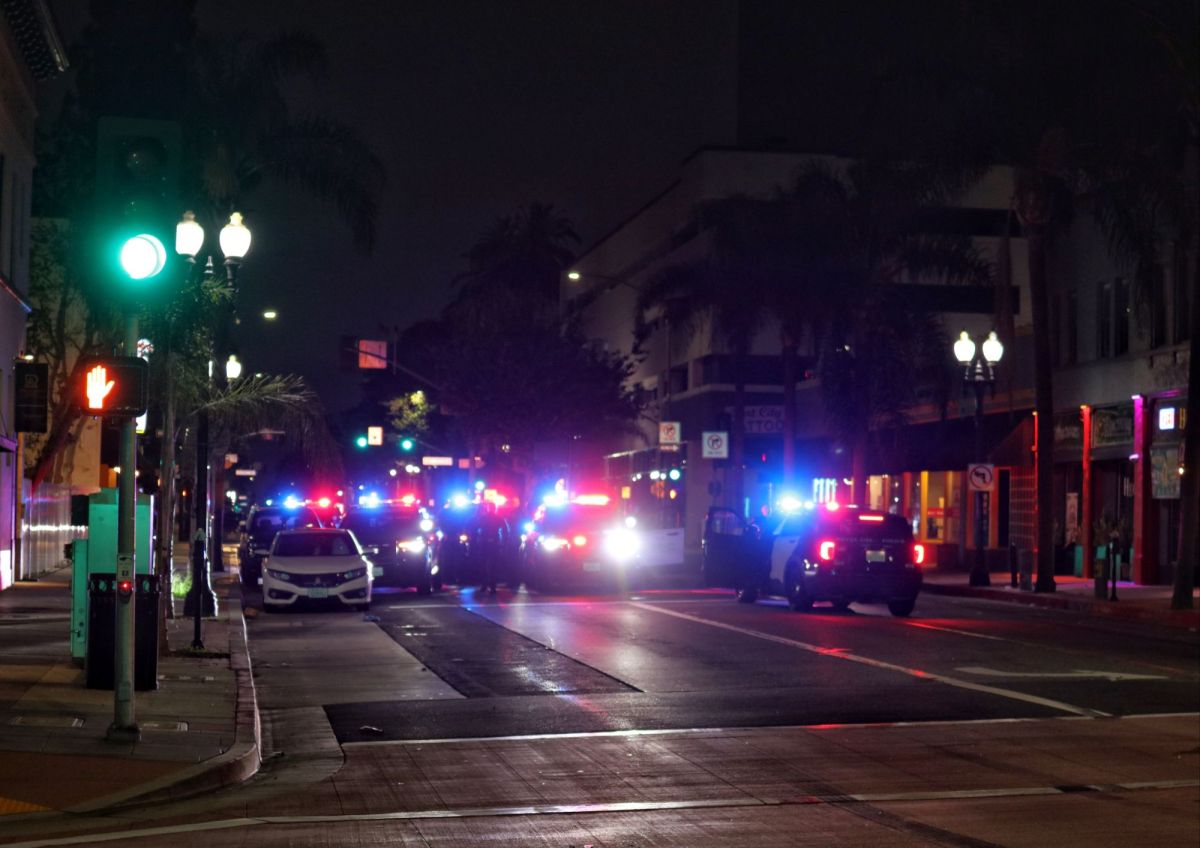
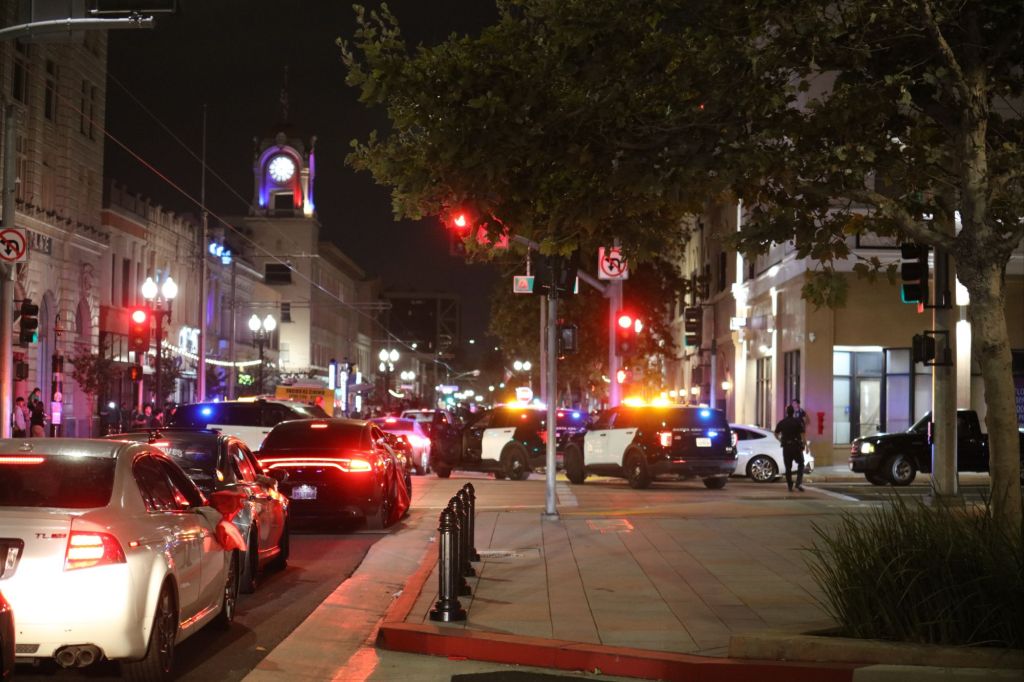
Editorial: Santa Ana debe dejar de ignorar a los terroristas cazarrecompensas que se hacen pasar por agentes de ICE.

Foto: The OC Reporter / Departamento de Policía de Santa Ana

A estas alturas ya no es un rumor; es un hecho documentado.

Hombres con placas falsas que se hacen pasar por funcionarios federales están aterrorizando hogares, asustando a jóvenes y destrozando familias en las calles de Santa Ana. No son agentes de ICE. Son cazarrecompensas independientes o contratistas que carecen de autoridad legal, constitucional y de derecho a estar en nuestras calles. Sin embargo, se aprovechan de nuestra ansiedad, desconcierto y del silencio de quienes juraron defendernos, actuando con total impunidad.

Estas personas no son agentes del orden. Son delincuentes. Suplantar la identidad de un agente federal es un delito grave tanto en California como a nivel federal. La entrada ilegal en propiedad ajena se define como el ingreso a una residencia sin permiso ni orden judicial. Utilizar amenazas de deportación para obtener favores o dinero de los residentes locales constituye coacción, y posiblemente secuestro. Además, según el artículo 837 del Código Penal de California, toda persona tiene el derecho —y la obligación— de realizar un arresto ciudadano al presenciar la comisión de tales delitos.

Entonces, ¿cuál es la razón de Santa Ana? ¿La policía se niega a actuar? No es por miedo al ICE. El problema no radica en la falta de conocimiento de la jurisdicción, sino en la negligencia. Es complicidad por inacción.

Foto de: The OC Reporter/ Impostores de ICE vistos en la 1.ª y Grand Ave.

A pesar de que el Ayuntamiento creó correctamente el fondo Ayuda Sin Fronteras, presentó solicitudes de acceso a la información pública, se sumó a demandas federales y recibió 50.000 dólares de apoyo de Sahuayo, México, nuestra policía sigue sin hacer nada mientras estos delincuentes andan sueltos. No están sobrecargados de trabajo ni confundidos. Simplemente deciden no aplicar la ley. Esto no es una discrepancia política. No es un debate sobre inmigración. Se trata de justicia fundamental.

Una madre no vive en una ciudad santuario si un hombre con una chaqueta negra llama a su puerta diciendo ser agente federal y ella se esconde en su cocina mientras la policía no hace nada cuando llama al 911. Está bajo asedio.

El alcalde Amezcua y el Ayuntamiento se han expresado extensamente sobre dignidad, justicia y derechos civiles. Ahora deben exigir que se tomen medidas. El Departamento de Policía de Santa Ana debe:

  • Utilice las leyes vigentes sobre arresto ciudadano y las leyes estatales contra la suplantación de identidad para capacitar de inmediato a los agentes en el reconocimiento y la detención de impostores que se hacen pasar por cazarrecompensas.
  • Identificar y denunciar públicamente a estos individuos como delincuentes, en lugar de como “socios en la aplicación de la ley”.
  • Establecer un equipo de respuesta rápida para investigar y registrar cada incidente reportado, y luego poner esta información a disposición del público en general.
  • Para procesar a los delincuentes reincidentes por cargos federales, trabaje con el FBI y el Departamento de Justicia.
  • Difundir imágenes, descripciones de vehículos y métodos conocidos a través de alertas comunitarias para informar a las familias sobre a quién temer y a quién detener.
Foto de: The OC Reporter/ Impostores de ICE vistos en Ross y Santa Ana Blvd.

El liderazgo moral de la ciudad no vale nada si su fuerza policial no defiende a sus ciudadanos de los criminales que se esconden tras la fachada del gobierno federal.

El aumento de $100,000 a Ayuda Sin Fronteras es algo que aplaudimos. Sin embargo, la tranquilidad de un niño que duerme sin ansiedad no se puede reemplazar con ninguna ayuda económica. El trauma de una intrusión domiciliaria por parte de un individuo con una placa falsa no se puede reparar con ninguna acción legal.

Gracias a Santa Ana, el mundo ha visto lo que es la valentía. Ahora debe demostrar lo que es la justicia mediante arrestos, no mediante comunicados de prensa.

Los cazarrecompensas no son agentes de inmigración, son delincuentes. Violan la ley. Además, nuestra policía debería empezar a tratarlos como tales.

— Los habitantes de Santa Ana merecen más que compasión. Merecen protección.