
La alcaldesa de Santa Ana, Valerie Amezcua, podría colaborar con el Servicio de Inmigración y Control de Aduanas (ICE) en la implementación de estas directivas federales

Foto de: Igmar Rodas / The Orange County Reporter

En los últimos días, Santa Ana, una ciudad ubicada en el condado de Orange, California, ha vivido extensas protestas pacíficas. Estas manifestaciones han sido impulsadas principalmente por la gran comunidad latina de la ciudad, que ha expresado una gran preocupación por múltiples cuestiones interconectadas.

Un tema clave en juego son las recientes políticas migratorias del presidente Donald Trump, especialmente sus propuestas de deportaciones masivas de inmigrantes indocumentados, incluidos aquellos sin antecedentes penales que se desempeñan como miembros diligentes y contribuyentes de la sociedad. El plan del gobierno de invocar la Ley de Enemigos Extranjeros de 1798 para acelerar las deportaciones ha intensificado estas preocupaciones.
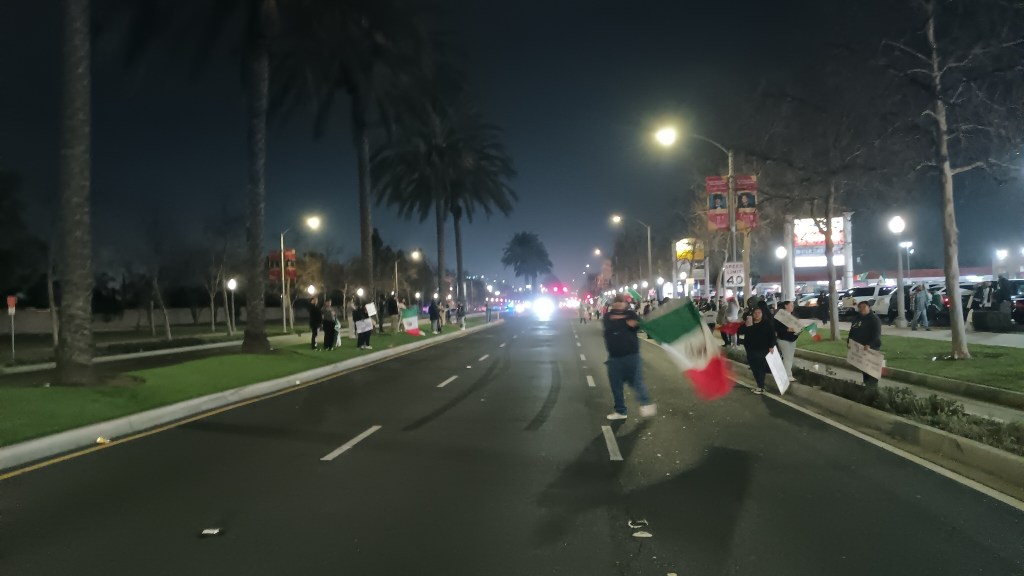
Foto de: Igmar Rodas / The Orange County Reporter

Para agravar aún más el malestar local, hay informes que indican que la alcaldesa de Santa Ana, Valerie Amezcua, podría estar coordinando con el Servicio de Inmigración y Control de Aduanas (ICE) para ejecutar estas órdenes federales. Muchos perciben esta supuesta colaboración como una violación de la ley de ciudades santuario de Santa Ana de 2017, que se promulgó para proteger a las personas indocumentadas de las acciones federales de inmigración.

Las protestas se han caracterizado por su enfoque no violento, con manifestantes que abogan por la protección de los derechos de los inmigrantes y el cumplimiento de la ordenanza de ciudad santuario. Los líderes comunitarios y los defensores están promoviendo políticas que reconocen el papel de los inmigrantes indocumentados y buscan una reforma migratoria integral en lugar de acciones punitivas.

Foto de: Igmar Rodas / The Orange County Reporter

Estos sucesos en Santa Ana reflejan una conversación nacional más amplia sobre las políticas de inmigración y la participación de los gobiernos locales en su aplicación. A medida que la situación evoluciona, pone de relieve la discordia entre los mandatos federales y los principios comunitarios, en particular en áreas con grandes poblaciones de inmigrantes.

Editorial: Santa Ana Mayor Valerie Amezcua Collaborating with ICE to Deport Santa Ana Residents? – A Breach of Trust in a Sanctuary City

Arrest of a person by ICE Agents on January 8th 2025 and Mayor Amezcua in Silence in the Sanctuary city of Santa Ana.

Santa Ana, a lively and diverse community that has historically taken pride in safeguarding immigrant families, is undergoing a concerning transformation. Under Mayor Valerie Amezcua’s direction, recent information has emerged indicating that the mayor’s office is collaborating with U. S. Immigration and Customs Enforcement (ICE) to deport residents. This has ignited a backlash from residents, activists, and community leaders who view this as a blatant contradiction to the city’s longstanding identity as a sanctuary city.

Santa Ana officially established its sanctuary status in 2017, offering vital protections for immigrants by limiting local law enforcement cooperation with federal immigration agencies. The aim was unequivocal: to foster a safe atmosphere for all residents, irrespective of their immigration status. Immigrant communities in Santa Ana have established their lives here, enriching the cultural, economic, and social landscape of the city. For many, the sanctuary label signified that they could exist with enhanced security, without the constant dread of deportation.

However, the recent revelations have overshadowed this feeling of safety and reliability. If Mayor Amezcua is indeed cooperating with ICE to facilitate deportations, it undermines the very tenets that Santa Ana’s sanctuary designation was intended to support. It not only breaches the trust of the immigrant community but also communicates that the city might be willing to work alongside federal authorities in ways that contradict its own laws and principles. This dilemma is not solely about one person; it mirrors a broader concern that impacts countless families. Deportations are not just statistics—they signify real individuals, mothers, fathers, sons, and daughters who face the possibility of being separated from their homes and communities. These individuals contribute to the city’s economy, participate in local educational institutions, and are vital members of the Santa Ana community.

If confirmed, Mayor Amezcua’s actions raise significant alarms. They jeopardize the trust that the city has diligently cultivated with its immigrant inhabitants. As a sanctuary city, Santa Ana ought to embody a symbol of safety and inclusion, not a location where immigrants dread deportation at the hands of local law enforcement. The city has always celebrated its progressive ideals, and this apparent policy shift represents a regression in the pursuit of immigrant rights and justice. The residents of Santa Ana are entitled to more. They warrant transparency from their elected officials and the reassurance that their city will continuously serve as a refuge, not a battleground for federal immigration enforcement. If the mayor persists in her collaboration with ICE, it is essential for the community to hold her accountable and demand a return to the principles that have established Santa Ana as a sanctuary city.

Ultimately, the residents of Santa Ana deserve to live free from the anxiety of deportation. If Mayor Amezcua is collaborating with ICE to remove local inhabitants, it is essential for her to reconsider this strategy and recognize that the sanctuary status of Santa Ana ought to be respected, not violated. It is time for our leaders to prioritize the needs of the community and strive for policies that safeguard, rather than penalize, the individuals who consider Santa Ana their home.