
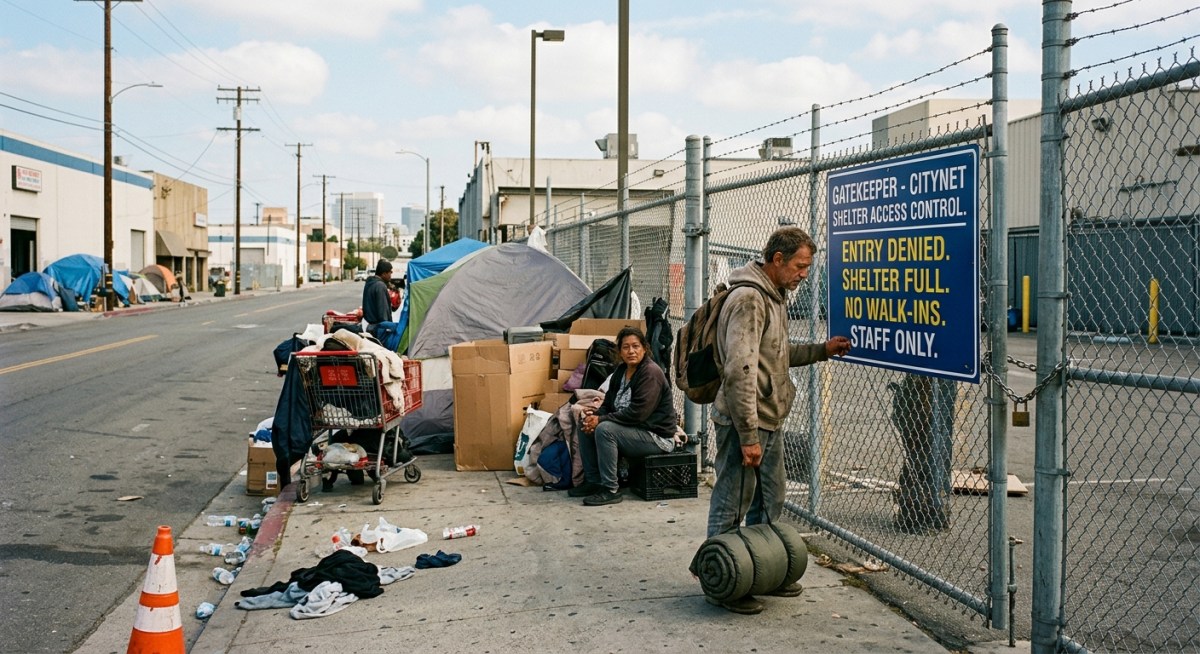
Santa Ana’s approach to unhoused management has undergone a structural transformation over the past decade. The shift from open-access intake managed by community-based non-profits to a centralized dispatch model governed by City Net has fundamentally altered how services are accessed on the ground. Where organizations like Mercy House or Illumination Foundation once handled walk-in intake directly, shelter placement now flows exclusively through a closed referral loop managed by contract outreach teams.
This referral-only framework restricts direct walk-in placement at municipal and regional facilities, requiring a formal assessment from City Net or law enforcement.
The Referral Bottleneck and Institutional Gatekeeping
The centralization of intake under City Net established a strict operational filter for shelter entry:
- Field Constraints for Law Enforcement: Non-emergency calls and field contacts handled by police officers are funneled into City Net‘s dispatch system. Officers cannot directly place individuals into shelter beds without navigating this centralized pipeline.
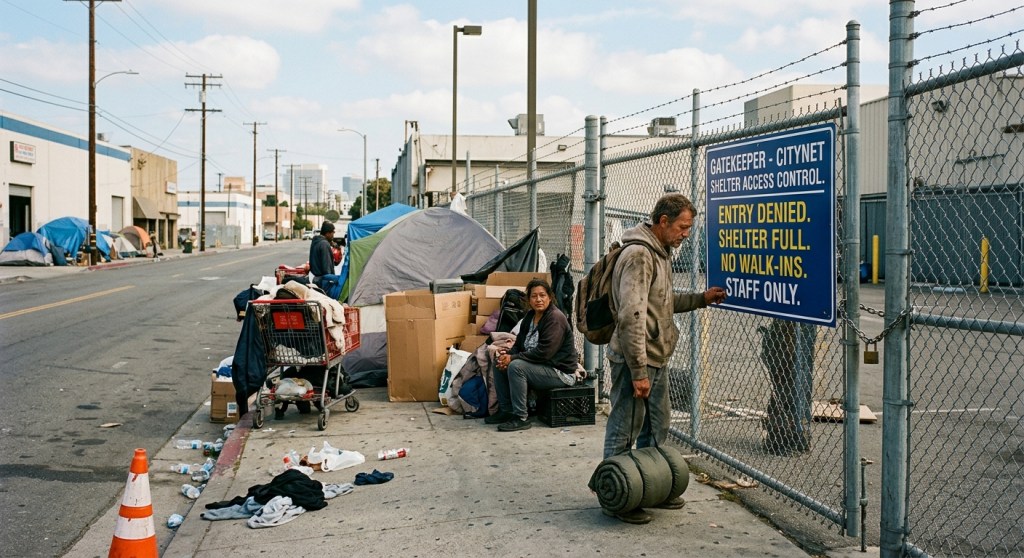
- Elimination of Walk-In Access: Unhoused residents attempting to seek shelter independently are turned away at facility gates. Entry depends entirely on field identification and documentation by contract outreach workers.
- Controlled Capacity Metrics: By routing all intake through a single entity, municipal leadership retains control over capacity data, prioritizing individuals with verified local ties while limiting visible gathering around service hubs.
Political Rhetoric vs. Operational Realities
As municipal leaders frame homelessness around public safety and street clearance metrics, the operational mechanics of the current intake system highlight a friction between political narrative and service delivery.
Public emphasis on clearing public spaces relies on an infrastructure designed to tightly regulate entry points. When municipal policy pairs strict enforcement of anti-camping and public-space ordinances with a closed referral network, the result is a system that manages visibility rather than expanding immediate access.
Evaluating the structural dynamics of Santa Ana’s intake framework—specifically the transition from open-access non-profit care to centralized contract gatekeeping—provides an objective window into how municipal policy shapes the reality on the streets.

