

The Fracture of the Golden Empire: Orange County’s Day of Reckoning

Orange County, California

The “Architecture of Silence” that has long defined the corridors of power in Orange County is finally groaning under the weight of its own secrets. For decades, the “Orange Curtain” served as a pristine barrier, hiding the machinations of an elite class behind the sun-drenched imagery of coastal wealth and suburban stability. But as the 8:00 PM deadline passes and the global “blame game” intensifies between the likes of JD Vance and Todd Blanche, that curtain isn’t just fluttering—it’s being torn down.

The “MAGA-nificent” Betrayal

In Huntington Beach, the self-proclaimed “MAGA-nificent Seven” city council has built a political fortress on the promise of local control and resistance to a “globalist elite.” For the thousands of residents who donned the hats and attended the rallies, the movement was a crusade for the forgotten patriot.

However, the exposure of a deeper, entrenched secret society influence within the administration’s inner circle creates a seismic identity crisis. If the leaders championed as the vanguard of the people are revealed to be operatives of the very elite they claimed to despise, the reaction will not be quiet. We are witnessing a historic split: a segment of the faithful will retreat into the comfort of denial, but another, more volatile faction will realize the “leader” is the true enemy. When the patriot feels deceived, the backlash isn’t just political—it is militant.

Santa Ana: The Counter-Weight

While the coastal enclaves grapple with betrayal, the streets of Santa Ana are vibrating with a different frequency. Documenting the “No Kings” movement reveals a community that has long suspected the game was rigged. As Huntington Beach leaned into the administration’s apocalyptic rhetoric, Santa Ana became the hub for anti-authoritarian action.

The exposure of this clandestine influence validates the “No Kings” narrative, transforming local protests into a spiritual and existential fight for the soul of the county. With the current two-week ceasefire acting as a thin veil for federal chaos, Santa Ana and Anaheim are poised for the largest mobilizations in history. If the technological infrastructure begins to fail—hitting the tech hubs of Irvine and Costa Mesa first—the communication blackout will only serve to fuel the fire of a resistance that no longer recognizes any king, secret or otherwise.

The Collapse of Silence

Orange County is a sanctuary of “old money” and defense contractors who have thrived in the status quo. But the “Neighborhood Watch” has taken a dark turn. As federal officials scramble to protect themselves, local power players in Newport Beach and Irvine are beginning to “unload” their connections.

The era of the “Accessory” is ending. Just as high-ranking figures disappear from the public eye to protect the paper trail, expect a sudden wave of local resignations and unexplained “vacations.” The records of who was influenced and who was compromised are leaking through the cracks of a failing system. The fortress of old money is being breached, and no corporate suit or political slogan is thick enough to hide the truth anymore.

A Microcosm of the End

Orange County is no longer a suburban monolith; it is a microcosm of a global struggle. From the ultra-wealthy enclaves to the vibrant immigrant heart of Santa Ana, the lines are drawn. The distraction of the next fourteen days is the last gasp of an old guard trying to maintain a semblance of order.

As the secret influences are stripped away, the “Orange Curtain” will not be repaired. We are entering an era where the masks are gone, the bluffs have been called, and the local architecture of power is facing a total, unyielding reboot. The truth has arrived in the land of sunshine, and it is casting very long shadows.

Editorial: Unpacking the Disturbing Reality of Police Immunity and Accountability

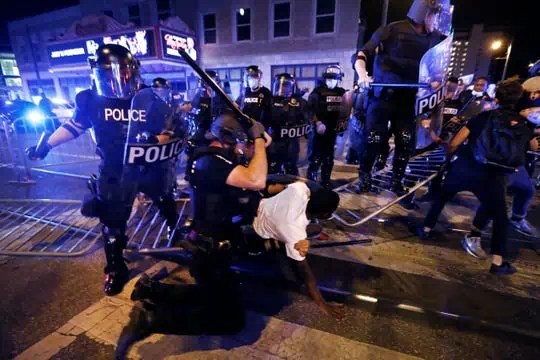
Recent occurrences throughout the United States have once more illuminated the concerning dynamics among law enforcement, politics, and the justice system. The most recent tragedy—the shooting and killing of a man by the Anaheim Police Department—represents yet another chapter in a burgeoning narrative of police violence that appears to be unrestrained. This incident is not an isolated event, but rather a manifestation of a much deeper, systemic issue, wherein police officers, safeguarded by politicians, continue to evade meaningful accountability for their actions.

The demise of Tamir Rice, a 12-year-old boy fatally shot by police in Cleveland in 2014, stands as a stark reminder of how swiftly law enforcement can resort to lethal force without repercussions. Rice’s heartbreaking death served as a catalyst for protests nationwide; nevertheless, years later, episodes like the one in Anaheim indicate that little has altered. The question then arises: why are these officers still unpunished?

A pervasive culture of impunity exists within police departments, one that is sustained by political figures who depend on these law enforcement entities for support and empowerment. Police unions, with their considerable political influence, have frequently protected officers from accountability, even when they have contravened the most fundamental principles of justice. The deeply rooted connections between law enforcement and politicians often imply that the very individuals who ought to uphold the law are accorded an unfair advantage concerning evading punishment.

However, the issue transcends the officers themselves. The very foundation of our justice system—judges—also plays a pivotal role in perpetuating this cycle. Time and again, judges have neglected to hold law enforcement accountable, extending leniency or outright dismissing charges against officers implicated in fatal shootings. While the public focuses on the officers who discharge their firearms, the judiciary that consistently exonerates them of misconduct should not be overlooked. It is insufficient to merely demand justice for the victims of police violence; we must also confront the broader system of corruption that guarantees these actions go unpunished.

There are calls to cease referring to law enforcement officers as “officers”—a gesture intended to remove the deference with which they are frequently regarded, to remind us that they are public servants, not untouchable entities. This rebranding is symbolic yet necessary. The public’s perception of law enforcement often elevates them to a status that obscures their role as accountable servants of the law. We must acknowledge them as individuals capable of wrongdoing, just like anyone else—and ensure they are held to the same standards.


Moreover, the citizens of this nation must reclaim their rights and commence utilizing their constitutional amendments to contest and resist these systemic abuses of power. It is essential to demand transparency, to insist on independent investigations, and to hold accountable not merely the officers who engage in these actions, but also the politicians, unions, and judges who shield them. The strength of the populace resides not solely in protests and appeals for justice but in the active participation with the mechanisms of power that facilitate these abuses.

Finally, we must hold our political leaders, such as Congressman Lou Correa, responsible for their involvement in sustaining this system. When politicians protect and advocate for law enforcement at the cost of justice, they foster a culture of corruption. They are complicit in the preservation of a system that injures marginalized communities and disregards fundamental human rights.

In conclusion, the epidemic of police violence cannot be addressed by focusing on individual officers alone. It necessitates a comprehensive strategy that includes holding not only law enforcement accountable but also the political and judicial systems that allow this violence to persist. We must demand a total reform of the systems that protect and sustain this cycle of impunity. Only then can we aspire to cultivate a society where justice genuinely signifies justice for all.