Editorial: Las fuerzas del orden atacan a los periodistas del sur de California.

Guardias Nacionales de California en alerta en las calles de Santa Ana, California. Foto: The Orange County Reporter

En los condados de Orange y Los Ángeles, las fuerzas del orden parecen haber pasado de los manifestantes a quienes informan la verdad, en lo que solo puede considerarse una grave crisis para la democracia. Según informes, las agencias policiales locales han recurrido a la violencia, arrestos ilegales y amenazas públicas contra reporteros, fotógrafos y periodistas que cubren redadas de ICE y protestas civiles.

Esto está respaldado por testimonios de testigos presenciales, relatos de testigos presenciales y videos, no por hipótesis. Se han disparado balas de goma contra periodistas, se les ha encarcelado sin motivo y se les ha prohibido explícitamente cubrir irregularidades policiales. Este comportamiento no solo es ilegal, sino también totalitario, y por lo tanto destruye la base de la libertad mediática de toda democracia funcional.
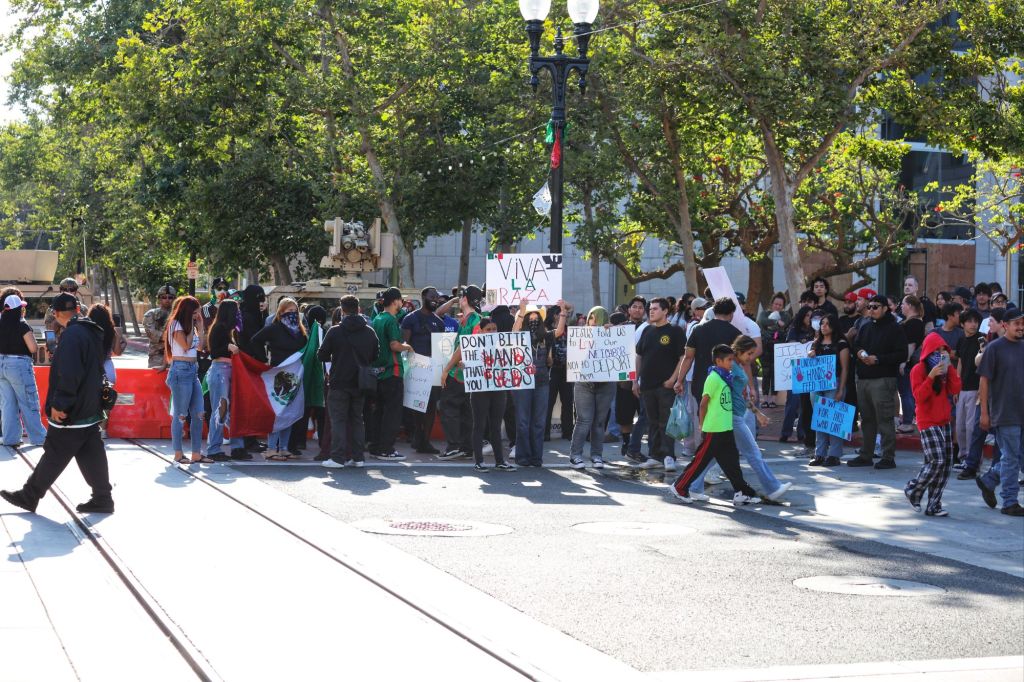
Manifestación pacífica frente al Palacio de Justicia Federal en Santa Ana, California. Foto: The Orange County Reporter.

El reciente despliegue de la Guardia Nacional y la Infantería de Marina de los EE. UU. en el sur de California aumenta el peligro. A diferencia de la policía local, la Infantería de Marina no está entrenada en seguridad comunitaria ni en disturbios civiles. Está entrenada para enfrentarse y eliminar a los oponentes en zonas de combate utilizando munición real. Esto no es control de multitudes, sino una táctica de escalada.

Entrar en ciudades ya sumidas en la agitación, las protestas y la inestabilidad política con soldados listos para el combate no es una demostración de poderío, sino una declaración de guerra contra la población, los derechos civiles y la libertad de prensa. Ofrece un ejemplo esclarecedor de las consecuencias de la excesiva intromisión del gobierno.

La Primera Enmienda protege la libertad de prensa como un escudo contra la tiranía, no como un favor. El público se ciega cuando se silencia a la prensa. Vivimos en una civilización regulada, no democrática, donde quienes dicen la verdad son vistos como oponentes.
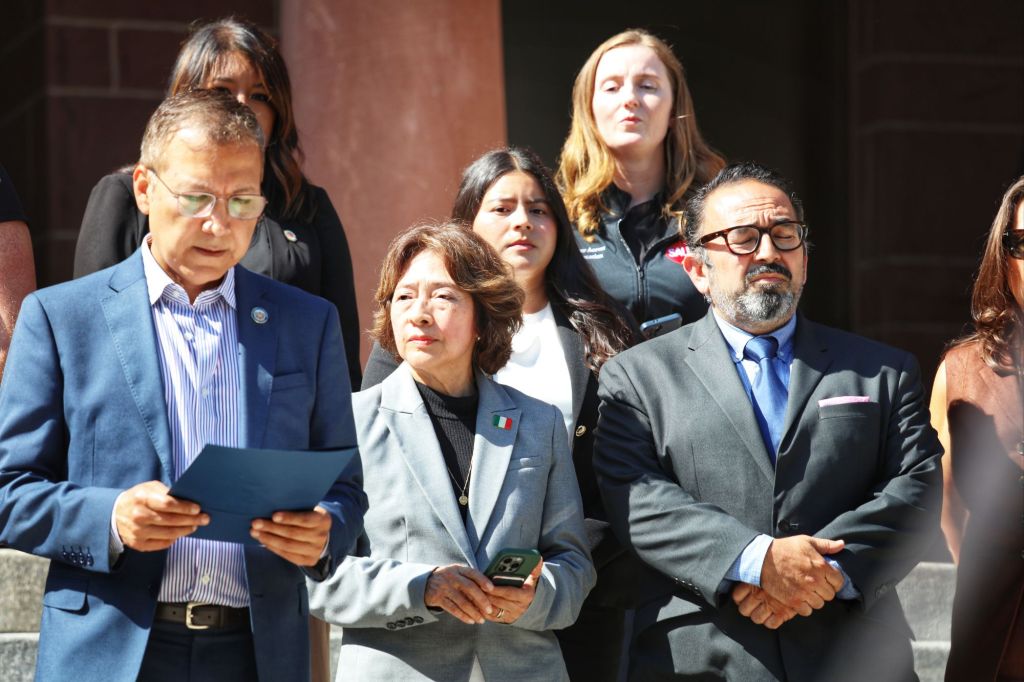
Vincent Sarmiento, de la Junta de Supervisores del Condado de Orange, y Benjamín Vázquez, alcalde interino de Santa Ana. Foto: The Orange County Reporter.

Exigimos que todos los funcionarios electos, las organizaciones de derechos civiles y los defensores legales actúen de inmediato para investigar estas violaciones. Protejan a los periodistas. Antes de que la violencia se intensifique, desmilitaricen nuestra sociedad ante todo.

Todo el mundo observa. ¿Se convertirá el sur de California en un santuario de libertad o caerá bajo la opresión?
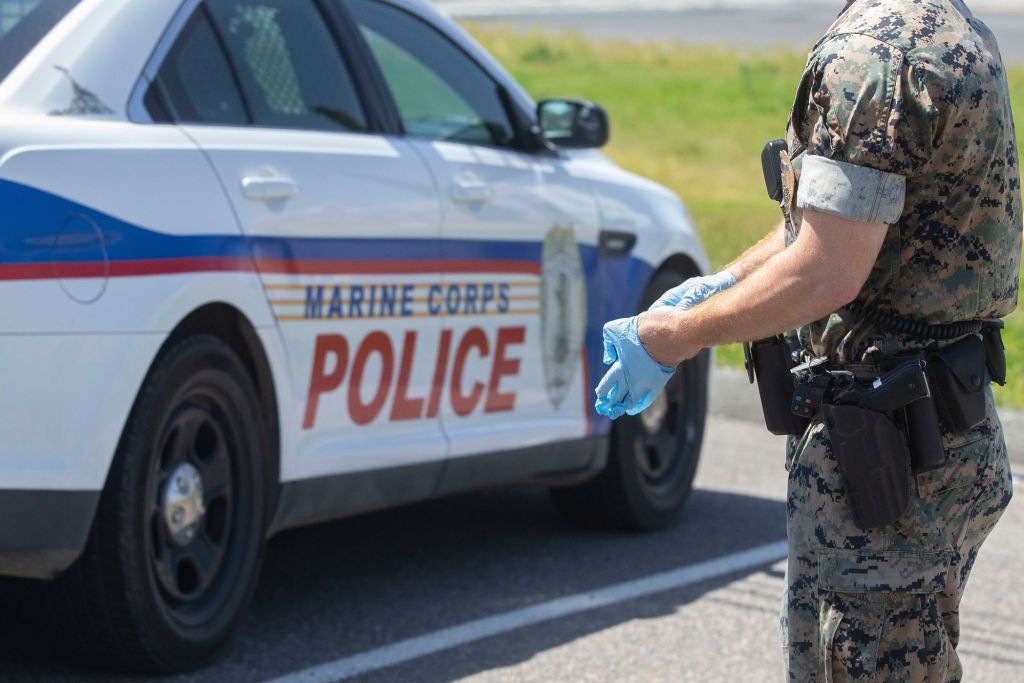
Editorial: A Personal Encounter Underscores the Significance of Clear Boundaries at Camp Pendleton

US Military Base Camp Pendleton MP

I unintentionally entered Camp Pendleton this week through one of its public access sites, which put me in an unexpected situation. I had accidentally driven onto federal property, which was a genuine mistake that was immediately noticed by the military police at Camp Pendleton.

After that, I had a courteous and professional conversation with the MPs who pulled me over at the entrance checkpoint. They checked my identification, interrogated me about why I was there, and made sure I wasn’t a security risk. They gave me a warning and sent me back to the main road after concluding that my presence was unintentional and not dangerous.

The U.S. Immigration and Customs Enforcement (ICE) agency was noticeably absent from this interaction. I was not surprised by this fact given that immigration enforcement and law enforcement frequently converge in unexpected ways in the current environment. And the fact that the military police were entirely concerned with security and safety—not immigration status—gave me a sense of comfort.

Every U.S. military facility, including Camp Pendleton, has its own distinct jurisdiction. It is a community that welcomes thousands of service members, their families, and civilian workers, as well as a sovereign military area. The military police’s decision not to include ICE during regular vehicle stops or searches is not only legally correct but also necessary for preserving trust and operational efficiency inside the base.

Camp Pendleton

The lack of immigration enforcement in routine policing creates a culture of security and cooperation for people who reside or work on base, such as civilian contractors, international military liaisons, or foreign nationals serving under special visas. It makes certain that individuals are not deterred by the threat of deportation from seeking necessary services or reporting crimes.

My brief but ultimately uneventful experience serves to emphasize a more fundamental point: military facilities must continue to prioritize their primary purpose of protecting the country. The law enforcement in that area should be carried out with professionalism, clarity, and a thorough awareness of the unique characteristics of military communities.

For a long time, the Department of Defense has maintained that military facilities are not the place for local law enforcement activities that have nothing to do with base security. Whether by duty, invitation, or, like in my case, by mistake, this policy safeguards the integrity of the military objective as well as the rights and dignity of all persons who enter the base.

The Camp Pendleton Military Police should be praised for their professional and cautious response to the situation. Their behavior demonstrates a dedication to the values of fairness, discretion, and respect that characterize our military, as well as to security.

Mistakes occur, but an institution’s actual character is revealed by how it responds. In this instance, Camp Pendleton successfully completed the test.