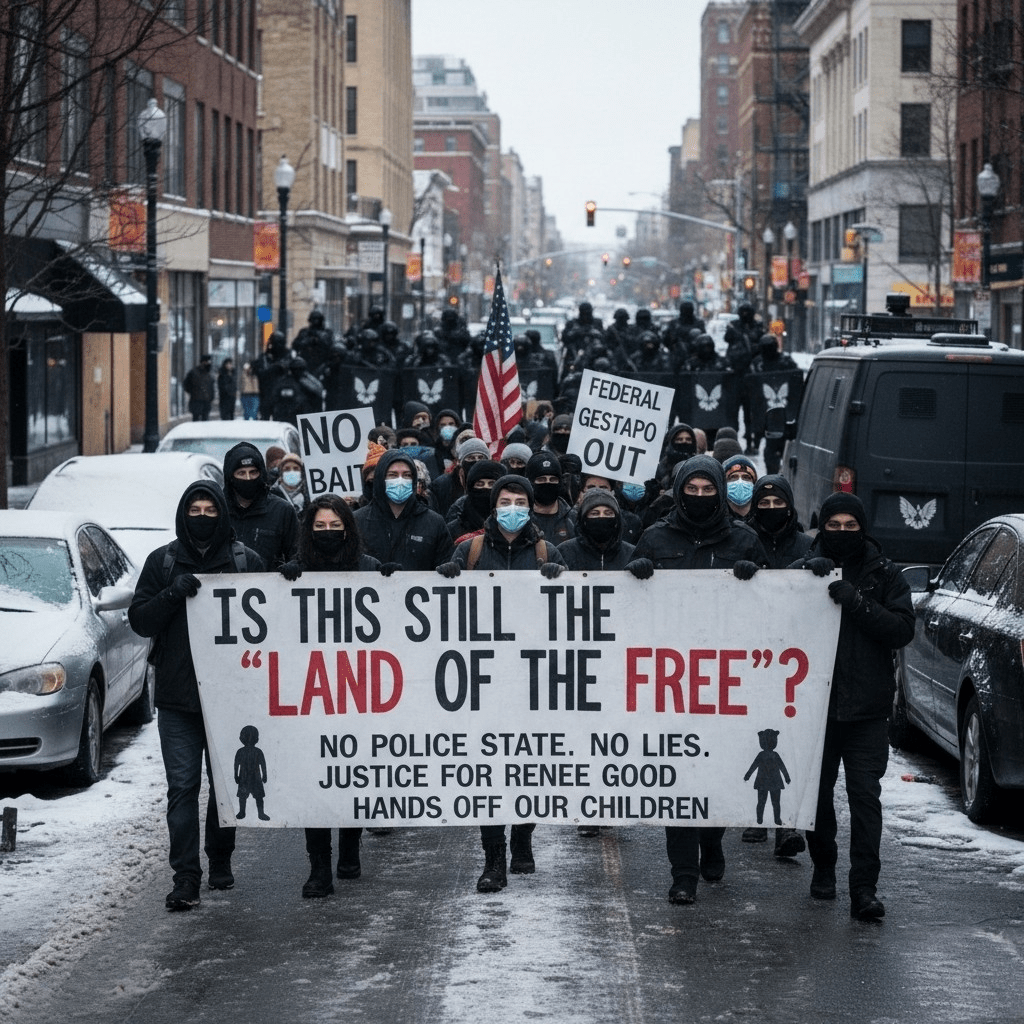
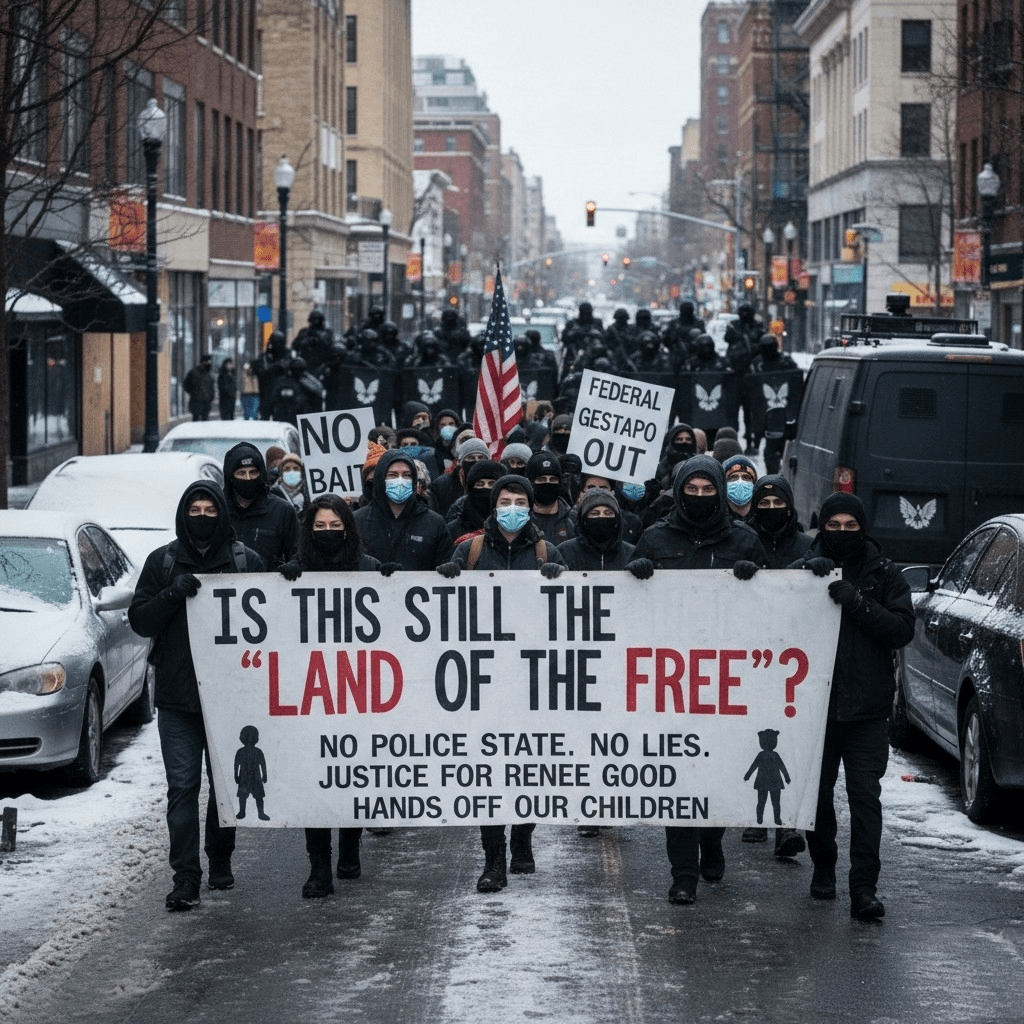
From the suburbs of Minneapolis to the streets of Santa Ana, the American promise of “liberty and justice for all” is now being broken down piece by piece. A political police state, where federal “Gestapo” methods are becoming the norm, is what immigration enforcement has evolved into from what it once was.
The Minnesota Blueprint: Exploitation and Executions
In what can only be called public executions, two American citizens, Renée Nicole Good and Alex Pretti, have died at the hands of federal agents in front of the entire country in the past three weeks. Bystander footage of Pretti’s case shows a man with only a cell phone in his hand before he is tackled and murdered. Instead of transparency, we see an executive administration surrounding the wagons and calling victims “domestic terrorists” in order to rationalize the inexcusable.
The employment of children as tactical weapons is even more heinous. The fact that 5-year-old Liam Conejo Ramos was detained and allegedly coerced by agents into serving as “bait” to entice his family out of their house demonstrates that no one is safe. We have lost our moral compass when the government starts utilizing preschoolers as pawns in a “kill or be killed” situation.
Orange County Receives the Cancer
The “cancer” of this police state is spreading quickly here in Orange County, although Minnesota is now the epicenter. There is a worrisome tendency for local law enforcement to work with DHS and ICE, sometimes in blatant disregard of California’s sanctuary laws.
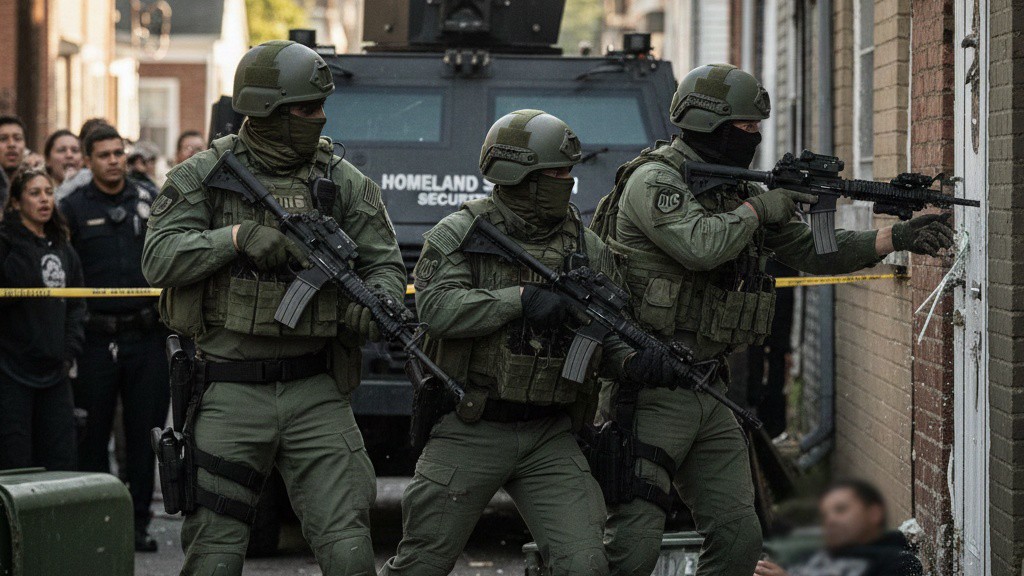
Fullerton: According to recent reports and video evidence, the Fullerton Police Department is now functioning as a support wing for federal agents, opening doors to private complexes and setting up perimeters as agents move around with semi-automatic weapons.
Anaheim: Recorded video shows local police officers either standing by or actively helping during violent raids at nearby establishments, such auto repair shops and car washes among them.
Activist Harassment: The targeting of individuals who dare to watch is maybe the most alarming aspect. In Orange County, California, activists are being followed by the California Highway Patrol and arrested by local police just for recording federal operations. The boundary between “protection” and “political enforcement” has blurred when federal agents are able to phone 911 to have local police “cut off” or harass a citizen monitor only a few blocks away from their residence.
A deadly silence
Where are the people we elected? As these paramilitary activities continue to interrupt our daily lives, our County Supervisors and Senator Tom Umberg, who represents Santa Ana and north Orange County, remain mostly silent. Their inaction gives the go-ahead for more escalation.
We need to consider when we stand up. It will be too late if we wait for a “public execution” to occur in our own backyard—if it is our neighbor, our friend, or our child. The shift from a free society to a police state does not occur suddenly; It occurs as a result of the close cooperation of local law enforcement and the deafening silence of our leaders.
Before the next victim is one of us, it is time for the city, county, and state authorities in California to end this massacre.
Desde los suburbios de Minneapolis hasta las calles de Santa Ana, la promesa estadounidense de “libertad y justicia para todos” se está desmoronando poco a poco . Un estado policial político , donde los métodos federales de la “Gestapo” se están convirtiendo en la norma, es en lo que la aplicación de la ley migratoria se ha convertido de lo que era antes .
El Plan de Minnesota: Explotación y Ejecuciones.
En lo que solo pueden llamarse ejecuciones públicas , dos ciudadanos estadounidenses , Renée Nicole Good y Alex Pretti , han muerto a manos de agentes federales frente a todo el país en las últimas tres semanas . Las imágenes de un transeúnte del caso de Pretti muestran a un hombre con solo un teléfono celular en la mano antes de ser abordado y asesinado . En lugar de transparencia, vemos a una administración ejecutiva rodeando a las víctimas y llamando a las víctimas “terroristas domésticos” para justificar lo inexcusable .
El empleo de niños como armas tácticas es aún más atroz . El hecho de que Liam Conejo Ramos, de 5 años, fuera detenido y presuntamente coaccionado por agentes para servir de cebo y convencer a su familia de que saliera de casa demuestra que nadie está a salvo. Hemos perdido la brújula moral cuando el gobierno empieza a utilizar a niños en edad preescolar como peones en una situación de “matar o morir” .
El Condado de Orange recibe el cáncer .
El “cáncer” de este estado policial se está extendiendo rápidamente aquí en el Condado de Orange , aunque Minnesota es ahora el epicentro . Existe una preocupante tendencia por parte de las fuerzas del orden locales a colaborar con el Departamento de Seguridad Nacional (DHS) y el Servicio de Inmigración y Control de Aduanas (ICE) , a veces en flagrante desacato a las leyes santuario de California.
Fullerton : Según informes recientes y pruebas en vídeo .El Departamento de Policía de Fullerton funciona ahora como un ala de apoyo para los agentes federales , abriendo puertas a complejos privados y estableciendo perímetros mientras los agentes se desplazan con armas semiautomáticas.
Anaheim: Un video grabado muestra a agentes de la policía local, ya sea observando o ayudando activamente durante redadas violentas en establecimientos cercanos , como talleres mecánicos y lavaderos de autos . Acoso
A Activistas : El acoso a individuos que se atreven a observar es quizás el aspecto más alarmante . En el condado de Orange , California, activistas están siendo seguidos por la Patrulla de Carreteras de California y arrestados por la policía local solo por grabar operaciones federales . La frontera entre “protección” y “aplicación política” se ha desdibujado cuando los agentes federales pueden llamar al 911 para que la policía local “interrumpa” o acose a un observador ciudadano a solo unas cuadras de su residencia .
Un silencio sepulcral.
¿Dónde están las personas que elegimos? Mientras estas actividades paramilitares continúan interrumpiendo nuestra vida diaria, nuestros supervisores del condado y el senador Tom Umberg, quien representa a Santa Ana y al norte del condado de Orange, permanecen mayormente en silencio. Su inacción da luz verde a una mayor escalada.
Debemos considerar cuándo nos ponemos de pie . Será demasiado tarde si esperamos a que ocurra una “ejecución pública” en nuestro propio patio trasero, ya sea de nuestro vecino, nuestro amigo o nuestro hijo. La transición de una sociedad libre a un estado policial no ocurre de repente ; ocurre como resultado de la estrecha cooperación de las fuerzas del orden locales y el silencio ensordecedor de nuestros líderes.
Antes de que la próxima víctima sea uno de nosotros, es hora de que las autoridades municipales, del condado y estatales …California debe poner fin a esta masacre.
La “Ley de No Policía Secreta” – SB 627 entra en vigor a partir del 1 de enero de 2026.
La “Ley de No a la Policía Secreta”, una legislación revolucionaria que prohíbe a todos los agentes del orden público que trabajan en el estado, incluidos los agentes federales (como los de ICE o CBP) y el personal de otros estados, usar mascarillas que oculten su identidad mientras están de servicio, se implementó en California a partir del 1 de enero de 2026, de acuerdo con el Proyecto de Ley Senatorial 627. La prohibición se dirige particularmente a las mascarillas “extremas”, como pasamontañas o pasamontañas, que ocultan los rasgos faciales hasta el punto de que un agente no puede ser fácilmente reconocido por su nombre o número de placa.
La creciente preocupación pública por la posibilidad de que funcionarios federales no identificados llevaran a cabo operativos, en particular de control migratorio, en grandes ciudades de California, completamente enmascarados y sin ningún medio de identificación, condujo a la legislación. Los críticos compararon estos métodos con los utilizados en regímenes autoritarios, alegando que erosionaban la confianza de la comunidad y fomentaban el miedo en lugar de la seguridad. Al exigir que todas las personas que ejercen la autoridad policial en el estado sean claramente identificables, la SB 627 busca restablecer la rendición de cuentas.
Para el 1 de julio de 2026, todas las fuerzas del orden, incluyendo las locales, estatales, federales e incluso los grupos de trabajo visitantes de otros estados, deberán implementar y publicar políticas escritas que rijan el uso de mascarillas faciales de acuerdo con la nueva legislación. Como reflejo del serio propósito de la legislatura, las infracciones pueden dar lugar tanto a litigios civiles como a sanciones penales. No obstante, esta estrategia de cumplimiento ha suscitado preocupación: sobre todo en casos de alta visibilidad o sensibilidad política, los críticos advierten que la identificación de los agentes podría exponerlos al acoso en internet, la difusión de información personal o represalias.
La transparencia es esencial en una democracia, según sus defensores. Durante el debate del proyecto de ley, un asistente legislativo declaró: «Si el público no sabe quién lo vigila, no puede haber una policía responsable». La legislación también aborda una amenaza real: la posibilidad de que delincuentes se hagan pasar por agentes del orden. El proyecto de ley SB 627 busca eliminar la ambigüedad que podría facilitar el fraude o la violencia al aumentar la cantidad de videos virales que muestran a personas enmascaradas ejerciendo su autoridad.
Sin embargo, existe una oposición inmediata y firme a la legislación. En entornos donde los agentes federales se enfrentan a amenazas de cárteles, traficantes de personas o extremistas nacionales, el Departamento de Seguridad Nacional de EE. UU. (DHS) ha declarado inconstitucional la SB 627, alegando que les impide desempeñar sus responsabilidades de forma segura. El DHS ha indicado que planea impugnar la legislación en los tribunales bajo el concepto de primacía federal y sostiene que el estado no tiene jurisdicción sobre las acciones de las fuerzas del orden federales.
Este conflicto legal sienta las bases para una posible batalla constitucional en la Corte Suprema de Estados Unidos sobre el conflicto entre los derechos estatales y la autoridad federal. Mientras tanto, el audaz experimento de California sirve como un caso de prueba nacional: ¿Tiene un estado la autoridad para exigir transparencia a todos los que portan una placa en su territorio, independientemente de su jurisdicción?
Al redefinir los límites éticos y visuales de la policía contemporánea, la SB 627 tiene el potencial de servir de modelo para leyes similares en todo el país si recibe apoyo. En una época donde las fronteras entre la autoridad estatal y federal son cada vez más difusas, podría fortalecer los límites del poder estatal si se rechaza. En cualquier caso, California ha reabierto un debate crucial sobre quién vigila a los vigilantes y si se les debería permitir usar mascarilla.
Aunque este estatuto está formalmente en vigor a partir de enero de 2026, el Estado de California y el gobierno federal ahora están envueltos en una importante disputa legal al respecto.
Disposiciones principales de la Ley de No a la Policía Secreta (SB 627)
Prohibición de mascarillas: Prohíbe a los agentes del orden público locales y federales utilizar pasamontañas, máscaras de esquí o polainas para el cuello que cubran sus rostros mientras están de servicio.
Requisitos de identificación: Los uniformes, nombres o números de placa deben facilitar la identificación de los agentes del orden. La Ley de No Vigilantes (SB 805), que aborda en particular las tácticas de “policía secreta” empleadas en recientes redadas de inmigración, suele ir acompañada de esto.
Resultados de las infracciones:
Responsabilidad civil: Los oficiales que usan máscaras cuando cometen agravios (como arrestos falsos o asaltos) pierden algunas de sus protecciones legales (inmunidad calificada) y pueden estar sujetos a una multa civil mínima de $10,000.
Cargos criminales: El incumplimiento de la prohibición de usar mascarillas puede ser procesado como un delito menor.
Situación jurídica vigente (enero de 2026)
Debe tener en cuenta los siguientes cambios, aunque la legislación entró en vigor el 1 de enero de 2026:
Demanda federal: El Departamento de Justicia de los Estados Unidos (DOJ) presentó una demanda contra California, alegando que el estado no puede regular las acciones de los agentes federales (ICE, Patrulla Fronteriza). Afirman que esto contraviene la “Cláusula de Supremacía” de la Constitución.
Orden judicial temporal: A fines de diciembre de 2025, un tribunal federal (la jueza Christina A. Snyder) emitió una orden judicial temporal sobre la aplicación de ciertas disposiciones de la ley contra funcionarios federales mientras el caso está pendiente de sentencia.
Conflicto sobre el terreno: Algunos fiscales de distrito de California, como los de San Francisco, han dicho que planean aplicar la ley agresivamente e incluso han insinuado que la policía local podría arrestar a los agentes federales que violen estas leyes estatales.
Las excepciones de la ley
Aunque la ley tiene algunas restricciones sobre el uso de mascarillas, hay situaciones particulares en las que está permitido:
Operaciones Encubiertas: Con el fin de garantizar la seguridad de los agentes en posiciones encubiertas.
Equipo médico/táctico: Cascos tácticos estándar o máscaras de grado médico, como las N95, que se usan por razones de salud.
Incendio/Situaciones peligrosas: Máscaras que brindan protección física contra peligros ambientales.
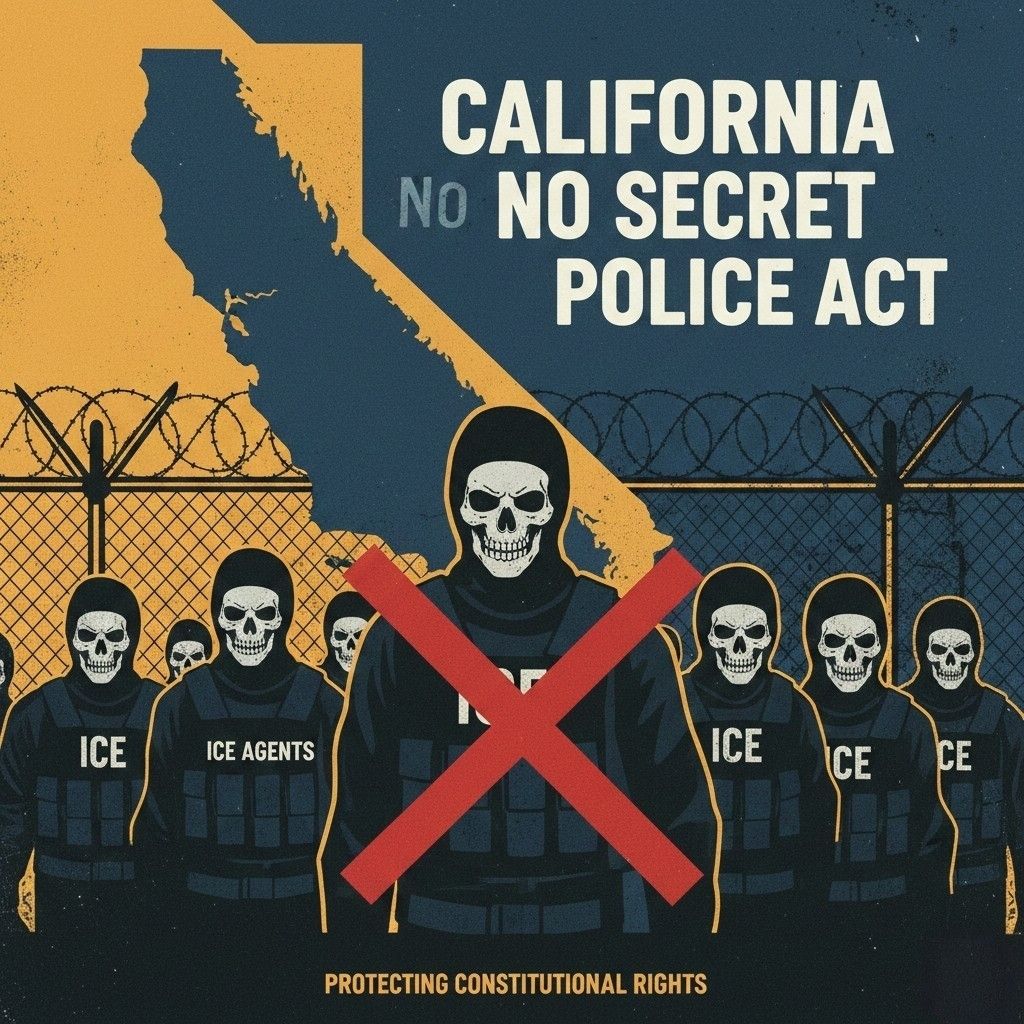
The “No Secret Police Act” – SB 627 is in effect as of January 1st 2026.
The “No Secret Police Act,” which is a revolutionary legislation that forbids all law enforcement officers working in the state, including federal agents (like those from ICE or CBP) and out-of-state personnel, from wearing face coverings that conceal their identity while on duty, has been implemented in California as of January 1, 2026, in accordance with Senate Bill 627. The prohibition particularly aims at “extreme” coverings, such as ski masks or balaclavas, that conceal facial features to the extent that an officer cannot be easily recognized by their name or badge number.
Growing public concern that unidentified federal officials were carrying out operations, notably immigration enforcement, in large California cities while fully masked and without any means of identification led to the legislation. These methods were compared by critics to those used in authoritarian regimes, claiming they eroded community trust and fostered dread as opposed to security. By requiring that all individuals who use police authority in the state be clearly identifiable, SB 627 seeks to reestablish accountability.
By July 1, 2026, all law enforcement organizations, including local, state, federal, and even visiting out-of-state task forces, must implement and make public written policies governing the use of facial coverings in accordance with the new legislation. Reflecting the legislature’s serious purpose, infractions may lead to both civil litigation and criminal punishment. Nonetheless, there have been worries about this enforcement strategy: Particularly in cases with high visibility or political sensitivity, critics caution that identifying officers might leave them vulnerable to internet bullying, doxxing, or retribution.
Transparency is essential in a democracy, according to its proponents. During the bill’s debate, a legislative assistant stated, “If the public doesn’t know who is policing them, you cannot have accountable policing.” The legislation also addresses a real threat: the possibility of criminals posing as law enforcement officials. SB 627 aims to remove ambiguity that might facilitate fraud or violence by increasing the number of videos that go viral and feature masked people asserting authority.
However, there is immediate and strong opposition to the legislation. In environments where federal officers face threats from cartels, human traffickers, or domestic extremists, the U.S. Department of Homeland Security (DHS) has deemed SB 627 unconstitutional, claiming that it impedes their capacity to carry out their responsibilities safely. DHS has indicated plans to contest the legislation in court under the notion of federal preemption and contends that the state has no jurisdiction over the actions of federal law enforcement.
This legal conflict lays the groundwork for a potential constitutional struggle in the United States Supreme Court over the conflict between state rights and federal authority. Meanwhile, California’s daring experiment serves as a national test case: Does a state have the authority to require transparency from everyone who wears a badge on its territory, regardless of jurisdiction?
By redefining the ethical and visual limits of contemporary policing, SB 627 has the potential to serve as a model for similar legislation throughout the nation if it is supported. In an age where the borders between state and federal authority are becoming more and more hazy, it may strengthen the boundaries of state power if it is defeated. In any case, California has reopened a vital discussion about who is watching the watchers and if they should be permitted to wear a mask..
Although this statute is formally in force as of January 2026, the State of California and the federal government are now embroiled in a significant legal dispute about it.
The No Secret Police Act (SB 627)’s Main Provisions
Mask Ban: It forbids local and federal law enforcement officers from wearing ski masks, balaclavas, or neck gaiters that cover their faces while on duty.
Identification Requirements: Uniforms, names, or badge numbers must make law enforcement officials easily identifiable. The No Vigilantes Act (SB 805), which particularly addresses the “secret police” tactics employed in recent immigration raids, is frequently coupled with this.
Results of infractions:
Civil Liability: Officers who wear masks when committing torts (such as false arrest or assault) lose some of their legal protections (qualified immunity) and may be subject to a minimum civil fine of $10,000.
Criminal Charges: A breach of the mask ban may be prosecuted as a misdemeanor.
Existing Legal Position (January 2026)
You should be aware of the following changes, even though the legislation became law on January 1, 2026:
Federal Lawsuit: The U.S. Department of Justice (DOJ) filed a lawsuit against California, claiming that the state cannot regulate the actions of federal agents (ICE, Border Patrol). They claim that this contravenes the Constitution’s “Supremacy Clause.”
Temporary Injunction: In late December 2025, a federal court (Judge Christina A. Snyder) issued a temporary stop (injunction) on the enforcement of certain provisions of the law against federal officers while the case is pending adjudication.
On the Ground Conflict: Some District Attorneys in California, like those in San Francisco, have said they plan to aggressively enforce the law and have even implied that local police may arrest federal agents who break these state laws.
The Law’s Exceptions
Although the law has some restrictions on mask use, there are particular situations when it is permitted:
Undercover Operations: In order to guarantee the security of agents in deep-cover positions.
Medical/Tactical Equipment: Standard tactical helmets or medical-grade masks, such as N95s, worn for health reasons.
Fire/Dangerous Situations: Masks that provide physical protection from environmental dangers.
Nota del editor: Este no es el primer caso de asesinato por parte de un agente de ICE desde que la administración Trump asumió el cargo, y probablemente no será el último a menos que algo cambie. Este problema nos afecta cada día más. El Condado de Orange es nuestra comunidad, y no podemos permitirnos permanecer en silencio mientras esté en riesgo. Por favor, manténganse alerta y alcen la voz. No podemos permitir que la división política destruya la seguridad de nuestro país y nuestra comunidad.
El agente de ICE Jonathan Ross, el asesino Renee Good
El miércoles 7 de enero de 2026, el experimento estadounidense pasó del estado de derecho al imperio de las armas. El asesinato de Renee Nicole Good, madre de tres hijos, asesinada a sangre fría por el agente del ICE Jonathan Ross, no fue un “trágico accidente” ni una “escalada necesaria”. Fue una ejecución. Capturadas con múltiples lentes de alta definición, las imágenes desmienten las mentiras del gobierno: no había una amenaza inminente, solo una mujer que intentaba sobrevivir a la persecución de un escuadrón de la muerte autorizado por el estado.
El Etiquetado de Una Víctima
Lo más escalofriante de este asesinato no es solo el momento en que se aprieta el gatillo, sino la tinta que se imprime. Al etiquetar inmediatamente a la Sra. Good como “terrorista doméstica”, la actual administración ha indicado su intención de usar la deshumanización como escudo para la violencia de Estado. Esta es una táctica autoritaria clásica: si se puede llamar “enemigo” a un ciudadano, se puede justificar cualquier atrocidad cometida contra él. Cuando el presidente utiliza al ICE como una fuerza policial secreta privada, y J.D. Vance aboga por la inmunidad total para estos agentes, en realidad están colocando a la “Gestapo” por encima de la Constitución.
El silencio del Capitolio
El Congreso se encuentra actualmente en una encrucijada de cobardía. Mientras los legisladores han visto las mismas imágenes que nosotros, los poderes fácticos guardan silencio. Esperan una “investigación adecuada” mientras las pruebas son evidentes. ¿Cuál es el umbral para actuar? ¿Acaso la guerra civil declarada por el poder ejecutivo contra el pueblo —tanto inmigrantes como ciudadanos— debe llegar a las puertas del Capitolio para que el poder legislativo recuerde su deber de control y equilibrio?
El Fracaso del Cuarto Poder
Mientras los reporteros independientes buscan la verdad, los grandes medios de comunicación siguen alimentando la ira del gobierno, minimizando un asesinato como un “incidente de seguridad”. Justifican el asesinato de una madre frente a su comunidad porque encaja en una narrativa de “ley y orden”. Pero no hay orden en un sistema donde un agente puede matar con impunidad, y no hay ley en un país donde la policía local es ignorada por agentes federales que no responden ante nadie.
Una Advertencia para El Ejecutor
Para Jonathan Ross: Puede que te sientas protegido por el clima político actual, pero la historia es un testimonio largo e implacable. Al optar por actuar como instrumento de una dictadura en auge, has sacrificado tu humanidad y has puesto en peligro la seguridad misma de tu propio legado. El karma no es una política; es la consecuencia inevitable de tus acciones.
La Ultima Línea
¿En qué momento una democracia se convierte en dictadura? Sucede cuando la gente deja de preguntarse “¿por qué?” y empieza a preguntarse “¿quién sigue?”. Si Renée Nicole Good puede ser asesinada en video sin arresto, entonces nadie, independientemente de su estatus, está a salvo. Se ha cruzado la línea. El video es la evidencia. El silencio es la complicidad.
La justicia para Renee Nicole Good no es sólo una cuestión de un agente; se trata de si todavía vivimos en una nación de leyes o en una nación de sombras.
Editor’s Note: This is not the first instance of an assassination by an ICE agent since the Trump administration took office, and it likely won’t be the last unless something changes. This issue is hitting closer to home every day. Orange County is our community, and we cannot afford to stay silent while it is put at risk. Please, stay alert and speak up. We cannot allow political division to destroy the safety of our country and community.
ICE Agent Jonathan Ross the Murderer Renee Good
On Wednesday, January 7, 2026, the American experiment shifted from the rule of law to the rule of the gun. The killing of Renee Nicole Good—a mother of three shot in cold blood by ICE Agent Jonathan Ross—was not a “tragic accident” or a “necessary escalation.” It was an execution. Caught on multiple high-definition lenses, the footage strips away the administration’s lies: there was no imminent threat, only a woman trying to survive a pursuit by a state-sanctioned hit squad.
The Labeling of a Victim
The most chilling aspect of this murder is not just the pull of the trigger, but the ink of the pen. By immediately labeling Ms. Good a “Domestic Terrorist,” the current administration has signaled its intent to use dehumanization as a shield for state violence. This is a classic authoritarian tactic: if you can name a citizen an “enemy,” you can justify any atrocity committed against them. When the President uses ICE as a private secret police force, and JD Vance advocates for total immunity for these agents, they are effectively placing the “Gestapo” above the Constitution.
The Silence of the Capitol
Congress currently stands at a crossroads of cowardice. While lawmakers have viewed the same footage that we have, the halls of power remain silent. They wait for a “proper investigation” while the evidence sits in plain sight. What is the threshold for action? Does the civil war declared by the executive branch against the people—immigrant and citizen alike—need to reach the front steps of the Capitol before the legislative branch remembers its duty to check and balance?
The Failure of the Fourth Estate
While independent reporters seek the truth, the mainstream media continues to carry water for the administration, sanitizing a murder into a “security incident.” They justify the killing of a mother in front of her community because it fits a narrative of “law and order.” But there is no order in a system where an agent can kill with impunity, and there is no law in a country where the local police are bypassed by federal enforcers who answer to no one.
A Warning to the Enforcer
To Jonathan Ross: You may feel protected by the current political climate, but history is a long and unforgiving witness. By choosing to act as a tool of a burgeoning dictatorship, you have sacrificed your humanity and endangered the very safety of your own legacy. Karma is not a political policy; it is the inevitable consequence of one’s actions.
The Final Line
At what point does a democracy become a dictatorship? It happens when the people stop asking “why” and start asking “who is next?” If Renee Nicole Good can be murdered on video without an arrest, then no one—regardless of their status—is safe. The line has been crossed. The video is the evidence. The silence is the complicity.
Justice for Renee Nicole Good is not just about one agent; it is about whether we still live in a nation of laws or a nation of shadows.
Immigration and Customs Enforcement (ICE) continues to function in cities and towns throughout the United States with blatant contempt for constitutional principles, civil rights, and human dignity. The raids take place during the early hours of the morning. Parents disappear from school drop-offs. Workers are abducted from their workplaces—all without warrants, frequently without justification, and always with the unsettling effectiveness of an organization that believes it is accountable to no one.
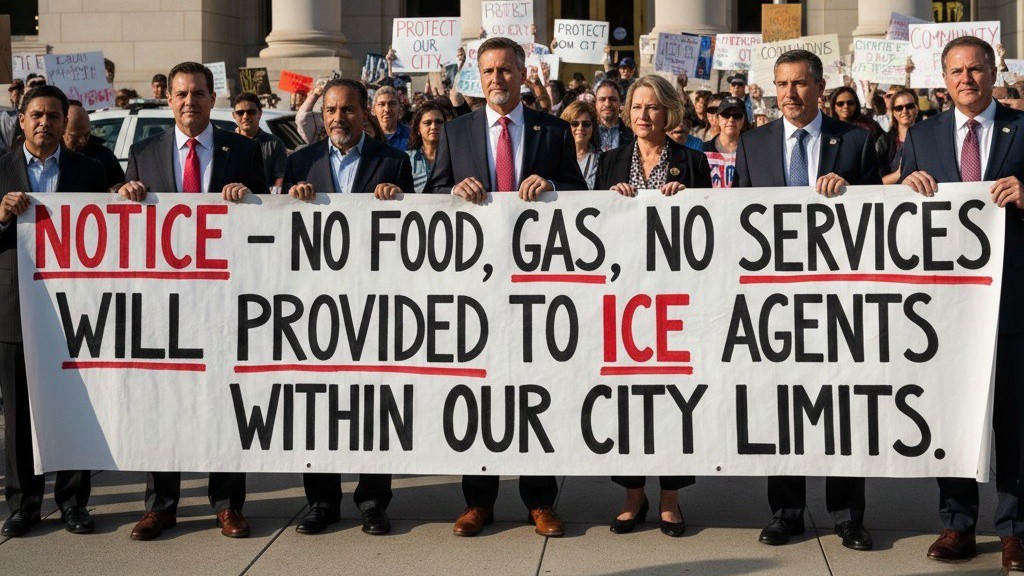
However, the reality is that ICE operates on more than just power. It uses gas. Regarding coffee from the corner deli. The serene complicity of local business, parking places, and Wi-Fi are all available at rest stops. That is exactly where communities have the power and obligation to retaliate.
City Officials should be doing this as a Sanctuary City.
The concept is straightforward but has far-reaching consequences: “If you don’t want ICE in your community, stop supporting it.”
Don’t sell gasoline to ICE vehicles that are marked or unlabeled. bar representatives for restaurants and restrooms. Tell local businesses: no contracts, no services, no silent support for a system that splits families apart and makes due process optional.
This isn’t vigilantism. It’s community self-defense.
Unlawful Actions by DHS and ICE!
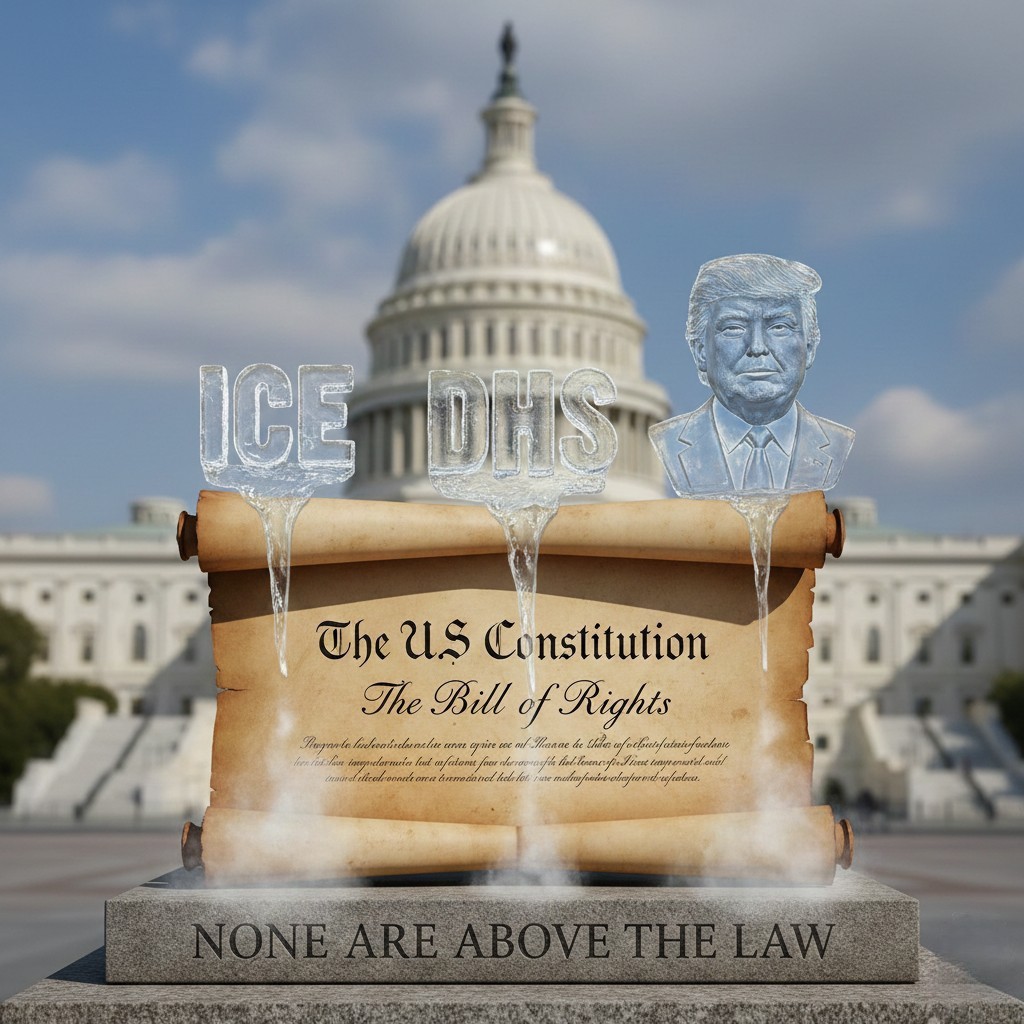
Such conduct, according to critics, “impedes federal law enforcement.” However, an agency loses the presumption of legitimacy when it regularly disregards the Fourth Amendment by entering houses without a warrant and the Fifth Amendment by arresting individuals without charges or access to a lawyer. ICE functions in a gray area made possible by indifference rather than legislation. Local companies become accessories to constitutional breaches every time a gas station fills an ICE van with gasoline or a restaurant provides breakfast to officers on their way to a raid, albeit unknowingly.
Although they are a beginning, sanctuary city statements are frequently symbolic. A genuine sanctuary is about the business owner who says, “Not on my property,” not about municipal hall resolutions. It’s about the community that collectively draws a line, saying, “You may have a badge, but you don’t have our consent.”
ICE has become the Enemy of The State as they are Attacking US Senators!
Others will contend that refusing service is un-American. However, it is undeniably un-American to permit a federal agency to arm local infrastructure against vulnerable neighbors while simultaneously asserting impunity. The Constitution does not cease to exist when someone’s immigration status changes, and it most certainly does not cease to exist when someone wears a DHS patch.
Moral resistance has always relied on disrupting the machinery of injustice—**not just condemning it, but starving it**—through the thousands of daily acts of ordinary people withdrawing their cooperation. History shows that oppressive regimes fall as a result of this withdrawal of cooperation, not just through courts or Congress. This withdrawal of cooperation has taken many forms, including divestment campaigns against apartheid and boycotts during the Civil Rights Movement.
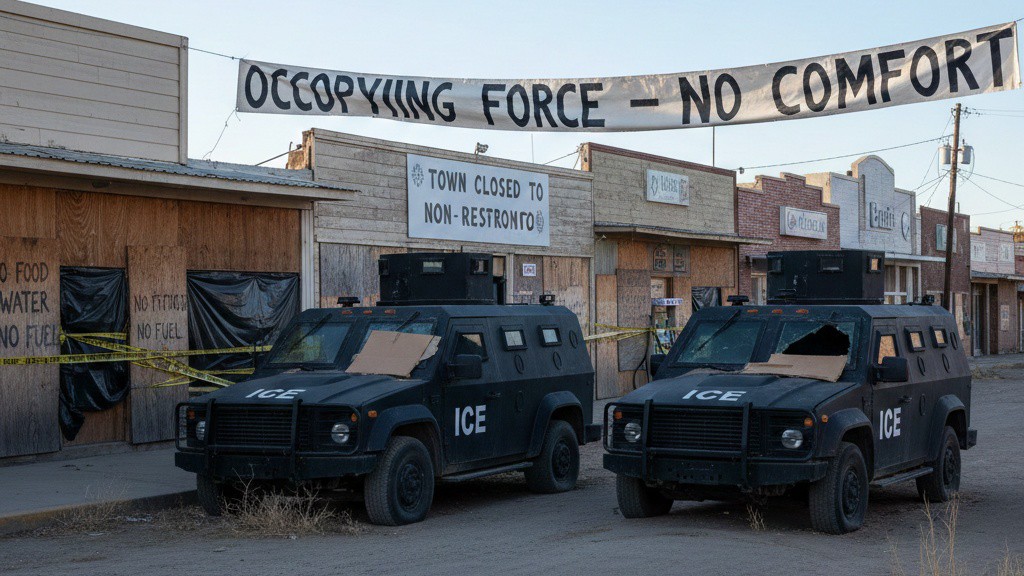
ICE is an Occupying Force to Oppress The People.
Therefore, to be clear, if ICE believes that it is above the Constitution, then communities are entitled to treat it as an occupying force, using complete non-cooperation rather than violence. No sustenance. No fuel. There are no restrooms. Not at all cozy. There isn’t a cover.
Make it logistically impossible for ICE to function in your city.
Sanctuary Cities, It’s time to start defending your residents, YOUR COMMUNITY .
Make your city a genuine haven rather than just a “sanctuary” in name.
Because justice cannot be proclaimed. We are the ones who enforce it.
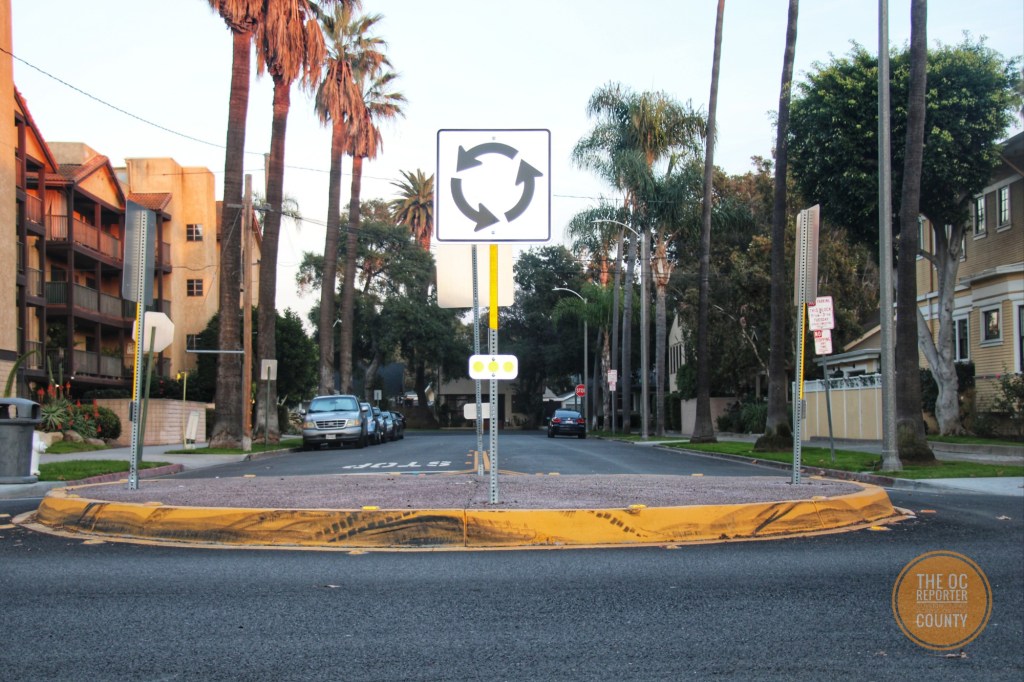
Foto de The OC Reporter/ ¿Seguridad o peligro en Santa Ana?
Las rotondas suelen considerarse una solución moderna a los problemas del tráfico urbano: reducen la velocidad de los vehículos, eliminan las colisiones transversales a alta velocidad y, en teoría, crean calles más tranquilas y seguras. Por eso, Santa Ana, al igual que muchas ciudades del país, las ha ido instalando poco a poco, desde corredores céntricos hasta tranquilas manzanas residenciales, como parte de una iniciativa más amplia de pacificación del tráfico.
Pero cuando una rotonda se encuentra cerca de un cruce peatonal donde un querido miembro de la comunidad es atropellado y muere, como le ocurrió a María Rubalcava de Ruesga, de 69 años, en las calles Bishop y Shelton en noviembre de 2025, no basta con citar las estadísticas nacionales. Los residentes se plantean preguntas urgentes y locales: ¿Funciona este diseño aquí? ¿Para quién? ¿Y a qué precio?
El accidente fatal, seguido pocos días después por una colisión de varios vehículos cerca de otra rotonda del centro, en las calles Bush y 8, ha intensificado las preocupaciones que venían latentes. Los vecinos reportan confusión, comportamiento errático al volante e incluso un aumento en la velocidad al circular por patrones circulares desconocidos. Una rotonda, que antes era una simple señal de alto de cuatro vías, se ha convertido en un lugar frecuente de cuasi accidentes, según informes locales.
Esto no significa que las rotondas sean intrínsecamente defectuosas. Datos de la Administración Federal de Carreteras e ingenieros de transporte muestran sistemáticamente que reducen los accidentes graves hasta en un 80 % en comparación con las intersecciones señalizadas. Pero el éxito depende de algo más que solo asfalto y pintura. Se basa en una señalización clara, una iluminación adecuada, cruces peatonales adecuados, educación vial y, fundamentalmente, la participación de la comunidad antes de que comience la construcción.
El compromiso de Santa Ana con Visión Cero —eliminar las muertes por accidentes de tránsito— es encomiable. Sin embargo, la infraestructura que prioriza el flujo vehicular sobre la claridad peatonal puede ser contraproducente, especialmente en vecindarios con personas mayores, niños y mucho tráfico peatonal. Si los residentes se sienten menos seguros, es una señal que vale la pena tomar en cuenta.
Instamos a la Ciudad de Santa Ana a detenerse, escuchar y evaluar. Publicar datos de accidentes antes y después. Realizar una auditoría de seguridad de las rotondas recientemente instaladas. Organizar foros vecinales, no solo para dar explicaciones, sino también para el codiseño. La seguridad no se trata solo de métricas de ingeniería; se trata de si las personas se sienten seguras al caminar a la parada de autobús o cruzar la calle para visitar a un vecino.
Las rotondas pueden ser parte de un futuro más seguro, pero solo si se diseñan pensando en las personas, no solo en el tráfico.
Photo by The OC Repoorter/ Safety or Hazard in Santa Ana?
Roundabouts are often hailed as a modern solution to urban traffic woes: they reduce vehicle speeds, eliminate high-speed T-bone collisions, and, in theory, create calmer, safer streets. That’s why Santa Ana, like many cities across the country, has been steadily installing them—from downtown corridors to quiet residential blocks—as part of a broader traffic-calming initiative.
But when a roundabout sits near a crosswalk where a beloved community member is struck and killed, as happened to 69-year-old Maria Rubalcava de Ruesga on Bishop and Shelton Streets in November 2025, it’s not enough to point to national statistics. Residents are asking urgent, localized questions: Is this design working here? For whom? And at what cost?
The fatal crash—followed just days later by a multi-vehicle collision near another downtown roundabout at Bush and 8th Streets—has amplified long-simmering concerns. Neighbors report confusion, erratic driver behavior, and even increased speeding as motorists navigate unfamiliar circular patterns. One roundabout, converted from a straightforward four-way stop, has become a frequent site of near-misses, according to local accounts.
This isn’t to say roundabouts are inherently flawed. Data from the Federal Highway Administration and transportation engineers consistently show they reduce severe crashes by up to 80% compared to signalized intersections. But success depends on more than just asphalt and paint. It hinges on clear signage, proper lighting, adequate pedestrian crossings, driver education—and, crucially, community input before construction begins.
Santa Ana’s commitment to Vision Zero—eliminating traffic deaths—is commendable. Yet infrastructure that prioritizes vehicle flow over pedestrian clarity can backfire, especially in neighborhoods with seniors, children, and high foot traffic. If residents feel less safe, that’s a signal worth heeding.
We urge the City of Santa Ana to pause, listen, and evaluate. Release before-and-after crash data. Conduct a safety audit of recently installed roundabouts. Host neighborhood forums—not just for explanation, but for co-design. Safety isn’t just about engineering metrics; it’s about whether people feel secure walking to the bus stop or crossing the street to visit a neighbor.
Roundabouts can be part of a safer future—but only if they’re designed with people, not just traffic, in mind.
Fotografía de The OC Reporter/ 3rd y Bush St – 1st Roundabout que Santa Ana instaló hace unos años y muchos accidentes casi fatales
Las rotondas han estado apareciendo en Santa Ana durante varios años, primero como instalaciones temporales, luego como elementos permanentes. El centro de la ciudad vio su primera rotonda en las calles Tercera y Bush, y en los últimos años, se han expandido a barrios residenciales como parte de la estrategia más amplia de la ciudad para moderar el tráfico.
Las autoridades municipales promocionan las rotondas como una medida de seguridad comprobada, citando estudios que demuestran que reducen la probabilidad de accidentes mortales y con lesiones graves en comparación con las intersecciones convencionales. Por su diseño, las rotondas reducen la velocidad de los vehículos y eliminan puntos de conflicto de alto riesgo, como giros a la izquierda y colisiones frontales, comunes en intersecciones con semáforos o con control de parada. Se espera que los conductores cedan el paso al tráfico circulante, reduzcan la velocidad al acercarse y señalicen antes de salir.
Foto de The OC Reporter/ El 19 de noviembre de 2025, María Rubalcava de Ruesga, de 69 años, fue atropellada y asesinada por un camión de basura mientras cruzaba donde está instalada una rotonda.
Pero algunos residentes ahora argumentan que estas mismas características están creando nuevos peligros. El 19 de noviembre de 2025, María Rubalcava de Ruesga, de 69 años, fue atropellada y falleció por un camión de basura mientras cruzaba un cruce peatonal cerca de la intersección de las calles Bishop y Shelton, donde se instaló una rotonda hace aproximadamente un año. El Departamento de Policía de Santa Ana está investigando el accidente, y los vecinos han expresado su preocupación de que la disposición de la rotonda pueda estar contribuyendo a condiciones peligrosas tanto para peatones como para conductores.
Menos de dos semanas después, otro accidente grave ocurrió en las cercanías. Según un registro de despacho de la OCFA del 28 de noviembre de 2025, a las 23:56, varios vehículos colisionaron en la intersección de las calles North Bush y East 8th, el mismo corredor que la rotonda del centro. Unidades de la División 6, incluyendo el Batallón 9, la Unidad de Motor 75 y el Camión 75, acudieron al lugar.
Foto de The OC Reporter/varios vehículos chocaron en la intersección de North Bush Street y East 8th Street
Los residentes de la zona reportan un aumento en el exceso de velocidad y confusión sobre las normas de derecho de paso, particularmente en una rotonda que reemplazó una antigua intersección de cuatro vías. Algunos afirman que el cambio ha vuelto la intersección más caótica, no más segura, aunque la ciudad no ha publicado datos oficiales de accidentes que comparen las condiciones antes y después de la instalación.
Fotografía de The OC Reporter/ Señales de conductores corriendo hacia la rotonda en 9th y Spurgeon.
Mientras Santa Ana continúa modernizando las intersecciones con rotondas para mejorar la seguridad del vecindario, los miembros de la comunidad solicitan una revisión más exhaustiva de su diseño, ubicación e impacto, especialmente en zonas con alta actividad peatonal.






 The OC Reporter