Editorial: The Leadership Crisis of Santa Ana Mayor Valerie Amezcua Endangers Residents

In a city recognized for its dedication to immigrant populations, Mayor Valerie Amezcua of Santa Ana is at the heart of a rising controversy that casts doubt on her leadership and the priorities she holds. At the City Council meeting on May 6th, 2025, the remarks made by Mayor Amezcua indicated a disturbing shift in attention—one that seems more focused on securing federal funds and political authority rather than safeguarding the very individuals she was elected to represent.

Santa Ana has been esteemed as a sanctuary city for many years, a stance based on the principle that all residents—irrespective of their immigration status—are entitled to public services, safety, and respect. This dedication has turned the city into a haven for many, particularly during uncertain times surrounding immigration laws. However, recent comments from Mayor Amezcua imply that this core value is now at risk—not from outside influences, but from officials within City Hall.

During the tense council meeting on May 6th, Amezcua expressed worries about the possible loss of federal financing linked to law enforcement activities, emphasizing how it could affect police resources and her own position. While financial management is crucial, framing the conversation in such self-focused terms has unsettled the community. It has conveyed to many that the mayor may be contemplating compromising the city’s sanctuary policy—not out of necessity, but from apprehension—fear of losing authority, funding, and ultimately, control.

This type of leadership—or the lack thereof—is genuinely concerning. Sanctuary policies represent more than mere symbols; they function as critical protections. By discouraging collaboration with Immigration and Customs Enforcement (ICE), these policies help undocumented individuals feel secure when reporting crimes, accessing emergency aid, and engaging in community affairs. Dismantling those protections would lead to immediate and severe repercussions, especially for the most vulnerable segments of our society.

The mayor’s seemingly open approach to modifying the city’s sanctuary policy without a defined strategy or community agreement erodes trust in local governance. Citizens should have leaders who uphold principles amidst political challenges, not ones who falter when facing financial difficulties or partisan pressures.

Additionally, the timing and manner of Amezcua’s comments were highly inappropriate. In a year characterized by escalating anti-immigrant feelings across the country, Santa Ana should be strengthening—not stepping back from—its standing as an example of inclusive governance. Instead, the mayor’s statements have created confusion, fear, and division at a time when solidarity is urgently needed.

We urge Mayor Amezcua to clarify her stance publicly and clearly reaffirm her dedication to Santa Ana’s sanctuary values. If she is unable to do so sincerely, perhaps it is time for new leadership to emerge—leadership that embodies the principles of compassion, bravery, and community that Santa Ana truly deserves.

Let’s keep in mind the purpose of sanctuary cities: they are meant to preserve lives, not to challenge federal power. The mayor should be aware that her responsibilities involve ensuring the safety of individuals, rather than just obtaining financial support. At this moment, the residents of Santa Ana are closely observing her decisions and the direction she takes.

Editorial: Holding the Santa Ana Police Department Responsible for Unregulated Patrol Stops

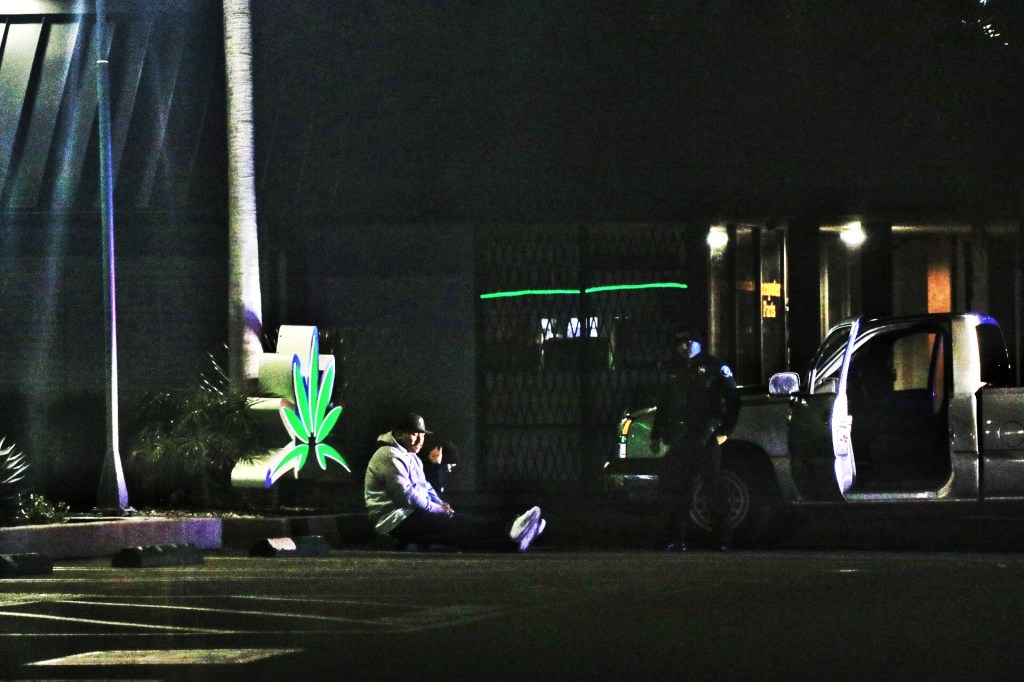
Photo by: Igmar Rodas/The Orange County Reporter Santa Ana Police Department makes traffic stops on Private Property.

A concerning trend has surfaced in Santa Ana: patrol officers are conducting traffic stops without adequately informing dispatch, resulting in no official documentation of their whereabouts or the rationale for the stop. When anxious residents contact the police department to report these dubious incidents—equipped with patrol car numbers and precise details—they encounter stonewalling and evasive responses from supervisory personnel.

The fundamental problem lies in a deficiency of accountability. Patrol vehicles are fitted with GPS tracking, yet supervisors decline to utilize this technology to confirm officer locations. Some even assert that accessing GPS information is “beyond their pay grade. ” This provokes serious questions: if supervisors are unaware of their officers’ locations, who possesses that knowledge? And if they do have it but choose not to reveal it, what could they be concealing?

Photo by: Igmar Rodas/The Orange County Reporter, Santa Ana Residents at Risk for Unchecked Stops, As Police Dispatch are unaware.

Openness is the cornerstone of public confidence in law enforcement. When officers act outside the regulations of their own department, it paves the way for misconduct—unlawful stops, racial profiling, and violations of civil rights. The situation where a supervisor denies the existence of a patrol unit that residents have clearly observed, or declines to provide badge numbers, is intolerable.

Santa Ana residents warrant a police force that functions within the confines of the law, rather than above it. The department must enforce stricter oversight protocols, incorporating real-time tracking of patrol vehicle locations that supervisors are obligated to supervise. Moreover, there must be a defined, enforceable policy requiring that all traffic stops are recorded with dispatch.

Photo by: Igmar Rodas/The Orange County Reporter.

Should the department resist these fundamental accountability initiatives, it falls upon the community to advocate for change. City officials, the police chief, and civilian oversight bodies must intervene to guarantee that officers adhere to appropriate protocols. Transparency is not a privilege—it is a public entitlement. Officers in Santa Ana must be accountable to the individuals they serve, rather than operating covertly.

Editorial: Encubrimiento de una muerte bajo custodia policial, Departamento de Policía de Santa Ana

La muerte de Freddie Washington mientras se encontraba bajo custodia policial ha provocado una gran controversia, en particular en relación con la respuesta del Departamento de Policía de Santa Ana al incidente. Muchos se preguntan por qué el departamento no ha sido abierto respecto de información vital sobre la muerte de Washington, lo que ha llevado a sospechar de un posible encubrimiento.

Fredd

Es importante reconocer, en primer lugar, que Washington falleció mientras se encontraba bajo custodia de las fuerzas del orden en Santa Ana, California. La falta de transparencia sobre los hechos que precedieron a su muerte, junto con las declaraciones públicas incompletas o tardías del Departamento de Policía de Santa Ana, ha intensificado el escepticismo público. Los críticos sostienen que la vacilación del departamento a la hora de revelar detalles esenciales, como la causa de la muerte o detalles específicos sobre las circunstancias de su arresto, puede ser un intento de proteger a los agentes implicados de ser interrogados.

En situaciones de alto perfil como ésta, es frecuente que se produzcan encubrimientos, especialmente cuando las autoridades se enfrentan a posibles repercusiones jurídicas y políticas. A falta de una investigación exhaustiva y transparente, es imposible que el público conozca la verdad. En una época caracterizada por una desconfianza generalizada hacia las fuerzas del orden, sucesos como éste aumentan las preocupaciones en torno a la rendición de cuentas de la policía y la protección de los derechos de los ciudadanos.

Además, existen problemas sistémicos más amplios. En numerosos casos, los departamentos pueden intentar ocultar información para mantener su reputación, evadir demandas judiciales o evitar más discordia en la comunidad. Sin embargo, esa falta de rendición de cuentas no hace más que aumentar las tensiones y generar demandas de una mayor supervisión y reformas en las fuerzas del orden.

La prioridad ahora debe ser insistir en una investigación completa e independiente sobre la muerte de Freddie Washington. Solo con transparencia y rendición de cuentas se puede empezar a restablecer la confianza entre las fuerzas del orden y las comunidades a las que sirven. Hasta que eso ocurra, la nube de sospechas y la posibilidad de un encubrimiento persistirán, socavando la credibilidad del departamento de policía y perpetuando el ciclo de desconfianza pública.

Editorial: Santa Ana Mayor Valerie Amezcua Collaborating with ICE to Deport Santa Ana Residents? – A Breach of Trust in a Sanctuary City

Arrest of a person by ICE Agents on January 8th 2025 and Mayor Amezcua in Silence in the Sanctuary city of Santa Ana.

Santa Ana, a lively and diverse community that has historically taken pride in safeguarding immigrant families, is undergoing a concerning transformation. Under Mayor Valerie Amezcua’s direction, recent information has emerged indicating that the mayor’s office is collaborating with U. S. Immigration and Customs Enforcement (ICE) to deport residents. This has ignited a backlash from residents, activists, and community leaders who view this as a blatant contradiction to the city’s longstanding identity as a sanctuary city.

Santa Ana officially established its sanctuary status in 2017, offering vital protections for immigrants by limiting local law enforcement cooperation with federal immigration agencies. The aim was unequivocal: to foster a safe atmosphere for all residents, irrespective of their immigration status. Immigrant communities in Santa Ana have established their lives here, enriching the cultural, economic, and social landscape of the city. For many, the sanctuary label signified that they could exist with enhanced security, without the constant dread of deportation.

However, the recent revelations have overshadowed this feeling of safety and reliability. If Mayor Amezcua is indeed cooperating with ICE to facilitate deportations, it undermines the very tenets that Santa Ana’s sanctuary designation was intended to support. It not only breaches the trust of the immigrant community but also communicates that the city might be willing to work alongside federal authorities in ways that contradict its own laws and principles. This dilemma is not solely about one person; it mirrors a broader concern that impacts countless families. Deportations are not just statistics—they signify real individuals, mothers, fathers, sons, and daughters who face the possibility of being separated from their homes and communities. These individuals contribute to the city’s economy, participate in local educational institutions, and are vital members of the Santa Ana community.

If confirmed, Mayor Amezcua’s actions raise significant alarms. They jeopardize the trust that the city has diligently cultivated with its immigrant inhabitants. As a sanctuary city, Santa Ana ought to embody a symbol of safety and inclusion, not a location where immigrants dread deportation at the hands of local law enforcement. The city has always celebrated its progressive ideals, and this apparent policy shift represents a regression in the pursuit of immigrant rights and justice. The residents of Santa Ana are entitled to more. They warrant transparency from their elected officials and the reassurance that their city will continuously serve as a refuge, not a battleground for federal immigration enforcement. If the mayor persists in her collaboration with ICE, it is essential for the community to hold her accountable and demand a return to the principles that have established Santa Ana as a sanctuary city.

Ultimately, the residents of Santa Ana deserve to live free from the anxiety of deportation. If Mayor Amezcua is collaborating with ICE to remove local inhabitants, it is essential for her to reconsider this strategy and recognize that the sanctuary status of Santa Ana ought to be respected, not violated. It is time for our leaders to prioritize the needs of the community and strive for policies that safeguard, rather than penalize, the individuals who consider Santa Ana their home.

Editorial: La alcaldesa de Santa Ana, Valerie Amezcua, colabora con el ICE para deportar a los residentes de Santa Ana?: una violación de la confianza en una ciudad santuario

Arresto de una persona por agentes de ICE el 8 de enero de 2025 y el alcalde Amezcua en silencio en la ciudad santuario de Santa Ana.


Santa Ana, una comunidad vivaz y diversa que históricamente se ha enorgullecido de proteger a las familias inmigrantes, está atravesando una transformación preocupante. Bajo la dirección de la alcaldesa Valerie Amezcua, ha surgido información reciente que indica que la oficina del alcalde está colaborando con el Servicio de Inmigración y Control de Aduanas de los Estados Unidos (ICE) para deportar a los residentes. Esto ha provocado una reacción negativa de los residentes, activistas y líderes comunitarios que ven esto como una contradicción flagrante con la identidad de larga data de la ciudad como ciudad santuario.


Santa Ana estableció oficialmente su estatus de santuario en 2017, ofreciendo protecciones vitales para los inmigrantes al limitar la cooperación de las fuerzas del orden locales con las agencias federales de inmigración. El objetivo era inequívoco: fomentar una atmósfera segura para todos los residentes, independientemente de su estatus migratorio. Las comunidades inmigrantes en Santa Ana han establecido sus vidas aquí, enriqueciendo el panorama cultural, económico y social de la ciudad. Para muchos, la etiqueta de santuario significaba que podían vivir con mayor seguridad, sin el temor constante de la deportación.


Sin embargo, las recientes revelaciones han eclipsado esta sensación de seguridad y fiabilidad. Si el alcalde Amezcua está realmente cooperando con el ICE para facilitar las deportaciones, socava los principios mismos que la designación de santuario de Santa Ana pretendía respaldar. No solo viola la confianza de la comunidad inmigrante, sino que también comunica que la ciudad podría estar dispuesta a trabajar junto con las autoridades federales de maneras que contradicen sus propias leyes y principios. Este dilema no se trata únicamente de una persona; refleja una preocupación más amplia que afecta a innumerables familias. Las deportaciones no son solo estadísticas: significan individuos reales, madres, padres, hijos e hijas que enfrentan la posibilidad de ser separados de sus hogares y comunidades. Estas personas contribuyen a la economía de la ciudad, participan en instituciones educativas locales y son miembros vitales de la comunidad de Santa Ana.


Si se confirma, las acciones del alcalde Amezcua generan importantes alarmas. Ponen en peligro la confianza que la ciudad ha cultivado diligentemente con sus habitantes inmigrantes. Como ciudad santuario, Santa Ana debería encarnar un símbolo de seguridad e inclusión, no un lugar donde los inmigrantes teman la deportación a manos de las fuerzas del orden locales. La ciudad siempre ha celebrado sus ideales progresistas, y este aparente cambio de política representa una regresión en la búsqueda de los derechos y la justicia de los inmigrantes. Los residentes de Santa Ana tienen derecho a más. Se merecen transparencia de sus funcionarios electos y la seguridad de que su ciudad servirá continuamente como refugio, no como campo de batalla para la aplicación de las leyes federales de inmigración. Si la alcaldesa persiste en su colaboración con el ICE, es esencial que la comunidad la haga responsable y exija un retorno a los principios que han establecido a Santa Ana como ciudad santuario.


En última instancia, los residentes de Santa Ana merecen vivir libres de la ansiedad de la deportación. Si la alcaldesa Amezcua está colaborando con el ICE para expulsar a los habitantes locales, es esencial que reconsidere esta estrategia y reconozca que el estatus de santuario de Santa Ana debe ser respetado, no violado. Es hora de que nuestros líderes prioricen las necesidades de la comunidad y luchen por políticas que protejan, en lugar de penalizar, a las personas que consideran a Santa Ana su hogar.

Editorial: The Unlawful Use of Vehicle-Mounted Spotlights by Law Enforcement Personnel.

Photo: Igmar Rodas / Santa Ana Police Department among others in Orange County are making it unsafe for drivers in their vehicles.

As a citizen worried about the rising issues regarding law enforcement practices, one matter that has caught my attention is the unlawful use of vehicle-mounted spotlights by personnel . This activity, although appearing harmless at first, raises serious concerns regarding civil liberties, accountability, and the abuse of power.

Spotlights are potent instruments utilized to illuminate large areas during nighttime operations. While undeniably useful in specific law enforcement contexts, like searching for suspects or evaluating perilous situations, their application has become significantly more widespread and frequently excessive. In numerous cases, spotlights are used during ordinary traffic stops or to intimidate citizens simply going about their daily lives. It is not unusual for personnel  to direct these bright beams straight into the windows of private vehicles or residences, resulting in discomfort, disorientation, and in some instances, even fear.

What troubles me most is that this behavior is not consistently performed within the legal framework. The Fourth Amendment of the United States Constitution shields citizens against unreasonable searches and seizures, and shining a strong spotlight into a vehicle or home without justification often surpasses that limit. By employing spotlights indiscriminately, law enforcement could be infringing upon citizens’ rights to privacy and due process, frequently without any evident or prompt rationale.

Photo: Igmar Rodas / Santa Ana PD using spotlight directly on unsuspecting drivers, an illegal use of spotlights and violation of the 4th Amendment.

Moreover, there are alarming reports of spotlights being utilized in non-enforcement contexts, such as during police patrols in communities where they may be wielded to intimidate residents. The application of such a blaring, intrusive tool in areas already facing tension between citizens and law enforcement only heightens mistrust and fear. An instrument intended to safeguard and ensure public safety is, in these cases, being weaponized to create a sense of powerlessness in communities.

Equally concerning is the absence of transparency and oversight regarding the usage of vehicle-mounted spotlights. When the spotlight is activated, an adequate explanation is rarely provided to the public or to those who have been subjected to this invasive practice. In the absence of clear regulations governing how and when these instruments can be utilized, we are left vulnerable to abuse. This practice frequently appears arbitrary, with personnel  making decisions impulsively, based on personal judgment or bias.

What’s even more exasperating is the silence on this matter from higher authorities. It is uncommon to witness any public recognition or accountability for the misuse of spotlights, and even rarer to observe steps taken to mitigate their illegal application. Law enforcement agencies are often swift to defend the tools they employ, but when these tools transgress into unlawful surveillance or harassment, there exists a duty for oversight and rectification.

As a community, we need to insist on greater accountability. Law enforcement personnel should be expected to adhere to elevated standards of behavior, and the usage of vehicle-mounted spotlights needs to be strictly controlled. There should be explicit regulations that safeguard citizens’ rights while guaranteeing personnel  have the necessary resources to perform their duties effectively. The random and unlawful deployment of such devices only worsens the rift between law enforcement and the communities they aim to protect.

Chief of Police Directive 21-1(View Full Document)

“Based on the public safety hazard and in response to community and Council concerns, effective immediately the indiscriminate use of vehicle-mounted spotlights towards the driver of a moving vehicle is PROHIBITED, unless officers can articulate exigent circumstances necessitating their use.”

In the end, the right to privacy and shielding from unjust governmental interference must always be preserved. The existing pattern of spotlight misuse signifies a concerning shift away from these principles, and it is time for us to confront this practice and advocate for reform. The rule of law must be applicable to all individuals, including those assigned with enforcing it.