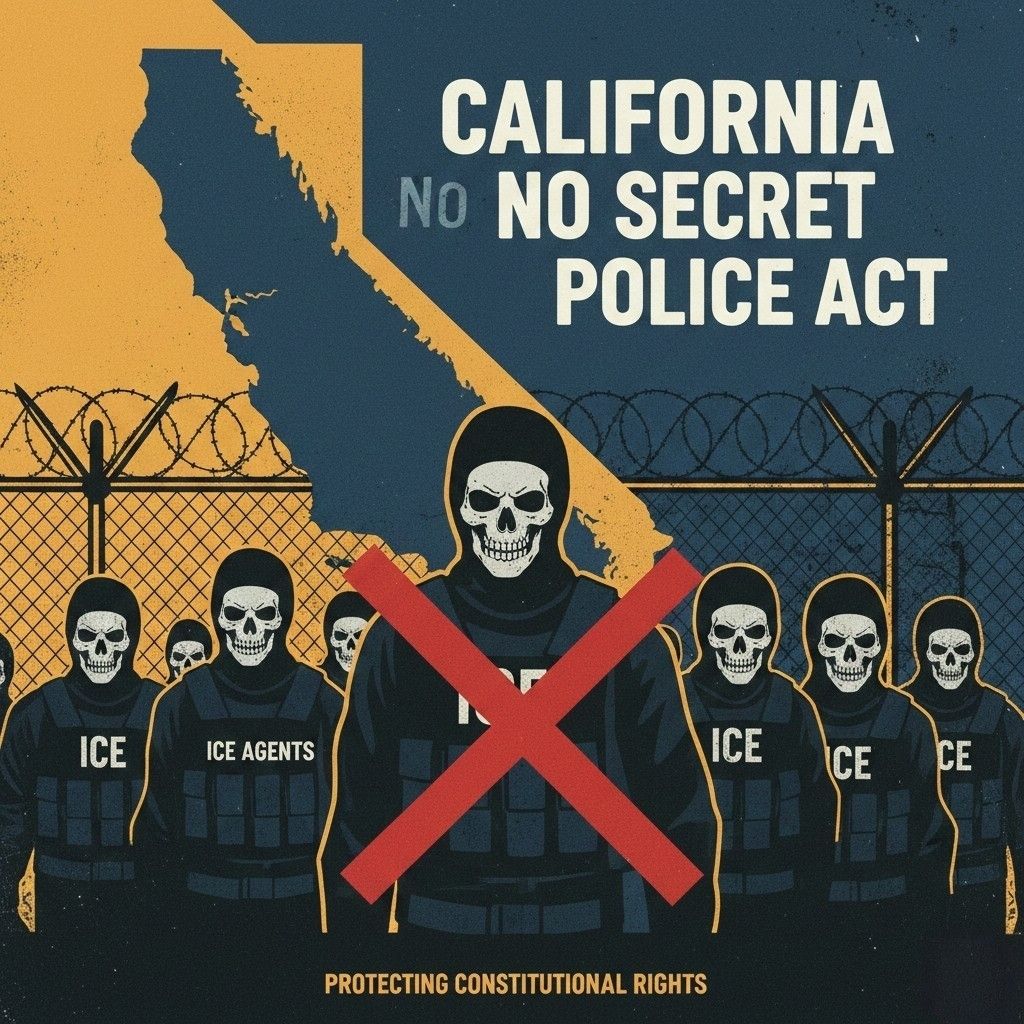
Editorial: La “Ley de No a la Policía Secreta” de California se convierte en ley: un paso revolucionario hacia la transparencia policial enfrenta oposición federal

La “Ley de No Policía Secreta” – SB 627 entra en vigor a partir del 1 de enero de 2026.

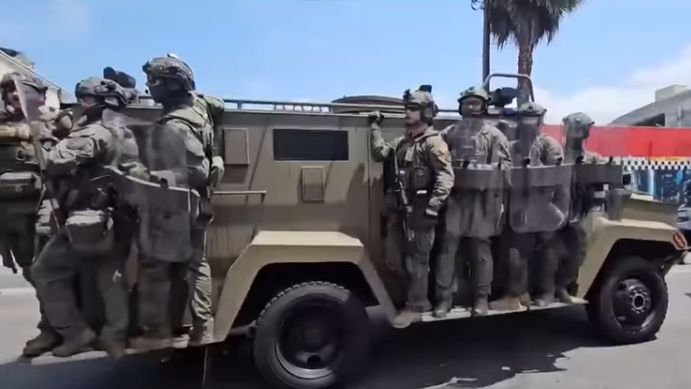
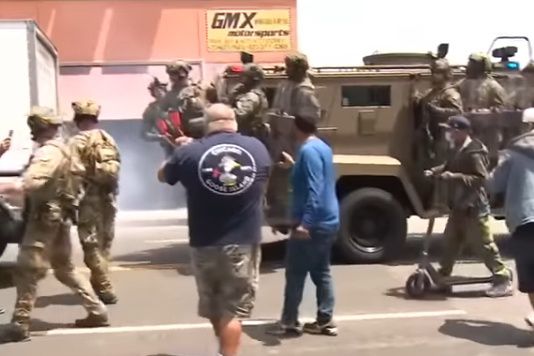
La “Ley de No a la Policía Secreta”, una legislación revolucionaria que prohíbe a todos los agentes del orden público que trabajan en el estado, incluidos los agentes federales (como los de ICE o CBP) y el personal de otros estados, usar mascarillas que oculten su identidad mientras están de servicio, se implementó en California a partir del 1 de enero de 2026, de acuerdo con el Proyecto de Ley Senatorial 627. La prohibición se dirige particularmente a las mascarillas “extremas”, como pasamontañas o pasamontañas, que ocultan los rasgos faciales hasta el punto de que un agente no puede ser fácilmente reconocido por su nombre o número de placa.

La creciente preocupación pública por la posibilidad de que funcionarios federales no identificados llevaran a cabo operativos, en particular de control migratorio, en grandes ciudades de California, completamente enmascarados y sin ningún medio de identificación, condujo a la legislación. Los críticos compararon estos métodos con los utilizados en regímenes autoritarios, alegando que erosionaban la confianza de la comunidad y fomentaban el miedo en lugar de la seguridad. Al exigir que todas las personas que ejercen la autoridad policial en el estado sean claramente identificables, la SB 627 busca restablecer la rendición de cuentas.

Para el 1 de julio de 2026, todas las fuerzas del orden, incluyendo las locales, estatales, federales e incluso los grupos de trabajo visitantes de otros estados, deberán implementar y publicar políticas escritas que rijan el uso de mascarillas faciales de acuerdo con la nueva legislación. Como reflejo del serio propósito de la legislatura, las infracciones pueden dar lugar tanto a litigios civiles como a sanciones penales. No obstante, esta estrategia de cumplimiento ha suscitado preocupación: sobre todo en casos de alta visibilidad o sensibilidad política, los críticos advierten que la identificación de los agentes podría exponerlos al acoso en internet, la difusión de información personal o represalias.

La transparencia es esencial en una democracia, según sus defensores. Durante el debate del proyecto de ley, un asistente legislativo declaró: «Si el público no sabe quién lo vigila, no puede haber una policía responsable». La legislación también aborda una amenaza real: la posibilidad de que delincuentes se hagan pasar por agentes del orden. El proyecto de ley SB 627 busca eliminar la ambigüedad que podría facilitar el fraude o la violencia al aumentar la cantidad de videos virales que muestran a personas enmascaradas ejerciendo su autoridad.

Sin embargo, existe una oposición inmediata y firme a la legislación. En entornos donde los agentes federales se enfrentan a amenazas de cárteles, traficantes de personas o extremistas nacionales, el Departamento de Seguridad Nacional de EE. UU. (DHS) ha declarado inconstitucional la SB 627, alegando que les impide desempeñar sus responsabilidades de forma segura. El DHS ha indicado que planea impugnar la legislación en los tribunales bajo el concepto de primacía federal y sostiene que el estado no tiene jurisdicción sobre las acciones de las fuerzas del orden federales.

Este conflicto legal sienta las bases para una posible batalla constitucional en la Corte Suprema de Estados Unidos sobre el conflicto entre los derechos estatales y la autoridad federal. Mientras tanto, el audaz experimento de California sirve como un caso de prueba nacional: ¿Tiene un estado la autoridad para exigir transparencia a todos los que portan una placa en su territorio, independientemente de su jurisdicción?

Al redefinir los límites éticos y visuales de la policía contemporánea, la SB 627 tiene el potencial de servir de modelo para leyes similares en todo el país si recibe apoyo. En una época donde las fronteras entre la autoridad estatal y federal son cada vez más difusas, podría fortalecer los límites del poder estatal si se rechaza. En cualquier caso, California ha reabierto un debate crucial sobre quién vigila a los vigilantes y si se les debería permitir usar mascarilla.

Aunque este estatuto está formalmente en vigor a partir de enero de 2026, el Estado de California y el gobierno federal ahora están envueltos en una importante disputa legal al respecto.

Disposiciones principales de la Ley de No a la Policía Secreta (SB 627)

  • Prohibición de mascarillas: Prohíbe a los agentes del orden público locales y federales utilizar pasamontañas, máscaras de esquí o polainas para el cuello que cubran sus rostros mientras están de servicio.
  • Requisitos de identificación: Los uniformes, nombres o números de placa deben facilitar la identificación de los agentes del orden. La Ley de No Vigilantes (SB 805), que aborda en particular las tácticas de “policía secreta” empleadas en recientes redadas de inmigración, suele ir acompañada de esto.

Resultados de las infracciones:

  • Responsabilidad civil: Los oficiales que usan máscaras cuando cometen agravios (como arrestos falsos o asaltos) pierden algunas de sus protecciones legales (inmunidad calificada) y pueden estar sujetos a una multa civil mínima de $10,000.
  • Cargos criminales: El incumplimiento de la prohibición de usar mascarillas puede ser procesado como un delito menor.

Situación jurídica vigente (enero de 2026)

Debe tener en cuenta los siguientes cambios, aunque la legislación entró en vigor el 1 de enero de 2026:

  • Demanda federal: El Departamento de Justicia de los Estados Unidos (DOJ) presentó una demanda contra California, alegando que el estado no puede regular las acciones de los agentes federales (ICE, Patrulla Fronteriza). Afirman que esto contraviene la “Cláusula de Supremacía” de la Constitución.
  • Orden judicial temporal: A fines de diciembre de 2025, un tribunal federal (la jueza Christina A. Snyder) emitió una orden judicial temporal sobre la aplicación de ciertas disposiciones de la ley contra funcionarios federales mientras el caso está pendiente de sentencia.
  • Conflicto sobre el terreno: Algunos fiscales de distrito de California, como los de San Francisco, han dicho que planean aplicar la ley agresivamente e incluso han insinuado que la policía local podría arrestar a los agentes federales que violen estas leyes estatales.

Las excepciones de la ley

Aunque la ley tiene algunas restricciones sobre el uso de mascarillas, hay situaciones particulares en las que está permitido:

  • Operaciones Encubiertas: Con el fin de garantizar la seguridad de los agentes en posiciones encubiertas.
  • Equipo médico/táctico: Cascos tácticos estándar o máscaras de grado médico, como las N95, que se usan por razones de salud.
  • Incendio/Situaciones peligrosas: Máscaras que brindan protección física contra peligros ambientales.
Editorial: California’s “No Secret Police Act” Becomes Law: A Revolutionary Step Toward Police Transparency Faces Federal Opposition

The “No Secret Police Act” –  SB 627 is in effect as of January 1st 2026.

The “No Secret Police Act,” which is a revolutionary legislation that forbids all law enforcement officers working in the state, including federal agents (like those from ICE or CBP) and out-of-state personnel, from wearing face coverings that conceal their identity while on duty, has been implemented in California as of January 1, 2026, in accordance with Senate Bill 627. The prohibition particularly aims at “extreme” coverings, such as ski masks or balaclavas, that conceal facial features to the extent that an officer cannot be easily recognized by their name or badge number.

Growing public concern that unidentified federal officials were carrying out operations, notably immigration enforcement, in large California cities while fully masked and without any means of identification led to the legislation. These methods were compared by critics to those used in authoritarian regimes, claiming they eroded community trust and fostered dread as opposed to security. By requiring that all individuals who use police authority in the state be clearly identifiable, SB 627 seeks to reestablish accountability.

By July 1, 2026, all law enforcement organizations, including local, state, federal, and even visiting out-of-state task forces, must implement and make public written policies governing the use of facial coverings in accordance with the new legislation. Reflecting the legislature’s serious purpose, infractions may lead to both civil litigation and criminal punishment. Nonetheless, there have been worries about this enforcement strategy: Particularly in cases with high visibility or political sensitivity, critics caution that identifying officers might leave them vulnerable to internet bullying, doxxing, or retribution.

Transparency is essential in a democracy, according to its proponents. During the bill’s debate, a legislative assistant stated, “If the public doesn’t know who is policing them, you cannot have accountable policing.” The legislation also addresses a real threat: the possibility of criminals posing as law enforcement officials. SB 627 aims to remove ambiguity that might facilitate fraud or violence by increasing the number of videos that go viral and feature masked people asserting authority.

However, there is immediate and strong opposition to the legislation. In environments where federal officers face threats from cartels, human traffickers, or domestic extremists, the U.S. Department of Homeland Security (DHS) has deemed SB 627 unconstitutional, claiming that it impedes their capacity to carry out their responsibilities safely. DHS has indicated plans to contest the legislation in court under the notion of federal preemption and contends that the state has no jurisdiction over the actions of federal law enforcement.

This legal conflict lays the groundwork for a potential constitutional struggle in the United States Supreme Court over the conflict between state rights and federal authority. Meanwhile, California’s daring experiment serves as a national test case: Does a state have the authority to require transparency from everyone who wears a badge on its territory, regardless of jurisdiction?

By redefining the ethical and visual limits of contemporary policing, SB 627 has the potential to serve as a model for similar legislation throughout the nation if it is supported. In an age where the borders between state and federal authority are becoming more and more hazy, it may strengthen the boundaries of state power if it is defeated. In any case, California has reopened a vital discussion about who is watching the watchers and if they should be permitted to wear a mask..

Although this statute is formally in force as of January 2026, the State of California and the federal government are now embroiled in a significant legal dispute about it.

The No Secret Police Act (SB 627)’s Main Provisions

  • Mask Ban: It forbids local and federal law enforcement officers from wearing ski masks, balaclavas, or neck gaiters that cover their faces while on duty.
  • Identification Requirements: Uniforms, names, or badge numbers must make law enforcement officials easily identifiable. The No Vigilantes Act (SB 805), which particularly addresses the “secret police” tactics employed in recent immigration raids, is frequently coupled with this.

Results of infractions:

  • Civil Liability: Officers who wear masks when committing torts (such as false arrest or assault) lose some of their legal protections (qualified immunity) and may be subject to a minimum civil fine of $10,000.
  • Criminal Charges: A breach of the mask ban may be prosecuted as a misdemeanor.

Existing Legal Position (January 2026)

You should be aware of the following changes, even though the legislation became law on January 1, 2026:

  • Federal Lawsuit: The U.S. Department of Justice (DOJ) filed a lawsuit against California, claiming that the state cannot regulate the actions of federal agents (ICE, Border Patrol). They claim that this contravenes the Constitution’s “Supremacy Clause.”
  • Temporary Injunction: In late December 2025, a federal court (Judge Christina A. Snyder) issued a temporary stop (injunction) on the enforcement of certain provisions of the law against federal officers while the case is pending adjudication.
  • On the Ground Conflict: Some District Attorneys in California, like those in San Francisco, have said they plan to aggressively enforce the law and have even implied that local police may arrest federal agents who break these state laws.

The Law’s Exceptions

Although the law has some restrictions on mask use, there are particular situations when it is permitted:

  • Undercover Operations: In order to guarantee the security of agents in deep-cover positions.
  • Medical/Tactical Equipment: Standard tactical helmets or medical-grade masks, such as N95s, worn for health reasons.
  • Fire/Dangerous Situations: Masks that provide physical protection from environmental dangers.

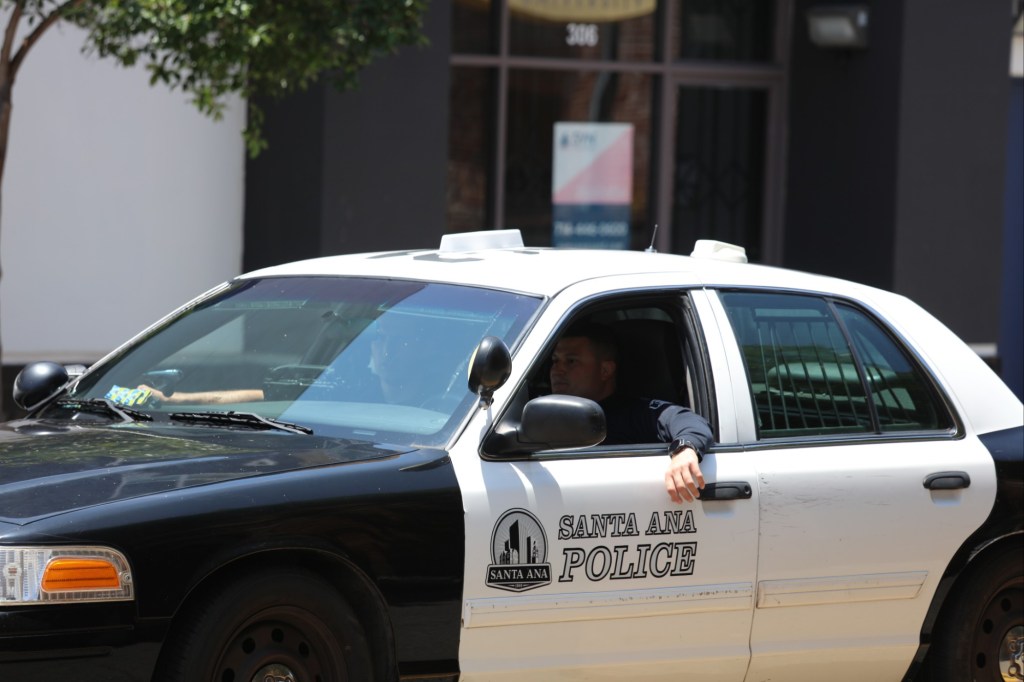
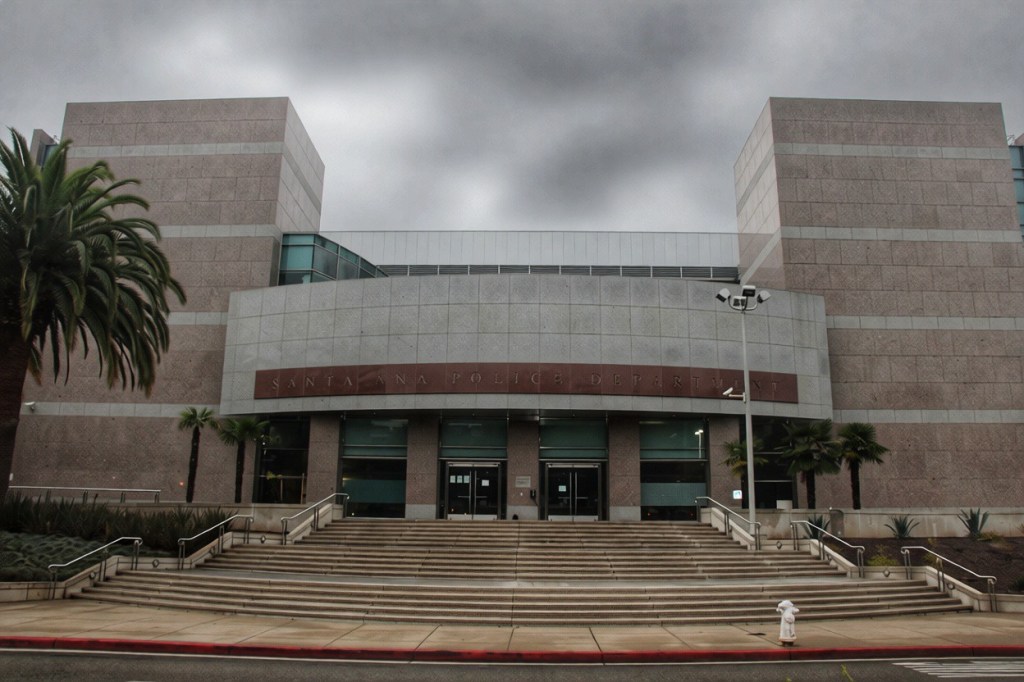
Editorial: Santa Ana debe dejar de ignorar a los terroristas cazarrecompensas que se hacen pasar por agentes de ICE.

Foto: The OC Reporter / Departamento de Policía de Santa Ana

A estas alturas ya no es un rumor; es un hecho documentado.

Hombres con placas falsas que se hacen pasar por funcionarios federales están aterrorizando hogares, asustando a jóvenes y destrozando familias en las calles de Santa Ana. No son agentes de ICE. Son cazarrecompensas independientes o contratistas que carecen de autoridad legal, constitucional y de derecho a estar en nuestras calles. Sin embargo, se aprovechan de nuestra ansiedad, desconcierto y del silencio de quienes juraron defendernos, actuando con total impunidad.

Estas personas no son agentes del orden. Son delincuentes. Suplantar la identidad de un agente federal es un delito grave tanto en California como a nivel federal. La entrada ilegal en propiedad ajena se define como el ingreso a una residencia sin permiso ni orden judicial. Utilizar amenazas de deportación para obtener favores o dinero de los residentes locales constituye coacción, y posiblemente secuestro. Además, según el artículo 837 del Código Penal de California, toda persona tiene el derecho —y la obligación— de realizar un arresto ciudadano al presenciar la comisión de tales delitos.

Entonces, ¿cuál es la razón de Santa Ana? ¿La policía se niega a actuar? No es por miedo al ICE. El problema no radica en la falta de conocimiento de la jurisdicción, sino en la negligencia. Es complicidad por inacción.

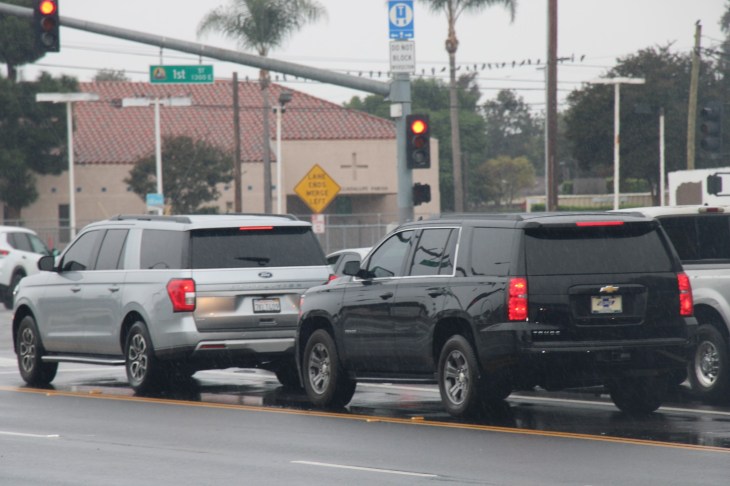
Foto de: The OC Reporter/ Impostores de ICE vistos en la 1.ª y Grand Ave.

A pesar de que el Ayuntamiento creó correctamente el fondo Ayuda Sin Fronteras, presentó solicitudes de acceso a la información pública, se sumó a demandas federales y recibió 50.000 dólares de apoyo de Sahuayo, México, nuestra policía sigue sin hacer nada mientras estos delincuentes andan sueltos. No están sobrecargados de trabajo ni confundidos. Simplemente deciden no aplicar la ley. Esto no es una discrepancia política. No es un debate sobre inmigración. Se trata de justicia fundamental.

Una madre no vive en una ciudad santuario si un hombre con una chaqueta negra llama a su puerta diciendo ser agente federal y ella se esconde en su cocina mientras la policía no hace nada cuando llama al 911. Está bajo asedio.

El alcalde Amezcua y el Ayuntamiento se han expresado extensamente sobre dignidad, justicia y derechos civiles. Ahora deben exigir que se tomen medidas. El Departamento de Policía de Santa Ana debe:

  • Utilice las leyes vigentes sobre arresto ciudadano y las leyes estatales contra la suplantación de identidad para capacitar de inmediato a los agentes en el reconocimiento y la detención de impostores que se hacen pasar por cazarrecompensas.
  • Identificar y denunciar públicamente a estos individuos como delincuentes, en lugar de como “socios en la aplicación de la ley”.
  • Establecer un equipo de respuesta rápida para investigar y registrar cada incidente reportado, y luego poner esta información a disposición del público en general.
  • Para procesar a los delincuentes reincidentes por cargos federales, trabaje con el FBI y el Departamento de Justicia.
  • Difundir imágenes, descripciones de vehículos y métodos conocidos a través de alertas comunitarias para informar a las familias sobre a quién temer y a quién detener.
Foto de: The OC Reporter/ Impostores de ICE vistos en Ross y Santa Ana Blvd.

El liderazgo moral de la ciudad no vale nada si su fuerza policial no defiende a sus ciudadanos de los criminales que se esconden tras la fachada del gobierno federal.

El aumento de $100,000 a Ayuda Sin Fronteras es algo que aplaudimos. Sin embargo, la tranquilidad de un niño que duerme sin ansiedad no se puede reemplazar con ninguna ayuda económica. El trauma de una intrusión domiciliaria por parte de un individuo con una placa falsa no se puede reparar con ninguna acción legal.

Gracias a Santa Ana, el mundo ha visto lo que es la valentía. Ahora debe demostrar lo que es la justicia mediante arrestos, no mediante comunicados de prensa.

Los cazarrecompensas no son agentes de inmigración, son delincuentes. Violan la ley. Además, nuestra policía debería empezar a tratarlos como tales.

— Los habitantes de Santa Ana merecen más que compasión. Merecen protección.

Editorial: Santa Ana Needs to Stop Ignoring Bounty Hunter Terrorists Impersonating ICE.

Photo by: The OC Reporter / Santa Ana Police Department

It’s no longer a rumor; it’s a documented fact.

Men wearing fake badges and claiming to be federal officials are terrorizing homes, scaring youngsters, and destroying families in the streets of Santa Ana. They are not ICE officers. They are independent bounty hunters, or contractors, who have no legal authority, constitutional authority, or right to be on our streets. They nevertheless take advantage of our anxiety, bewilderment, and the silence of the people sworn to defend us while acting with impunity.

These are not “enforcers.” They are criminals. Impersonating a federal officer is a felony under both California and federal law. Trespassing is defined as entering a residence without permission or a warrant. Using deportation threats to get compliance or money from locals is coercion, and maybe kidnapping. Additionally, according to California Penal Code § 837, every person has the right—and the obligation—to conduct a citizen’s arrest when witnessing such offenses being committed.

Therefore, what is the reason for Santa Ana? The police are unwilling to take action? Not fear of ICE. The problem is not a lack of understanding regarding jurisdiction. It is negligence. It’s complicity by inaction.

Photo by: The OC Reporter/ ICE Impostors seen on 1st and Grand Ave.

Despite the fact that the City Council has correctly created the Ayuda Sin Fronteras fund, submitted FOIA requests, joined federal lawsuits, and received $50,000 in support from Sahuayo, Mexico, our police force is still doing nothing while these criminals are allowed to go free. They aren’t “overworked,” nor are they “confused.” They are making the decision to refrain from enforcing the law. This isn’t a disagreement on policy. This is not a discussion about immigration. This is about fundamental justice.

A mother is not living under a sanctuary city if a man in a black jacket knocks on her door claiming to be federal and she hides in her kitchen while the police do nothing when she calls 911. She’s under siege.

Mayor Amezcua and the City Council have spoken at length about dignity, fairness, and civil rights. They must now insist on action. The Santa Ana Police Department must:

  • Utilize current citizen’s arrest laws and state laws against impersonation to immediately train officers to recognize and apprehend bounty hunter imposters.
  • Publicly identify and denounce these individuals as criminals rather than “enforcement partners.”
  • Establish a quick response team to look into and record each reported event, and then make this information available to the general public.
  • In order to prosecute repeat offenders on federal charges, work with the FBI and DOJ.
  • Disseminate images, vehicle descriptions, and known methods through community alerts to inform families about who to be afraid of and who to apprehend.
Photo by: The OC Reporter/ ICE Impostors seen on Ross and Santa Ana Blvd.

The city’s moral leadership is worthless if its police force won’t defend its citizens from the criminals hiding behind the guise of the federal government.

The $100,000 increase to Ayuda Sin Fronteras is something we applaud. However, a child sleeping without anxiety cannot be replaced by any financial support. The trauma of a house invasion by a guy using a phony badge cannot be undone by any legal action.

The world has seen what bravery looks like, thanks to Santa Ana. It must now demonstrate what justice looks like via arrests, not via press releases.

The bounty hunters are not ICE, they are criminals. They break the law. Additionally, our cops should start treating them like one.

— The People of Santa Ana deserve more than sympathy. They deserve protection.

Editorial: A Call for Accountability — Why Hasn’t Mayor Valerie Amezcua Taken Action Against Unverified “Federal Agents” Operating in Santa Ana?

Santa Ana Police Department
Failing to Protect The Residents of Santa Ana.

The people of Santa Ana deserve transparency, protection, and due process under the law. Yet, disturbing reports continue to surface regarding unidentified individuals—often masked and claiming to be federal agents—who are allegedly involved in unlawful detentions and even kidnappings in public view. These actions, reportedly occurring in the presence of Santa Ana Police Department (SAPD) officers who fail to intervene or verify the identities of these individuals, raise urgent questions about both legal responsibility and public safety.

Under California’s Penal Code 832, peace officers are required to act with due diligence in the performance of their duties. When SAPD officers witness what appears to be illegal acts—including kidnapping—and do not intervene or attempt to identify those responsible, they may indeed be complicit under the law. By failing to verify credentials, request identification, or at least investigate such incidents, SAPD officers risk becoming accessories to crimes committed in their presence.

Furthermore, every sworn law enforcement officer has taken an oath to uphold the U.S. Constitution and protect citizens from unlawful government intrusion. When officers stand by as individuals—whether legitimate federal agents or not—engage in warrantless detentions or abductions, they are violating the very principles they swore to defend.

Mayor Valerie Amezcua, as the head of the city’s executive branch and a representative of the people, must address this alarming situation immediately. The City Council and local oversight bodies also have a duty to ensure that SAPD is fulfilling its mandate to serve and protect all residents of Santa Ana—not turning a blind eye to potential criminal activity, no matter the alleged affiliation of the perpetrators.

We call on Mayor Amezcua and SAPD leadership to:

  1. Issue clear directives for officers to verify the identity and agency affiliation of any individual claiming to be a federal agent before allowing them to conduct operations within the city.
  2. Investigate all reported incidents involving unverified individuals engaging in detentions or arrests.
  3. Provide transparency to the public regarding any coordination or communication with federal agencies operating locally.
  4. Hold accountable any officers who fail to perform their sworn duty to protect citizens from unlawful harm or coercion.

The Constitution does not permit selective enforcement of the law. If our local law enforcement will not uphold it—especially when others abuse their perceived authority—they become part of the problem rather than the solution.

Santa Ana deserves better. Our community deserves safety, clarity, and justice—not silence or complicity.

Editorial: When Security Guards Play Cop — The Dangerous Consequences and Who’s Responsible

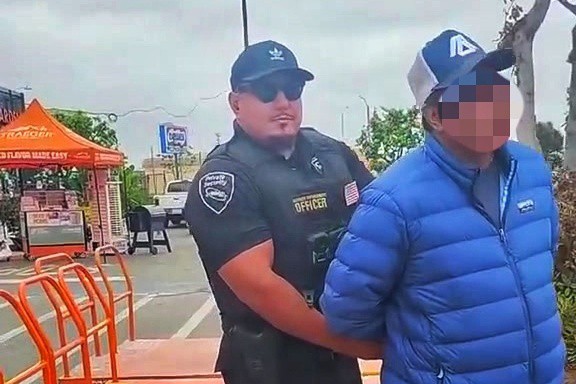
Unidentified Security making an arrest of an individual for Allegedly Being Undocumented.

A disturbing video has surfaced showing a California security guard acting like a law enforcement officer, detaining an undocumented man outside a Home Depot and claiming he would call immigration authorities. In the footage, the man is held against his will while the so-called “guard” makes false claims of authority, threatening deportation and treating the individual like a criminal suspect — despite having no legal right to make such an arrest.

This isn’t just a case of overstepping — it’s a potential crime.

A Crime in Plain Sight

Under California law, kidnapping is defined as moving a person a substantial distance without their consent, through force or fear (Penal Code § 207). Even if the guard believed he was acting within his rights, intent doesn’t erase the act — and detaining someone without legal authority can constitute kidnapping.

Additionally, impersonating a peace officer is a misdemeanor punishable by up to one year in county jail and a fine of up to $10,000 (Penal Code § 538d). If this individual falsely claimed authority, flashed a badge, or otherwise led the detainee to believe he was a legitimate law enforcement officer, he may have committed multiple crimes.

And yet, no charges have been filed. The Bureau of Security and Investigative Services (BSIS), which regulates private security guards in California, has reportedly not been notified. No public statement has come from either the security company involved or from Home Depot, which employs the firm under contract.

Security Guard overstepping his Authority and Kidnapping this individual for Allegedly being undocumented.

Who Is Liable?

The question now becomes: Who is responsible for this abuse?

1. The Security Guard

At the very least, the individual guard should be investigated for:

  • Kidnapping
  • False imprisonment
  • Impersonation of an officer
  • Unauthorized arrest

If proven guilty, the consequences should include immediate revocation of his guard card by BSIS, criminal prosecution, and possible civil liability.

2. The Security Company

Security firms are legally responsible for the actions of their employees when those actions occur during the scope of employment. If this guard was on duty at a location contracted by the company (such as the Home Depot in question), then the company could be liable for:

  • Negligent hiring or training
  • Failure to supervise
  • Allowing unlawful conduct by its agents

Companies must ensure that their employees understand the limits of their authority — especially when it comes to detaining individuals suspected of immigration violations. Private security personnel do not have the power to arrest someone solely for being undocumented.

3. Home Depot

While not a law enforcement agency itself, Home Depot contracts with private security firms to provide services. While they may not be directly liable unless they encouraged or authorized illegal behavior, they still have a moral obligation to distance themselves from misconduct and demand accountability from their contractors.

They also have a responsibility to the public to ensure that the people patrolling their premises are trained, licensed, and operating within the law.

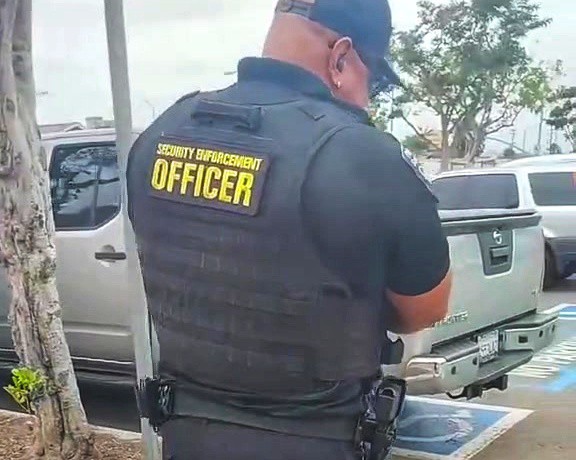
Home Depot Security Enforcement “Officer”

Where Is BSIS?

The fact that BSIS has not been alerted is deeply troubling. As the state agency charged with overseeing private security operations, BSIS must act swiftly when allegations of misconduct arise. That includes investigating incidents like this, suspending or revoking licenses where appropriate, and referring cases to local prosecutors when criminal activity is evident.

If BSIS fails to act, it sends a message that impersonating officers and illegally detaining people won’t carry consequences — a dangerous precedent in a state that prides itself on protecting civil liberties.

A Call for Justice

We cannot allow private security guards to play sheriff, especially when doing so puts vulnerable communities at risk. This incident is not isolated — similar stories have emerged across the country, often targeting immigrants who may not know their rights or fear retaliation if they speak out.

Local law enforcement agencies must also take note: if you witness a citizen being detained by someone claiming to be a federal agent or law enforcement officer, your duty is to verify identity and authority before allowing or assisting in any arrest. Failure to do so may make you complicit in a felony.

Conclusion

This incident demands action:

  • Prosecute the individual guard for potential crimes.
  • Hold the security company accountable for oversight failures.
  • Demand transparency from Home Depot.
  • Alert and involve BSIS immediately.

No one should live in fear of being detained or deported by someone wearing a badge they don’t deserve.

Enough is enough. It’s time for justice — not vigilante justice disguised as security.

Editorial: A Cry for Empathy in Santa Ana — Not Control

Protester that lost family in the Military.

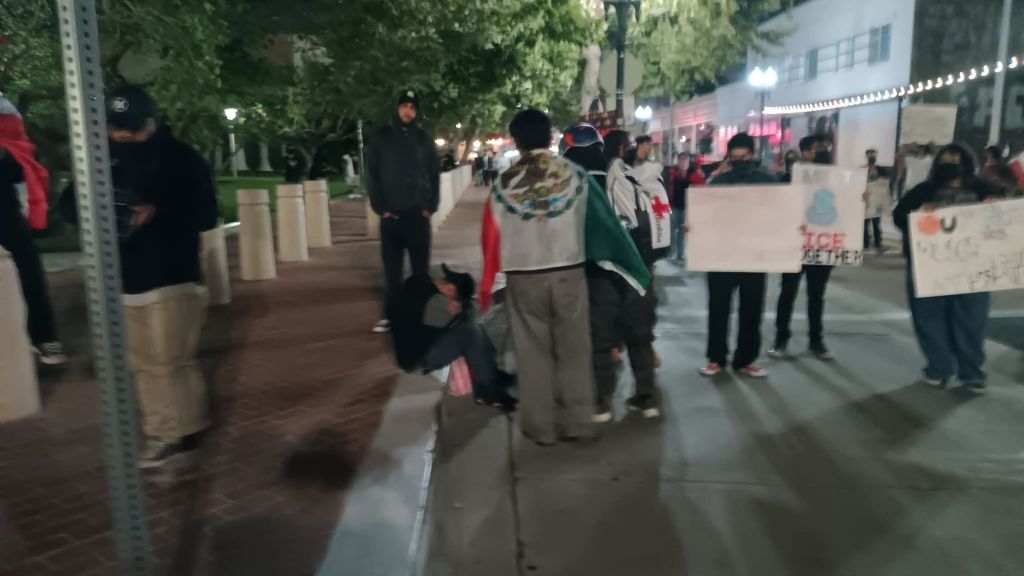
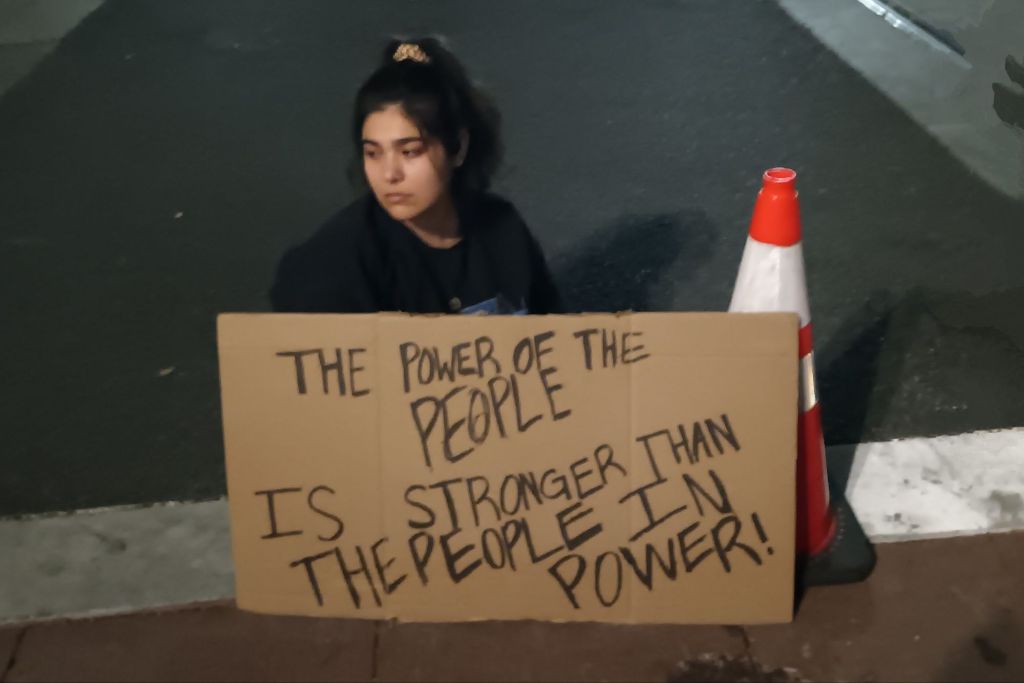
Last night, if you caught my Facebook Live broadcast, you witnessed a moment that cut deep into the soul of our community. I found myself stepping into a couple of tense altercations during what was otherwise a peaceful demonstration of solidarity in Downtown Santa Ana.

The first involved a young Latino man, overwhelmed with pain. Another demonstrator tried to de-escalate the situation, but emotions were high, and instead of cooling down, things flared up—especially between the young man, law enforcement, and military personnel on site. I had to step in. What could have turned violent needed a voice of calm. I did my best to be that voice.

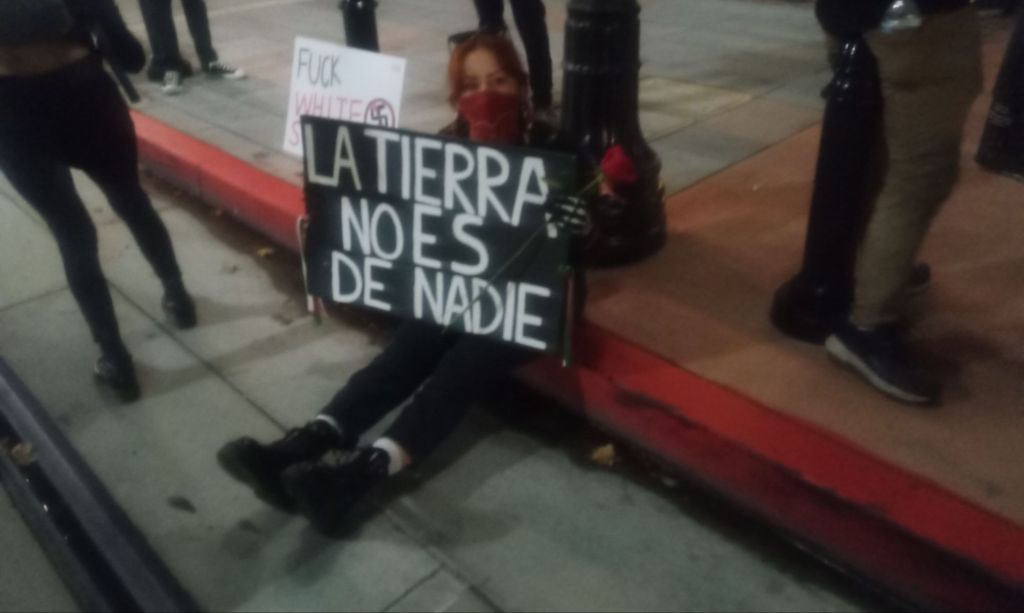
Lone Demonstration of Solidarity

This young man—hurting, frustrated, and grieving—had family in the military. The pain he carried exploded into words directed at law enforcement. Again, I stepped in to calm him. But minutes later, after walking away, he returned, now face-to-face with an OCSD deputy. This time, his grief turned to desperation. He pleaded with the officer to shoot him. Said he wanted to die like his brother, who lost his life in service.

He stood just inches from the deputy, who had assumed an aggressive posture. I intervened once again, shielding this broken soul from what could have become another tragic incident on our streets.

Solidarity

Which raises the question: What is it with law enforcement and the lack of empathy? Have badges and state protection numbed their humanity? When did they stop hearing pain and start seeing only threats?

I have family in the military—my brother, my cousins. I understand duty. But duty, whether in uniform or behind a badge, is first and foremost to the Constitution, not to a delusional narcissist like Donald Trump. The U.S. Marine Corps Code of Conduct and the Oath of Enlistment make this clear: uphold the Constitution, not the man who happens to sit in the Oval Office.

Orange County Sheriff Department taking an Aggressive Stance on Peaceful Protest.

The same should be expected of our local police. Their oath is not to power—it’s to principle. Yet increasingly, we’re seeing the military and law enforcement used not as protectors of the people, but as enforcers of a nationalist, fascist agenda driven by fear and division.

We are not the enemy. That young man was not the enemy. He was a citizen in pain. And what he needed was compassion—not confrontation.

Editorial: Where Are Our Elected Officials in Los Angeles’s Military Crisis?

Militarized Blackhawk Helicopter

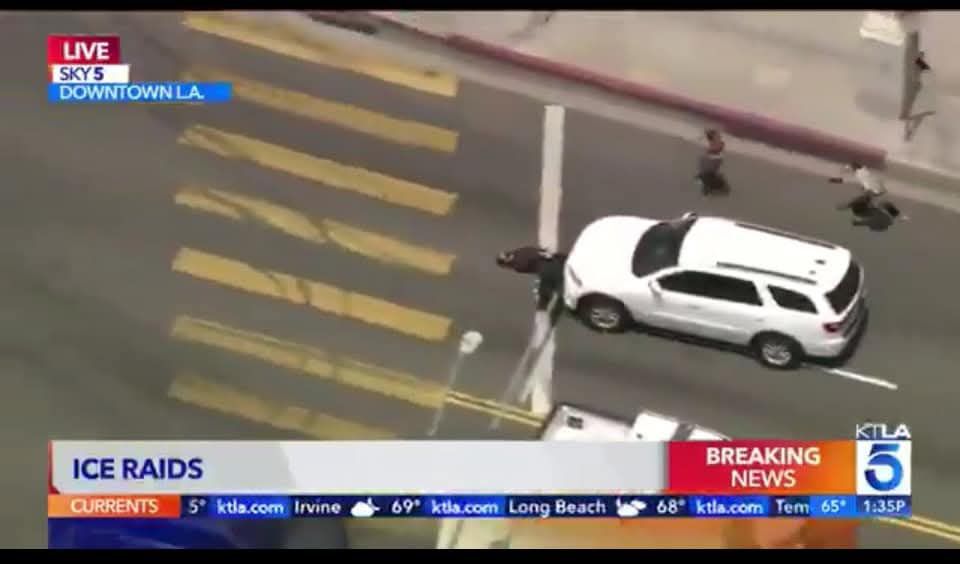
In a troubling escalation, the California National Guard has reportedly been sent to Los Angeles equipped with live ammunition rounds. Even more troubling is the fact that a military Blackhawk helicopter was observed in the metropolis providing live rounds to an ICE (Immigration and Customs Enforcement) site. On American land, in the middle of one of the most diverse cities in the country, not in a faraway war zone, this is occurring in our neighborhoods.

This incredibly disturbing conduct raises several urgent problems. Who authorized this military mission? With such extreme force, what is the justification for equipping federal immigration detention facilities? And, above all, where are the voices of accountability?

A Military Blackhawk Helicopter Delivering Live Ammunition and Explosives to ICE Agents near Downtown Los Angeles as Documented by ABC7 News Helicopter.

Bound by the Constitution to demand accountability and transparency, Congressman Lou Correa, representing part of Orange County and sitting on the powerful Homeland Security Committee, is bound by the Constitution. His quiet is overwhelming. As he is in charge of federal law enforcement agencies and homeland operations, his constituents need protection from the creeping normalization of military presence in civilian areas.

In the same vein, where are California’s other members of Congress, especially those who were directly elected to represent the Los Angeles area? What are they doing while military-grade equipment is flown to ICE grounds? The people they represent are watching their neighborhoods become militarized zones, and there is very little public discussion, hearings, or monitoring being done during this metamorphosis.

Particularly when live rounds are employed, the line between military occupation and civil policing becomes fuzzy when the National Guard is deployed in conjunction with federal immigration enforcement. Not just excessive, these acts serve as a terrifying, unlawful, and dangerous reminder of how unbridled authority damages democracy.

If elected officials like Lou Correa keep passive, they will be complicit in the erosion of civil rights and the growing adoption of authoritarian approaches under the pretense of national security. California officials cannot afford to turn a blind eye to problems. The public demands justification. They call for action. They call for bravery.

Those in power now have a choice to either back the people or remain apart and allow those who will.

Editorial: Federal Agencies and Private Militants Terrorize Paramount, California — Protester Run Over

Police State

Paramount, California — a working-class, predominantly immigrant city — is now the latest flashpoint in a terrifying pattern of militarized crackdowns and unchecked aggression by federal agencies and private operatives. Residents report a surge of operations involving Immigration and Customs Enforcement (ICE), the Bureau of Alcohol, Tobacco, Firearms and Explosives (ATF), private contractors like Blackwater (now rebranded as Constellis), and even rogue bounty hunters acting outside of constitutional limits. These forces have descended upon the city with military-grade equipment, assault rifles, unmarked vehicles, and the blatant disregard for civil rights that has come to characterize such operations.

The most horrifying incident came during a peaceful protest earlier this week, when a protester was run over by a federal vehicle. Witnesses state that the victim — a young activist marching against ICE raids in the neighborhood — was deliberately targeted. The federal agents present refused to offer medical assistance and instead formed a perimeter to shield the vehicle and its driver from public accountability. The victim was later rushed to the hospital by fellow demonstrators. No arrests have been made. No apologies issued.

Peaceful Demonstrator was hit and killed by ICE Agents when ICE Agents ran him over with a Federal Vehicle.

What is happening in Paramount is not law enforcement. It is a campaign of fear. Residents speak of pre-dawn raids, helicopters circling above schools, families pulled from their homes without warrants, and masked operatives demanding identification with no legal basis. Community members are being surveilled, harassed, and detained — not for crimes, but for the crime of existing in a system that criminalizes immigrants, Black and Brown bodies, and anyone who dares to dissent.

The involvement of Blackwater-style contractors and bounty hunters — with their long track records of war crimes, human rights violations, and total lack of accountability — only amplifies the terror. These groups are not bound by the same protocols and oversight as public law enforcement, yet they are armed to the teeth and deployed as if the community were a battlefield.

Where is the oversight? Where are California’s state leaders, the county supervisors, the city officials? Their silence is complicity.

Paramount is not a war zone. It is a community of hard-working families, students, elders, and everyday people who deserve safety — not occupation. No federal badge or military patch gives anyone the right to terrorize civilians, run over protesters, or treat neighborhoods like enemy territory. If this happened abroad, the U.S. government would call it a human rights violation. But on American soil, under the guise of “law enforcement,” it is business as usual.

We must demand an independent investigation into these operations. We must demand the names of every agency, contractor, and officer involved. We must demand justice for the protester injured — and for every family living in fear.

This is not democracy. This is a dystopia.

The people of Paramount deserve better. The nation must pay attention.

Editorial: America Under Siege — How President Donald Trump’s Racist Agenda Has Turned the Government Against Its Own People

Trump’s Racist Agenda

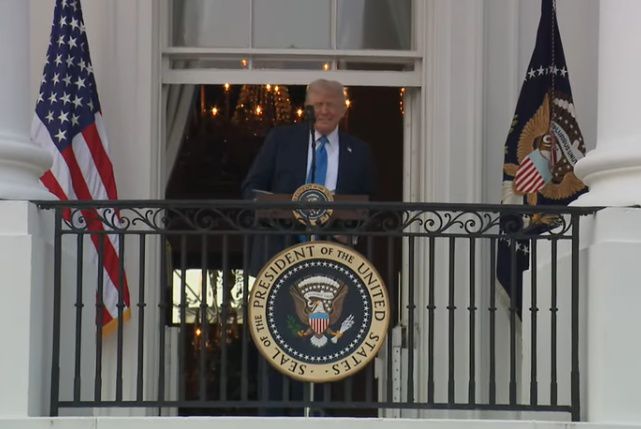
The United States is facing a constitutional crisis unlike anything seen in modern history. Under the current presidency of Donald Trump, an authoritarian and racist agenda has taken hold, turning government institutions and private interests into tools of persecution. This is not speculation. This is the lived experience of countless U.S. citizens and minorities who find themselves targeted, harassed, and violated by the very structures meant to protect them.

ICE agents, bounty hunters, ATF operatives, FBI surveillance teams, the U.S. military, and agents of the Department of Homeland Security are being unleashed on American soil—not to serve justice, but to silence dissent, terrorize communities of color, and enforce a white nationalist vision of the nation. And they are not acting alone.

State, county, and city governments—many of them aligned with Trump’s extremist agenda—are enablers in this campaign. From local police departments collaborating with federal raids, to state legislatures passing laws criminalizing protest, every level of government has been bent toward repression. Add to this the involvement of corporate profiteers like Halliburton—whose contracts enable mass surveillance, detention, and militarization—and we are no longer talking about rogue elements. We are talking about a full-fledged system of control.

This is not security. This is persecution.

Immigrant families are torn apart in pre-dawn raids. Black and Brown neighborhoods are over-policed, surveilled, and criminalized. Protesters are tear-gassed, beaten, and jailed for exercising their First Amendment rights. Entire communities live under a constant threat of state violence, and the Constitution’s promises of due process, equal protection, and freedom from unlawful search and seizure are trampled daily.

The current administration’s fingerprints are all over this. Trump has openly celebrated law enforcement brutality, labeled political opponents as enemies, and stoked racial division at every turn. His agenda is not hidden—it is shouted from podiums, etched into executive orders, and enforced by the barrel of a gun.

Militarized ATF

This is how democracy dies—not all at once, but under the slow crush of sanctioned injustice.

What we are witnessing is not simply a failure of policy. It is a deliberate effort to turn the United States into a police state that serves the interests of the few, at the expense of the many. It is the transformation of the federal government into a tool for racial dominance, using fear and violence to suppress resistance.

It is unconstitutional. It is immoral. And it must be stopped.

Unlawful Raids, Racist Agenda, Civil Rights Violations

We must name it for what it is: State-sponsored oppression.

Now is not the time for silence or neutrality. Now is the time to resist—legally, politically, and morally. We must demand accountability from every agency, every politician, and every corporation complicit in this violence. We must protect and elevate the voices of the targeted. And we must fight to restore the Constitution to its rightful place as a shield for the people—not a weapon for the powerful.

History is watching. Future generations will ask what we did when democracy was under attack from within. Let the answer be that we stood up.

Editorial Board