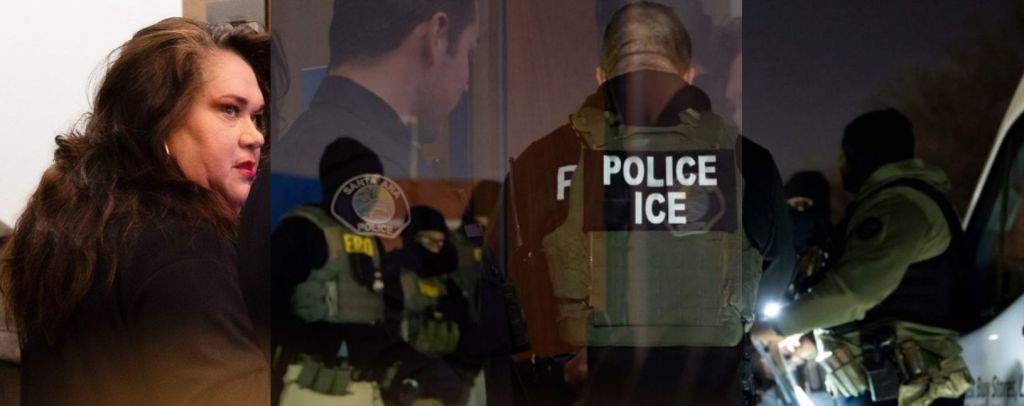
Editorial: Santa Ana Mayor Valerie Amezcua Collaborating with ICE to Deport Santa Ana Residents? – A Breach of Trust in a Sanctuary City

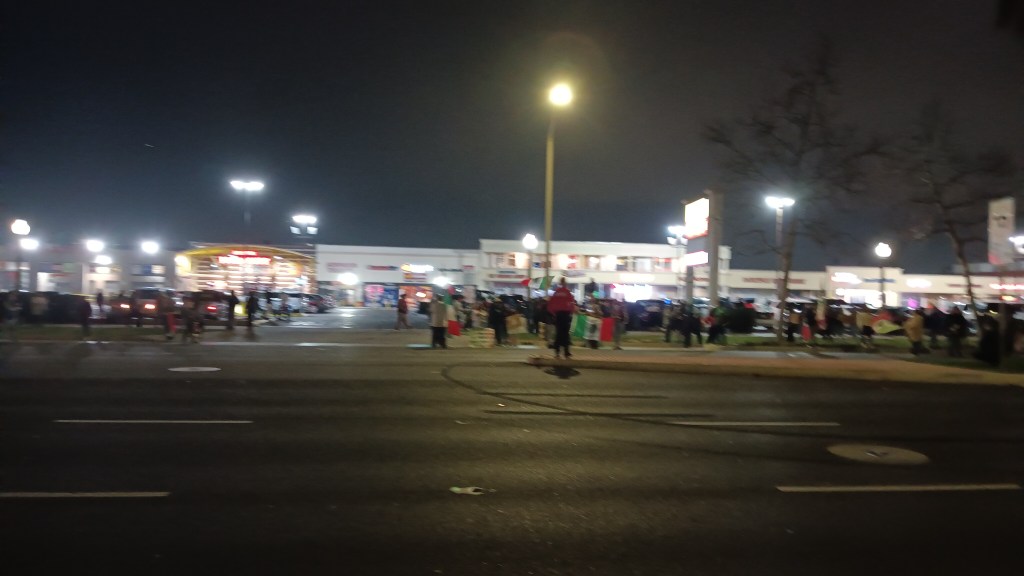
Arrest of a person by ICE Agents on January 8th 2025 and Mayor Amezcua in Silence in the Sanctuary city of Santa Ana.

Santa Ana, a lively and diverse community that has historically taken pride in safeguarding immigrant families, is undergoing a concerning transformation. Under Mayor Valerie Amezcua’s direction, recent information has emerged indicating that the mayor’s office is collaborating with U. S. Immigration and Customs Enforcement (ICE) to deport residents. This has ignited a backlash from residents, activists, and community leaders who view this as a blatant contradiction to the city’s longstanding identity as a sanctuary city.

Santa Ana officially established its sanctuary status in 2017, offering vital protections for immigrants by limiting local law enforcement cooperation with federal immigration agencies. The aim was unequivocal: to foster a safe atmosphere for all residents, irrespective of their immigration status. Immigrant communities in Santa Ana have established their lives here, enriching the cultural, economic, and social landscape of the city. For many, the sanctuary label signified that they could exist with enhanced security, without the constant dread of deportation.

However, the recent revelations have overshadowed this feeling of safety and reliability. If Mayor Amezcua is indeed cooperating with ICE to facilitate deportations, it undermines the very tenets that Santa Ana’s sanctuary designation was intended to support. It not only breaches the trust of the immigrant community but also communicates that the city might be willing to work alongside federal authorities in ways that contradict its own laws and principles. This dilemma is not solely about one person; it mirrors a broader concern that impacts countless families. Deportations are not just statistics—they signify real individuals, mothers, fathers, sons, and daughters who face the possibility of being separated from their homes and communities. These individuals contribute to the city’s economy, participate in local educational institutions, and are vital members of the Santa Ana community.

If confirmed, Mayor Amezcua’s actions raise significant alarms. They jeopardize the trust that the city has diligently cultivated with its immigrant inhabitants. As a sanctuary city, Santa Ana ought to embody a symbol of safety and inclusion, not a location where immigrants dread deportation at the hands of local law enforcement. The city has always celebrated its progressive ideals, and this apparent policy shift represents a regression in the pursuit of immigrant rights and justice. The residents of Santa Ana are entitled to more. They warrant transparency from their elected officials and the reassurance that their city will continuously serve as a refuge, not a battleground for federal immigration enforcement. If the mayor persists in her collaboration with ICE, it is essential for the community to hold her accountable and demand a return to the principles that have established Santa Ana as a sanctuary city.

Ultimately, the residents of Santa Ana deserve to live free from the anxiety of deportation. If Mayor Amezcua is collaborating with ICE to remove local inhabitants, it is essential for her to reconsider this strategy and recognize that the sanctuary status of Santa Ana ought to be respected, not violated. It is time for our leaders to prioritize the needs of the community and strive for policies that safeguard, rather than penalize, the individuals who consider Santa Ana their home.

Editorial: Unpacking the Disturbing Reality of Police Immunity and Accountability

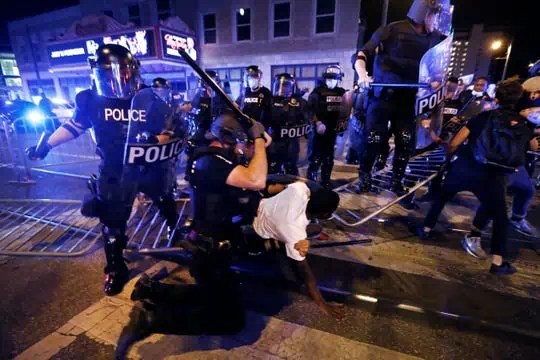
Recent occurrences throughout the United States have once more illuminated the concerning dynamics among law enforcement, politics, and the justice system. The most recent tragedy—the shooting and killing of a man by the Anaheim Police Department—represents yet another chapter in a burgeoning narrative of police violence that appears to be unrestrained. This incident is not an isolated event, but rather a manifestation of a much deeper, systemic issue, wherein police officers, safeguarded by politicians, continue to evade meaningful accountability for their actions.

The demise of Tamir Rice, a 12-year-old boy fatally shot by police in Cleveland in 2014, stands as a stark reminder of how swiftly law enforcement can resort to lethal force without repercussions. Rice’s heartbreaking death served as a catalyst for protests nationwide; nevertheless, years later, episodes like the one in Anaheim indicate that little has altered. The question then arises: why are these officers still unpunished?

A pervasive culture of impunity exists within police departments, one that is sustained by political figures who depend on these law enforcement entities for support and empowerment. Police unions, with their considerable political influence, have frequently protected officers from accountability, even when they have contravened the most fundamental principles of justice. The deeply rooted connections between law enforcement and politicians often imply that the very individuals who ought to uphold the law are accorded an unfair advantage concerning evading punishment.

However, the issue transcends the officers themselves. The very foundation of our justice system—judges—also plays a pivotal role in perpetuating this cycle. Time and again, judges have neglected to hold law enforcement accountable, extending leniency or outright dismissing charges against officers implicated in fatal shootings. While the public focuses on the officers who discharge their firearms, the judiciary that consistently exonerates them of misconduct should not be overlooked. It is insufficient to merely demand justice for the victims of police violence; we must also confront the broader system of corruption that guarantees these actions go unpunished.

There are calls to cease referring to law enforcement officers as “officers”—a gesture intended to remove the deference with which they are frequently regarded, to remind us that they are public servants, not untouchable entities. This rebranding is symbolic yet necessary. The public’s perception of law enforcement often elevates them to a status that obscures their role as accountable servants of the law. We must acknowledge them as individuals capable of wrongdoing, just like anyone else—and ensure they are held to the same standards.


Moreover, the citizens of this nation must reclaim their rights and commence utilizing their constitutional amendments to contest and resist these systemic abuses of power. It is essential to demand transparency, to insist on independent investigations, and to hold accountable not merely the officers who engage in these actions, but also the politicians, unions, and judges who shield them. The strength of the populace resides not solely in protests and appeals for justice but in the active participation with the mechanisms of power that facilitate these abuses.

Finally, we must hold our political leaders, such as Congressman Lou Correa, responsible for their involvement in sustaining this system. When politicians protect and advocate for law enforcement at the cost of justice, they foster a culture of corruption. They are complicit in the preservation of a system that injures marginalized communities and disregards fundamental human rights.

In conclusion, the epidemic of police violence cannot be addressed by focusing on individual officers alone. It necessitates a comprehensive strategy that includes holding not only law enforcement accountable but also the political and judicial systems that allow this violence to persist. We must demand a total reform of the systems that protect and sustain this cycle of impunity. Only then can we aspire to cultivate a society where justice genuinely signifies justice for all.

Editorial: The Brawls Inside and Outside Downtown Santa Ana Nightclubs: A Call for Action

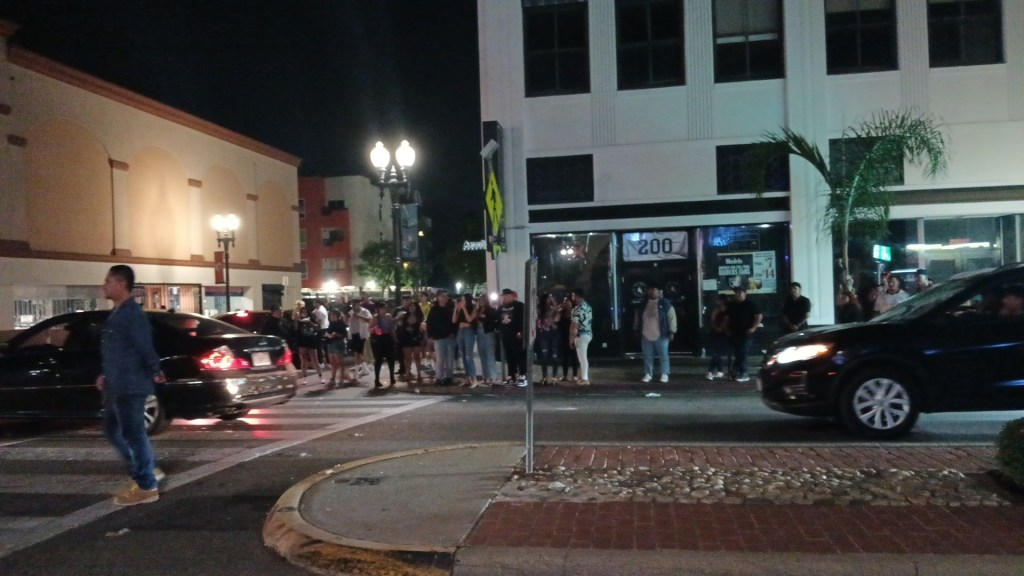
On any weekend night, the lively streets of downtown Santa Ana brim with excitement, yet beneath the vivid lights and booming bass of the nightclubs exists a more troubling aspect—one tainted by violence. As someone who has spent numerous evenings walking through these streets, I have observed firsthand the growing prevalence of fights erupting both within and outside the clubs. What’s equally concerning, however, is the sluggish and often insufficient reaction by the Santa Ana Police Department to these occurrences, prompting me to wonder if the safety of the community is genuinely a priority.

Within the nightclubs, the tension is tangible. The densely packed crowds, fueled by alcoholic drinks and drugs, foster an atmosphere ripe for conflict. A careless remark or a minor shove can swiftly escalate into a full-blown brawl. I have seen altercations ignite over insignificant issues—someone cutting in line at the bar, an intoxicated person inadvertently colliding with another, or even just an incorrect glance exchanged between two strangers. The ensuing chaos is consistently the same: people yelling, chairs and bottles flying, and bystanders hastily trying to dodge getting caught in the fray. However, it’s not only the fights that unsettle me. It’s the absence of action from club security, who appear more concerned about safeguarding their business than ensuring patron safety.

Photo: Igmar Rodas / Chaos erupts outside Next Round Bar & Grill in Downtown Santa Ana.

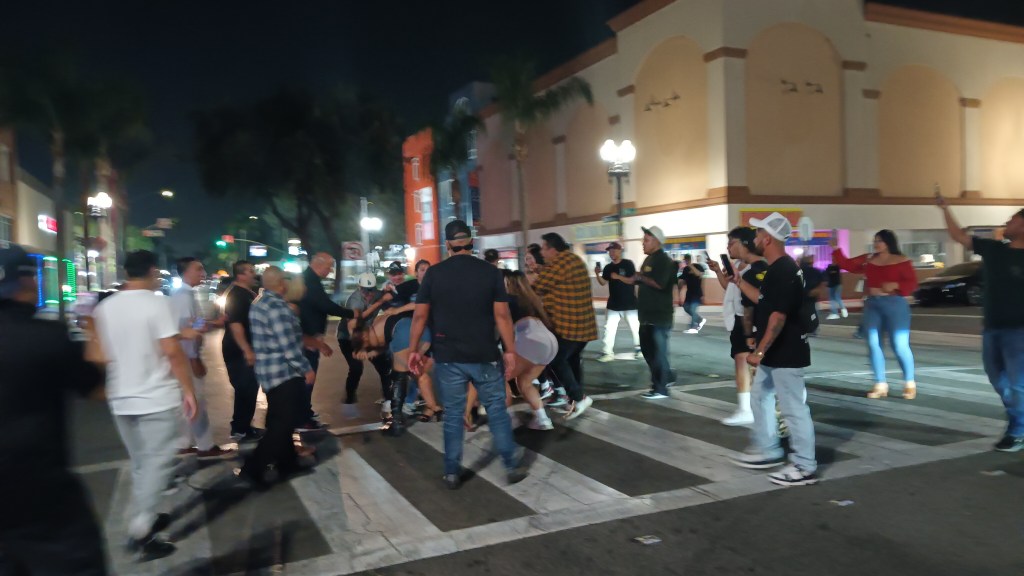
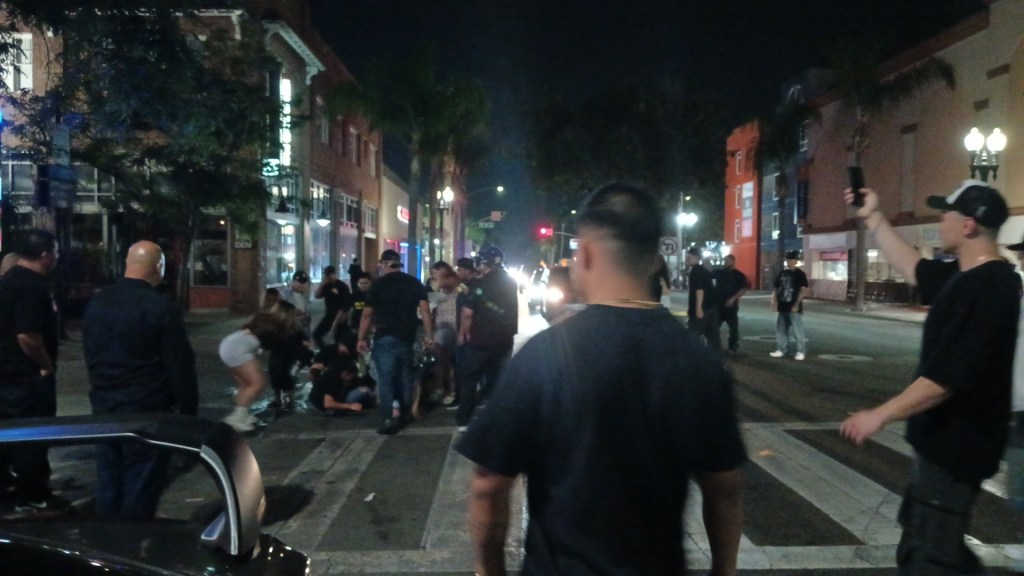
Yet even more alarming is what transpires when the brawls bleed out into the streets. The once-vibrant streets of downtown transform into battlegrounds, with individuals throwing punches, hurling slurs, and generating an overall sense of lawlessness. Just a few weeks ago, I watched in astonishment as a fight between two men escalated into a blockwide clash. People were yelling for assistance, yet the police were nowhere to be found. It wasn’t until several minutes later—an eternity in the midst of chaos—that officers arrived, and by that moment, the harm was done. Several individuals had already been harmed, and the offenders had vanished.

Photo: Igmar Rodas / Over 50 intoxicated people blocking traffic brawling in the middle of an intersection at 2nd and Broadway in Downtown Santa Ana.

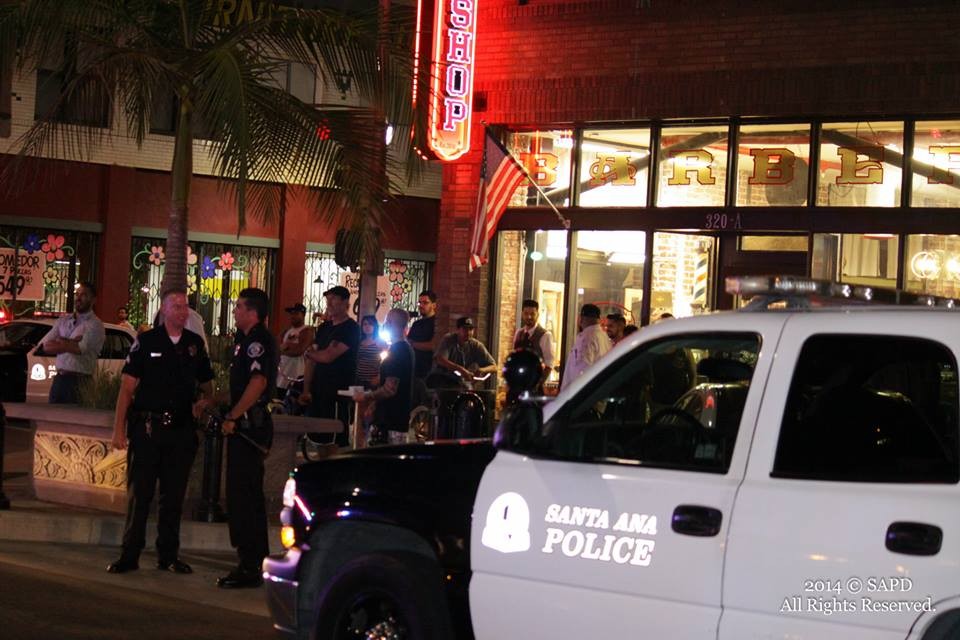
The sluggish reaction from the Santa Ana Police Department is the elephant in the room. For a city that takes pride in cultivating a lively nightlife, it’s unacceptable that the police appear so ill-equipped to handle these frequent violent episodes. On numerous occasions, I have heard from both patrons and local business proprietors that they have reached out to the police for assistance, only to have officers arrive far too late. There’s a feeling of neglect, a sense that the police are either too short-staffed or simply too overwhelmed to adequately tackle the situation. The absence of prompt action often leaves those caught in the turmoil feeling deserted, while those accountable for the violence go unpunished.


This delayed reaction isn’t merely an inconvenience; it’s a critical safety issue. Each time an altercation occurs, there’s a potential for it to escalate—firearms, blades, or even worse could easily come into play, and the longer it takes for law enforcement to intervene, the more probable it is that circumstances will deteriorate. The streets of Santa Ana shouldn’t resemble a battleground after sunset. People ought to be able to enjoy an evening out without the anxiety of being caught up in or witnessing violence. And yet, repeatedly, we’re left questioning: where are the police when they are needed?

Photo: Igmar Rodas / Brawl still going with no Santa Ana Police Department presence, (I had to call 911 to get the Santa Ana Police Department to respond).

What is evident is that the situation necessitates action, and it must occur immediately. The Santa Ana Police Department ought to devise methods to enhance its response time to incidents within and surrounding the downtown area. An increase in officer deployment during peak times is essential, along with improved coordination with nightclub security to stop situations from escalating initially. Moreover, there ought to be a heightened focus on community policing, with officers establishing connections with local business owners and the public, so that when an altercation does occur, there’s already an element of trust that can speed up the response process.

As a resident and Independent Reporter to downtown Santa Ana, I desire to see it prosper. I want individuals to unite and relish the nightlife, without concerns for their safety. However, for that to materialize, the Santa Ana Police Department and the city must do more to guarantee that the fights inside and outside the nightclubs don’t continue to tarnish the reputation of this once-vibrant area. We require a quick, definitive response to violence, not just dealing with its consequences. The moment for action is now.


Editorial: The Unlawful Use of Vehicle-Mounted Spotlights by Law Enforcement Personnel.

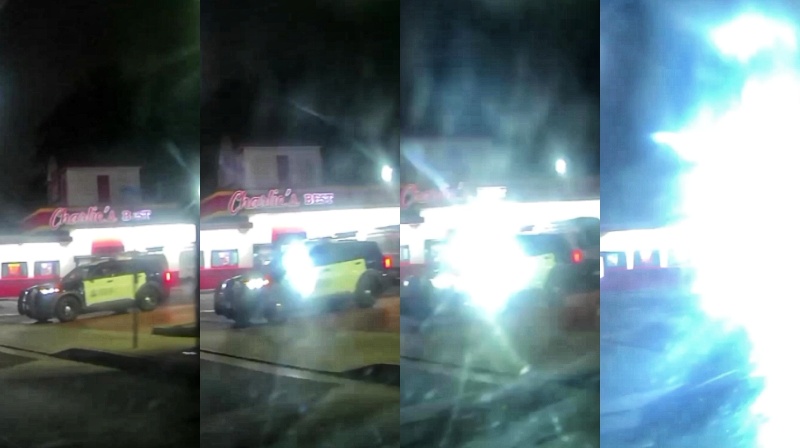
Photo: Igmar Rodas / Santa Ana Police Department among others in Orange County are making it unsafe for drivers in their vehicles.

As a citizen worried about the rising issues regarding law enforcement practices, one matter that has caught my attention is the unlawful use of vehicle-mounted spotlights by personnel . This activity, although appearing harmless at first, raises serious concerns regarding civil liberties, accountability, and the abuse of power.

Spotlights are potent instruments utilized to illuminate large areas during nighttime operations. While undeniably useful in specific law enforcement contexts, like searching for suspects or evaluating perilous situations, their application has become significantly more widespread and frequently excessive. In numerous cases, spotlights are used during ordinary traffic stops or to intimidate citizens simply going about their daily lives. It is not unusual for personnel  to direct these bright beams straight into the windows of private vehicles or residences, resulting in discomfort, disorientation, and in some instances, even fear.

What troubles me most is that this behavior is not consistently performed within the legal framework. The Fourth Amendment of the United States Constitution shields citizens against unreasonable searches and seizures, and shining a strong spotlight into a vehicle or home without justification often surpasses that limit. By employing spotlights indiscriminately, law enforcement could be infringing upon citizens’ rights to privacy and due process, frequently without any evident or prompt rationale.

Photo: Igmar Rodas / Santa Ana PD using spotlight directly on unsuspecting drivers, an illegal use of spotlights and violation of the 4th Amendment.

Moreover, there are alarming reports of spotlights being utilized in non-enforcement contexts, such as during police patrols in communities where they may be wielded to intimidate residents. The application of such a blaring, intrusive tool in areas already facing tension between citizens and law enforcement only heightens mistrust and fear. An instrument intended to safeguard and ensure public safety is, in these cases, being weaponized to create a sense of powerlessness in communities.

Equally concerning is the absence of transparency and oversight regarding the usage of vehicle-mounted spotlights. When the spotlight is activated, an adequate explanation is rarely provided to the public or to those who have been subjected to this invasive practice. In the absence of clear regulations governing how and when these instruments can be utilized, we are left vulnerable to abuse. This practice frequently appears arbitrary, with personnel  making decisions impulsively, based on personal judgment or bias.

What’s even more exasperating is the silence on this matter from higher authorities. It is uncommon to witness any public recognition or accountability for the misuse of spotlights, and even rarer to observe steps taken to mitigate their illegal application. Law enforcement agencies are often swift to defend the tools they employ, but when these tools transgress into unlawful surveillance or harassment, there exists a duty for oversight and rectification.

As a community, we need to insist on greater accountability. Law enforcement personnel should be expected to adhere to elevated standards of behavior, and the usage of vehicle-mounted spotlights needs to be strictly controlled. There should be explicit regulations that safeguard citizens’ rights while guaranteeing personnel  have the necessary resources to perform their duties effectively. The random and unlawful deployment of such devices only worsens the rift between law enforcement and the communities they aim to protect.

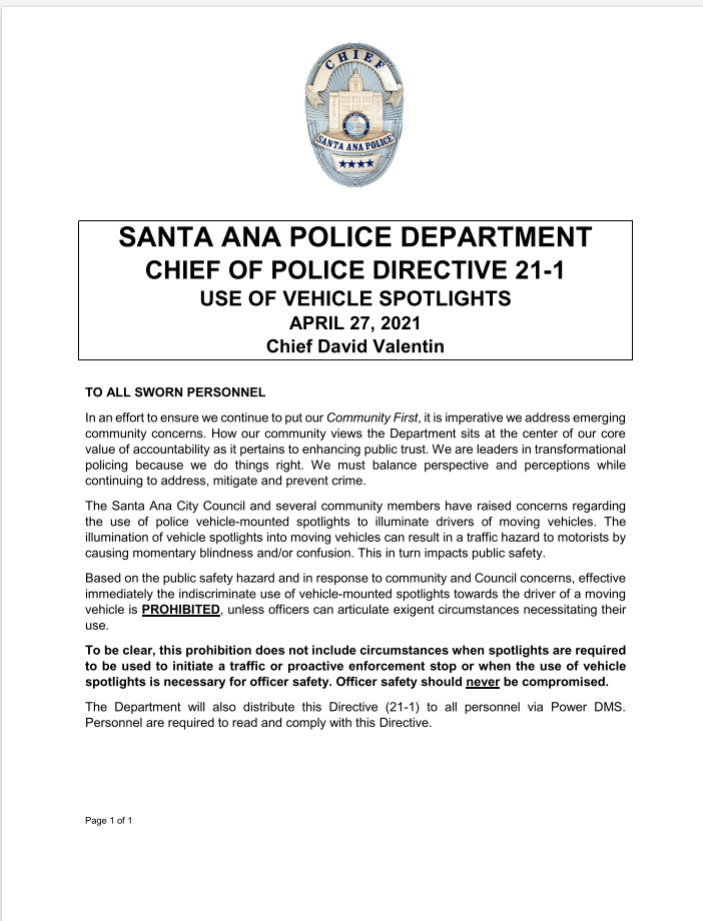
Chief of Police Directive 21-1(View Full Document)

“Based on the public safety hazard and in response to community and Council concerns, effective immediately the indiscriminate use of vehicle-mounted spotlights towards the driver of a moving vehicle is PROHIBITED, unless officers can articulate exigent circumstances necessitating their use.”

In the end, the right to privacy and shielding from unjust governmental interference must always be preserved. The existing pattern of spotlight misuse signifies a concerning shift away from these principles, and it is time for us to confront this practice and advocate for reform. The rule of law must be applicable to all individuals, including those assigned with enforcing it.

Police Brutality in Santa Ana

Police Violence & Brutality in Santa Ana

Police brutality in Santa Ana has been an issue, which has received lots of concern from the people and especially the activists. Several mishandled cases of use of force and police misconduct involving affines of the Santa Ana Police Department or SAPD have received public outcry. Such occurrences happen in contact with minority groups making many people question the department and their conduct.

Notable Incidents

This has led to several cases of police brutality being highlighted of which some have occurred in Santa Ana. This occurred when some of the officers were said to have involved unnecessary force when arresting some individuals which resulted to harm and protest. These factors have led to investigations and have been the force behind community activism for police accountability of their conducts.

Community Response and Activism

To counter the claims of the police brutality local activists and groups have come forward to push for reform within the SAPD. Citizens, however, have demanded reform to the police functioning, one on the ability to control force or in proper handling of riots, and the other concerning the absence of a body unrelated to the police force that supervises their actions. People walk to incite justice for victims of the police brutality while numerous public demonstrations are heard to respond to injustice.

Calls for Reform

Responding to years of police misconduct in Santa Ana, people continue raising their voices to address the problem systemically. There are people that would like the state to introduce measures when the citizens are protected rather than being harmed. This entails increasing support to police officers’ mental health and improving the Force/Public Order Policies.

SAPD

Conclusion

The problem of police misconduct hence the excessive use of force in Santa Ana is still prevalent with people demanding a change. The above concerns can only be addressed as the societies gain trust in the police and feel safe with whatever actions the police take against them.

Fight Breakouts in a Unlicensed Punk Rock Performance In Santa Ana’s Artwalk.

Saturday April 6th 2019

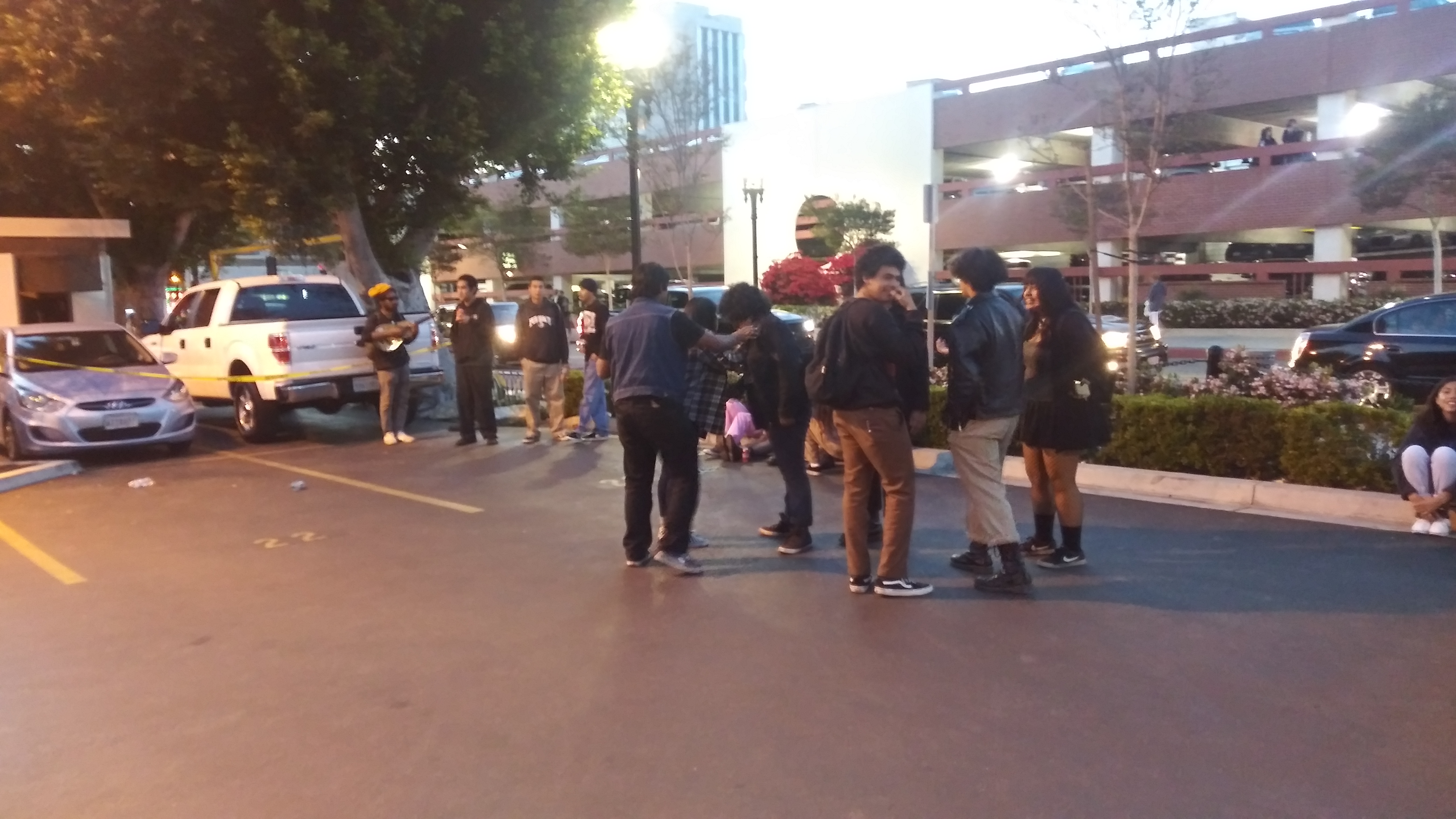
Guy talking to Young Man that was hit at the mosh pit and was upset to that fact.

At around 7:15 p.m. in the evening a fight breakouts at an Unlicensed Punk Rock Performance. As several witnesses stated that a young punk was hit at the mosh pit that was in the front of the band performing. The young punk had to be dragged by several others because after getting hit he couldn’t stand up. He was laid in the parking lot across from the crowd, as he regained consciousness it was obvious that he wanted to fight.

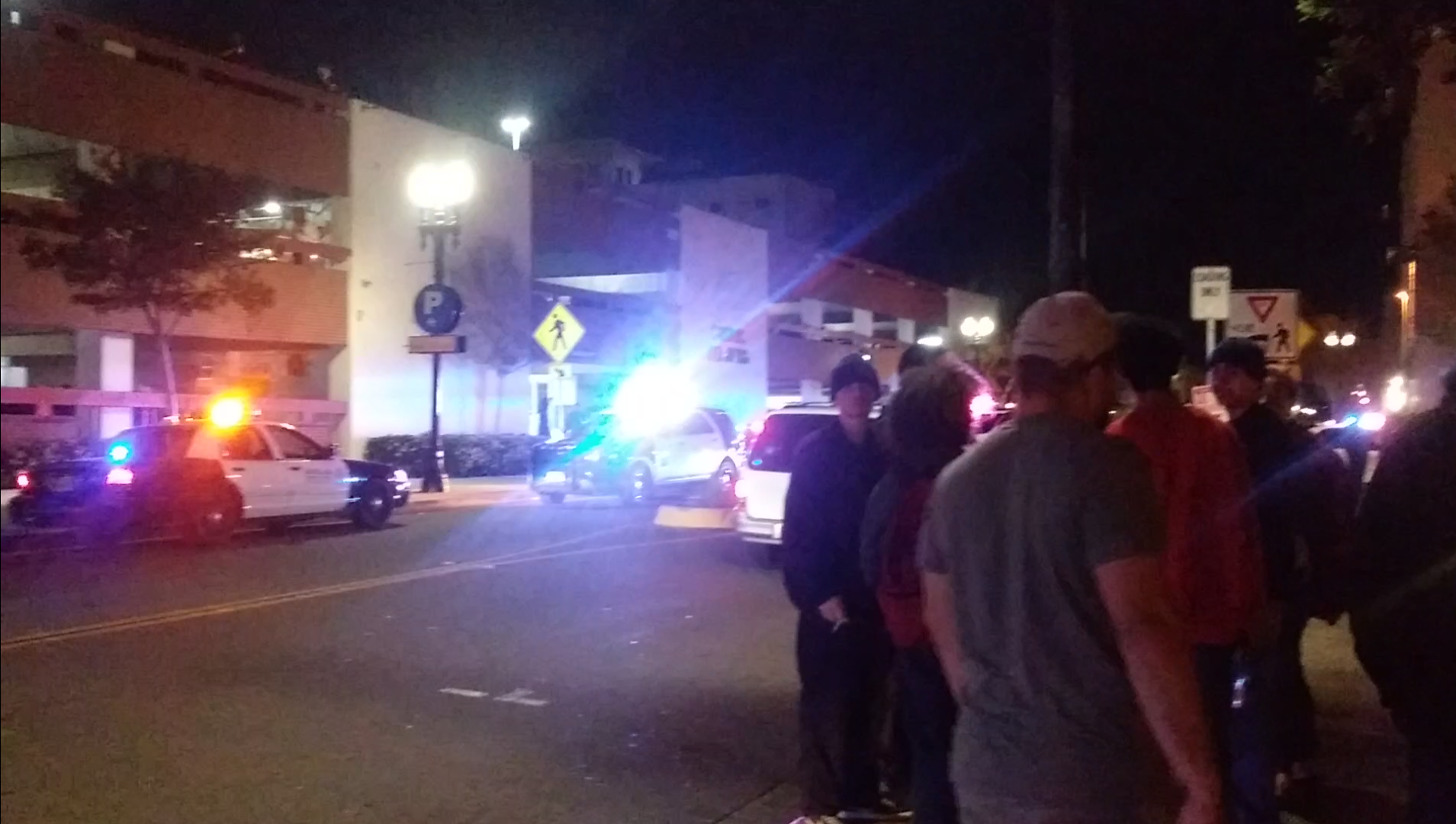
A witness stated that after that young man got up and started the fight which prompted a full response from Santa Ana Police Department to disperse the young crowd which some of them had been drinking and had open alcohol containers in hand.

Santa Ana Police Department In Full Force after a fight breakouts at a Punk Rock Performance in DTSA

Some of the young crowd were upset that they were charged between $3 – 4.00 fee to attend and to find out that the promoter as some called him “Mr. Sunday” left as soon as he saw Santa Ana Police Department arrive on scene. Also I interviewed one band member that was supposed to play next before the performers were shut down and him and his band were livid to the outcome since they paid about $300.00 to the Promoter Mr. Sunday just to be stiffed by him.

As Santa Ana is getting a new crowd due to Gentrification more issues will ensue like this one which it couldn’t happen at a leter day but the day where Santa Ana Art District is going on with The Santa Ana Artwalk in Down Town Santa Ana.

Video Link: https://youtu.be/BKWpjsqJJMk