
Editorial: A Call for De-escalation: Rethinking the Fatal Response to Crisis

A Call for De-escalation: Rethinking the Fatal Response to Crisis

The tragic death of a 15-year-old at the hands of the Santa Ana Police Department this past Sunday, June 14, 2026, serves as a harrowing reminder of the lethal consequences that can arise when law enforcement encounters an individual in the midst of a behavioral or mental health crisis. Officers were called to an apartment complex in the 3400 block of Main Street regarding a family disturbance, where they encountered the teenager who was reportedly under the influence and armed with a knife. While the situation involved a reported assault—where the teen allegedly stabbed a 53-year-old man—the outcome, a child dead at the scene, demands a serious re-examination of departmental tactics.

The Failure of Tactical Rigidity

When police respond to calls involving individuals struggling with mental health or substance-induced crises, the goal must be the preservation of life through the calculated application of time, distance, and de-escalation. Instead, the encounter resulted in a fatal shooting, raising critical concerns about the department’s approach:

  • Although officers reportedly gave several commands for the teen to drop the weapon, the transition to lethal force suggests a failure to utilize less-lethal alternatives—such as beanbag rounds or other restraint tools—that could have neutralized the threat without ending a life.
  • In scenarios where an adolescent is visibly erratic or suffering from a mental health episode, the presence of a weapon should trigger a specialized response focused on containment and negotiation rather than a standard tactical confrontation.
  • The department must account for why lethal force was deemed the only viable option against a minor, particularly when standard de-escalation training emphasizes exhausting all other means before resorting to the use of a service weapon.

The Human Cost and Systematic Neglect

Beyond the tactical failures lies a deeper issue: the way our systems treat those in the throes of a breakdown. A teenager in a state of crisis is a person who has lost their way, not a combatant to be eliminated. When we send armed officers to handle what is fundamentally a medical or psychological emergency, we are setting the stage for disaster. The “duty to act” must never supersede the “duty to protect,” especially when the life at stake is that of a child. We have to ask ourselves: when did we decide that the convenience of a swift, lethal resolution is worth more than the potential for a young life to be saved and rehabilitated?

A Demand for Accountability and Reform

The ongoing investigation by the Santa Ana Police Department’s Homicide Unit, Internal Affairs, and the Orange County District Attorney’s Office is a necessary procedural step, but it is not a substitute for systemic change. The community deserves:

  • A full disclosure of the incident details and a rigorous internal audit of the officers’ adherence to use-of-force policies.
  • A shift in policy that mandates the presence of, or consultation with, trained mental health crisis professionals for all domestic disturbances involving signs of behavioral instability.
  • A revision to departmental policy that sets a significantly higher bar for the use of deadly force when the subject is a minor, prioritizing long-term containment over immediate, fatal resolution.

Community Call to Action

The time for silent observation has passed. We urge all concerned residents to attend the upcoming Santa Ana City Council meeting. We must demand that the council place this incident on the agenda for an emergency public hearing. It is imperative that we hold our elected officials and police leadership accountable by voicing our demand for immediate policy reform. Show up, speak out, and ensure that the voices of the community are heard until concrete changes are implemented to prevent such a tragedy from ever happening again.

The loss of a 15-year-old is a profound tragedy that should force the Santa Ana Police Department to confront its own tactical culture. We must move toward a model of public safety where a crisis call results in life-saving intervention rather than a death sentence.


EDITORIAL: The Shield and the Silver Badge: How SAPD’s Blind Deference to Private Security Threatens Public Safety

SAPD on a Call from a Security Guard

There is an invisible, unregulated gray area expanding across the sidewalks of Santa Ana, and it poses a direct threat to the constitutional rights of every resident. It is the zone where private security guards—hired to protect specific commercial properties—step off their contracted parcels and into the public square to enforce their own brand of street justice.

But the real crisis isn’t just the rogue guard playing cop. The crisis is that the Santa Ana Police Department consistently acts as their personal muscle, arriving on scene to automatically validate the narrative of the person wearing a uniform, regardless of who actually broke the law.

When a private security guard steps past a property line onto a public sidewalk to engage, harass, or intimidate citizens, they are no longer protecting an asset. They are creating a public issue and a massive liability. Yet, time and again, when SAPD responses are triggered by bogus “security assistance” calls, responding officers routinely treat the guard as the default victim and the citizen as the default suspect.

This automatic bias flips the script of justice on its head. In the eyes of arriving officers, the silver badge of a private contractor carries more weight than the word of a tax-paying resident or an independent journalist.

More concerning still is a systemic failure in basic field procedure: SAPD officers routinely fail to verify the state-issued permits of the guards making these emergency calls.

One of many Security Companies in Santa Ana, Which could possibly create a threat to public safety because of unprofessional security guards.

Under California law, the Bureau of Security and Investigative Services (BSIS) mandates that every guard must carry a valid Guard Card and, if applicable, an exposed firearm permit. They are legally required to present these upon request. When a guard leaves their property line to instigate a confrontation on public property, they are legally acting as an ordinary citizen—potentially committing acts of disturbing the peace, harassment, or unlawful detention.

Furthermore, a guard does not even have to physically step off the parcel to violate state regulations. By simply standing on private property and hurling profanity, launching verbal threats, or throwing physical objects across the property line into the public domain—such as an adjacent sidewalk—they are committing a clear violation of state law and BSIS rules. Aggression that crosses into public space is a breach of the peace, plain and simple.

By failing to immediately demand and verify a guard’s BSIS credentials during these incidents, SAPD officers are not just cutting corners; they are enabling unlicensed, volatile, or under-trained individuals to dictate who gets detained on our streets.

This blind deference transforms our local police department into a taxpayer-funded shield for private corporate interests. When a heavy police presence—often involving multiple patrol vehicles and a dozen officers—arrives to back up a guard who was the actual aggressor, it creates a chilling effect in our neighborhoods. It teaches the public that private security can overreach with impunity because the police will always take their side.

Private security guards are not peace officers. They do not possess a gold shield, they do not have police powers, and their authority stops exactly where the private concrete meets the public sidewalk.

It is time for the Santa Ana Police Department to stop treating private security contractors as an extension of the force. Officers must begin enforcing the law symmetrically: check the permits, look at the property lines, hold guards accountable for the threats and objects they hurl into the public space, and recognize that when a security guard crosses the boundary of professional conduct, the guard is the liability—not the community members they are targeting.

INVESTIGATION UNDERWAY: HELP US HOLD PRIVATE SECURITY ACCOUNTABLE

If you have any complaints, encounters, or concerns regarding private security guards in Santa Ana—specifically within the downtown area—we want to hear from you.

The OC Reporter is actively investigating private security guards who are failing to follow California state laws, BSIS policies, and the regulations set forth by the California Business and Professions Code. If you have been harassed, witnessed jurisdictional overreach, or have photos, video, or statements to share, please reach out to us immediately to help us build this investigation. Your information and anonymity will be protected.

Bài xã luận: Những vết nứt ẩn sau tấm kính

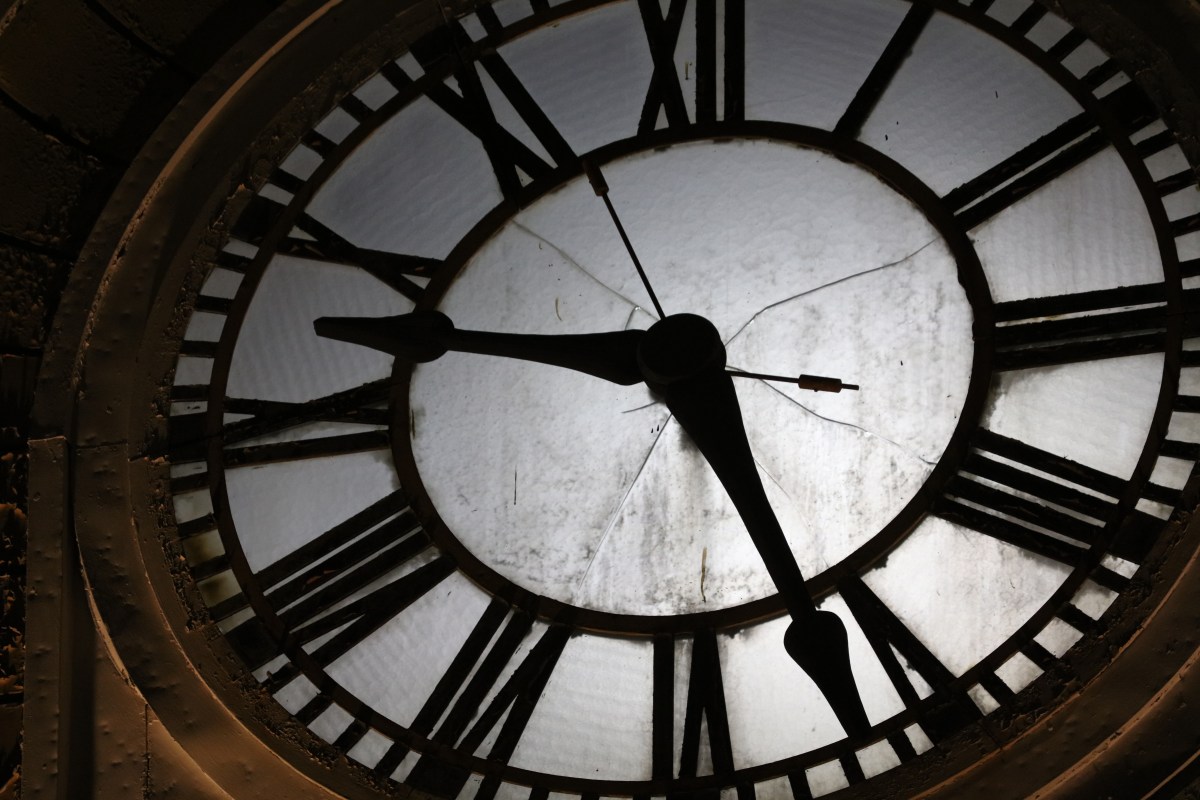
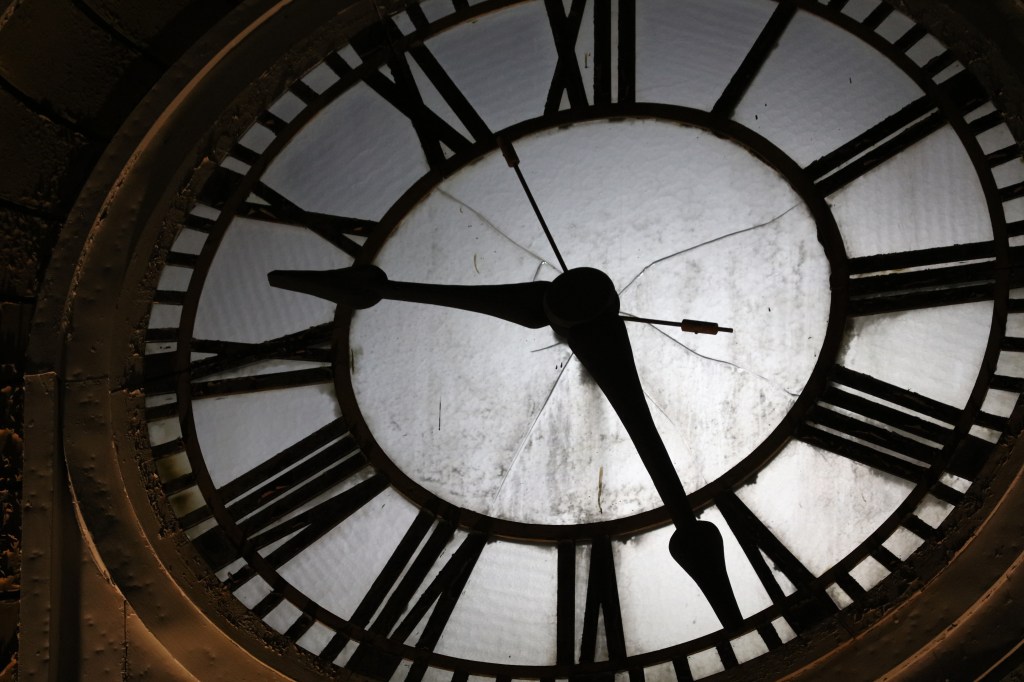
Tháp đồng hồ cũ ở góc đường số 4 và Sycamore.

Chiếc đồng hồ ở góc đường số 4 và Sycamore đứng sừng sững như một người lính canh lặng lẽ giữa trung tâm thành phố Santa Ana, kim đồng hồ như ngừng quay trong một trạng thái trì trệ vĩnh viễn. Hầu hết cư dân đi ngang qua mà không hề để ý, nhưng nếu nhìn kỹ hơn – kiểu nhìn chỉ dành cho những người sẵn lòng ghi lại những điều khó chịu – sẽ thấy những vết nứt sâu, lan tỏa trên lớp kính mờ của nó. Đây không chỉ là dấu hiệu của tuổi tác; chúng là một phép ẩn dụ cho một cấu trúc đô thị đang sụp đổ trong khi những người ở vị trí cao nhất lại làm ngơ.

Những rạn nứt này thể hiện rõ nhất trong chính quyền của Thị trưởng Valeria Amezcua .

Thất bại trong lãnh đạo

Đối với một thành phố năng động và phức tạp như Santa Ana, khả năng lãnh đạo không chỉ đơn thuần là nắm giữ quyền lực; nó đòi hỏi lòng can đảm để giải quyết sự xuống cấp về cấu trúc bên trong Tòa thị chính. Tuy nhiên, dưới nhiệm kỳ của Thị trưởng Amezcua, những “vết nứt” chỉ ngày càng sâu thêm. Chính quyền ngày càng bị chi phối bởi sự liên kết chặt chẽ với Hiệp hội Cảnh sát Santa Ana (SAPOA) , tạo ra một vòng luẩn quẩn ưu tiên lợi ích nhóm hơn nhu cầu của người dân bình thường.

Chuỗi thể chế

Sự xuống cấp diễn ra theo một con đường rõ ràng từ mặt đường lên đến tầng văn phòng cao nhất:

  • Ảnh hưởng của SAPOA: Sức mạnh chính trị của công đoàn cảnh sát tiếp tục gây ảnh hưởng quá lớn đến chính sách của thành phố, thường gây tổn hại đến trách nhiệm giải trình thực sự của cảnh sát.
  • Sở Cảnh sát: Các vấn đề về cấu trúc trong sở vẫn chưa được giải quyết, bị che khuất bởi sự thiếu giám sát minh bạch từ phía hội đồng.
  • Hội đồng và Thị trưởng: Đứng đầu chuỗi quyền lực này là Thị trưởng và Hội đồng thành phố, những người dường như bằng lòng để cho bộ máy chính quyền tiếp tục bị trục trặc, miễn là vẻ bề ngoài vẫn còn nguyên vẹn.

Ghi lại sự thật

Cũng như một nhiếp ảnh gia ghi lại “Kiến trúc của sự im lặng” – những chuyển đổi siêu hình và cấu trúc mà người khác bỏ qua – chúng ta phải ghi lại hiện thực của chính quyền địa phương. Những vết nứt trên chiếc đồng hồ ở góc đường số 4 và Sycamore gây khó chịu vì chúng đại diện cho một sự lựa chọn: lựa chọn phớt lờ lịch sử và cho phép nền tảng của thành phố chúng ta bị xói mòn.

Thị trưởng Amezcua đã thất bại trong vai trò người lãnh đạo chủ động tìm cách khắc phục những yếu kém này. Thay vào đó, bà đang điều hành một hệ thống nơi tính minh bạch bị hy sinh vì lợi ích chính trị. Khi sự giám sát độc lập và các yêu cầu công khai hồ sơ tiếp tục làm sáng tỏ các thủ tục xử phạt vi phạm hành chính và các vấn đề về bảo mật dữ liệu của thành phố, công chúng bắt đầu thấy được những gì đã bị che giấu ngay trước mắt.

Đã đến lúc không thể làm ngơ trước sự xuống cấp nữa. Nếu chính phủ từ chối khắc phục những vấn đề này, thì trách nhiệm ghi nhận chúng sẽ thuộc về người dân cho đến khi không thể tiếp tục phớt lờ được nữa.

Editorial: Las fracturas tras el cristal

Antigua torre del reloj en la esquina de la 4ª y Sycamore.

El reloj de la esquina de la 4ª y Sycamore se alza como un centinela silencioso sobre el centro de Santa Ana, con sus manecillas congeladas en un estado de estancamiento permanente. La mayoría de los residentes pasan de largo sin prestarle atención, pero una mirada más detenida —una mirada que solo se permite a quienes están dispuestos a documentar lo incómodo— revela profundas grietas que se extienden por su cristal esmerilado. No son simples signos de la edad; son una metáfora de una estructura municipal que se desmorona mientras quienes están en el poder miran hacia otro lado.

En ningún otro lugar son más evidentes estas fracturas que en la administración de la alcaldesa Valeria Amezcua .

Un fracaso del liderazgo

Para una ciudad tan vibrante y compleja como Santa Ana, el liderazgo requiere más que simplemente ostentar un cargo; requiere el valor de abordar el deterioro estructural dentro del Ayuntamiento. Sin embargo, durante la gestión del alcalde Amezcua, las grietas no han hecho más que profundizarse. La administración se ha definido cada vez más por su alineación con la Asociación de Oficiales de Policía de Santa Ana (SAPOA) , creando un círculo vicioso que prioriza los intereses particulares sobre las necesidades de los ciudadanos comunes que transitan por estas calles.Anuncio

La cadena institucional

El deterioro sigue un camino claro desde el nivel de la calle hasta el cargo más alto:

  • La influencia de SAPOA: El peso político del sindicato policial sigue ejerciendo una influencia desproporcionada en las políticas de la ciudad, a menudo a expensas de una verdadera rendición de cuentas por parte de la policía.
  • Departamento de Policía: Los problemas estructurales dentro del departamento siguen sin resolverse, amparados por la falta de supervisión transparente por parte del consejo.
  • El Consejo y el Alcalde: En la cima de esta cadena se encuentran un Alcalde y un Consejo Municipal que parecen conformes con dejar que el mecanismo de gobierno siga roto, siempre y cuando la fachada permanezca intacta.

Documentando la verdad

Así como un fotógrafo captura la «arquitectura del silencio» —las transiciones metafísicas y estructurales que otros ignoran—, nosotros debemos capturar la realidad de nuestro gobierno local. Las grietas en el reloj de la esquina de la 4ª y Sycamore son preocupantes porque representan una elección: la elección de ignorar la historia y permitir que los cimientos de nuestra ciudad se erosionen.

La alcaldesa Amezcua no ha demostrado ser la líder que toma las medidas necesarias para solucionar estos problemas. En cambio, preside un sistema donde la transparencia se sacrifica por conveniencia política. A medida que la supervisión independiente y las solicitudes de acceso a registros públicos siguen revelando los entresijos de los procedimientos de multas municipales y los problemas de privacidad de datos, la ciudadanía comienza a ver lo que ha estado oculto a plena vista.

Es hora de dejar de ignorar el deterioro. Si el gobierno se niega a reparar las grietas, le corresponde a la ciudadanía documentarlas hasta que ya no se puedan ignorar.

Editorial: The Fractures Behind the Glass

Old Clock Tower at 4th and Sycamore

The clock at 4th and Sycamore stands as a silent sentinel over downtown Santa Ana, its hands frozen in a permanent state of arrested development. Most residents pass it without a second glance, but a closer look—the kind of look afforded only by those willing to document the uncomfortable—reveals deep, radiating cracks in its frosted glass. These are not just signs of age; they are a metaphor for a municipal structure that is crumbling while those at the top look the other way.

Nowhere are these fractures more evident than in the administration of Mayor Valeria Amezcua.

A Failure of Leadership

For a city as vibrant and complex as Santa Ana, leadership requires more than just holding a gavel; it requires the courage to address the structural decay within City Hall. Yet, under Mayor Amezcua’s tenure, the “cracks” have only deepened. The administration has become increasingly defined by its alignment with the Santa Ana Police Officers Association (SAPOA), creating a feedback loop that prioritizes special interests over the needs of the everyday people who walk these streets.

The Institutional Chain

The decay follows a clear path from the street level to the highest office:

  • The SAPOA Influence: The political weight of the police union continues to exert an outsized influence on city policy, often at the expense of genuine police accountability.
  • The Police Department: Structural issues within the department remain unaddressed, shielded by a lack of transparent oversight from the council.
  • The Council and Mayor: At the top of this chain sits a Mayor and a City Council that seem content to let the mechanism of government remain broken, provided the facade remains intact.

Documenting the Truth

Just as a photographer captures the “Architecture of Silence”—the metaphysical and structural transitions that others ignore—we must capture the reality of our local government. The cracks in the clock at 4th and Sycamore are bothersome because they represent a choice: the choice to ignore history and allow the foundation of our city to erode.

Mayor Amezcua has failed to be the leader who picks up the tools to fix these breaks. Instead, she presides over a system where transparency is sacrificed for political convenience. As independent oversight and public records requests continue to peel back the layers of municipal citation procedures and data privacy issues, the public is starting to see what has been hidden in plain sight.

It is time to stop walking past the decay. If the government refuses to fix the cracks, it falls upon the people to document them until they can no longer be ignored.